Summary

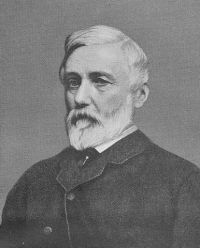
Portrait of William Young Sellar William Young Sellar 1911 Encyclopædia Britannica, Volume 17… (1911)

The permanent literary interest of Martial’s epigrams arises not so much from their verbal brilliancy, though in this they are unsurpassed, as from the amount of human life and character which they contain. He, better than any other writer, enables us to revive the outward spectacle of the imperial Rome. If Juvenal enforces the lesson of that time, and has penetrated more deeply into the heart of society, Martial has sketched its external aspect with a much fairer pencil and from a much more intimate contact with it.
Source: Wikisource

Portrait of William Young Sellar William Young Sellar 1911 Encyclopædia Britannica, Volume 17… (1911)

Even those who greatly admire his genius, and find the freshest interest in his representation of Roman life and his sketches of manners and character, do not attempt to palliate his faults, though they may partially account for them by reference to the morals of his age and the circumstances of his life. The age was one when literature had either to be silent or to be servile. Martial was essentially a man of letters: he was bound either to gain favour by his writings or to starve. Even Statius, whose writings are in other respects irreproachable, is nearly as fulsome in his adulation.
Source: Wikisource

Portrait of William Young Sellar William Young Sellar 1911 Encyclopædia Britannica, Volume 17… (1911)

Living in a very artificial age, he was quite natural, hating pomp and show, and desiring to secure in life only what really gave him pleasure. To live one’s own life heartily from day to day without looking before or after, and to be one’s self without trying to be that for which nature did not intend him, is the sum of his philosophy.
Source: Wikisource

Get perspective with Kwize: daily news enlightened by great literature