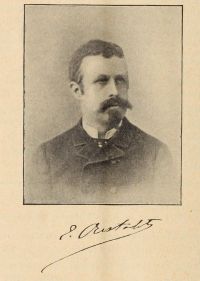
Émile Oustalet

Émile Oustalet

Summary

Portrait of Émile Oustalet Émile Oustalet,  Popular Science Monthly (1878)

“ Like the squirrels, too, they are lively and alert during the day, and spend the nights concealed in holes; like them, they shelter themselves against cold by gathering around them their bushy tails; like them, finally, they are exceedingly timid and wary, fleeing at the least noise, and seeking refuge in the foliage. But here the resemblance ends: for, while the Rodents, with their strong incisors and molars, easily cut and bruise the hardest grains and fruits, the Hapalians, whose jaws are of a different conformation, live on birds'-eggs, insects, fruits, and buds. ”
Source: Wikisource

Portrait of Émile Oustalet Émile Oustalet,  Popular Science Monthly (1879)

“ To judge from their name, the Edentates should all be animals without teeth; yet, though some of them, as the ant-eater and pangolin, offer this peculiarity, others, on the contrary, as the sloth, the armadillo, and the orycteropus or earth-hog, have the jaws provided with organs of mastication, except the portion where the incisors should be. Again, the nails which terminate the digits of the Edentata are sometimes sharp and hooked, so that the animal may climb easily and suspend itself from the branches of trees; again, they are spade-shaped, so that the animal may excavate the ground. ”
Source: Wikisource

Get perspective with Kwize: daily news enlightened by great literature