Pangolin

Definition and stakes

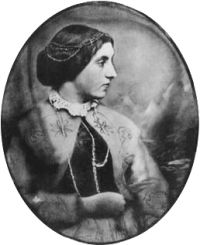
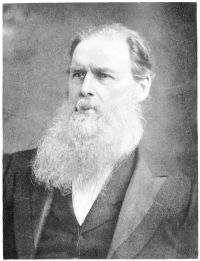
Portrait of Julia McNair Wright Julia McNair Wright,  Nature readers (1891)

“ When the pangolin wishes to defend itself, it can erect its scales as the porcupine does its quills, and so it looks very fierce. All the motions of the pangolin are slow except the play of its tongue, which darts in and out with great rapidity.
[Pg 335]
From a study of these animals we see, that while the edentata differ remarkably in many respects, they are alike in these particulars: There are no teeth on the front of the jaws; their toes have strong claws; their motions are very slow; their intelligence is small; they are inhabitants of South America or the eastern part of Asia.
”
Source: Gutenberg

Portrait of Julia McNair Wright Julia McNair Wright,  Nature readers (1891)

“ This coat is composed of large, leaf-like, pointed scales, set in the skin much in the fashion of the nails on your fingers. These scales lap over each other like roofing-slates, and extend from the nose to the tip of the tail. A strip on the under side of the body is bare of scales.
Like the armadillo, the pangolin can roll itself into a ball if it is in danger. Also like the armadillo, the pangolins have short, strong legs, strong, curved claws, and dig burrows. But they are not so fond of burrowing as the armadillo, and if they find a hollow in a tree they take that for a home.
”
Source: Gutenberg

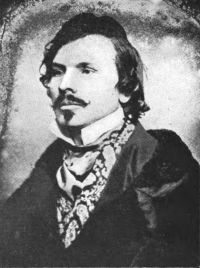
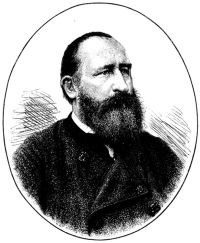
Portrait of Alfred Edmund Brehm Alfred Edmund Brehm,  From North Pole to Equator: Studies of Wild Life and Scenes in Many Lands (1896)

“ The weak pangolin is protected more effectively by his armour, which is strong enough to turn a sword, than by the weapons on its feet; the aard-vark is able to use its claws most effectively, and can also give such smart side-blows with its heavy tail that it readily gets rid of an antagonist who is not of superior strength. ”
Source: Gutenberg

Get perspective with Kwize: daily news enlightened by great literature