Summary

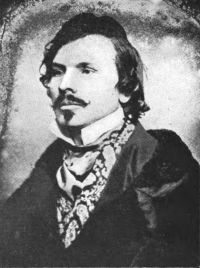
Portrait of Mayne Reid Mayne Reid Odd People: Being a Popular Description of Singular Races of Man

Even at the present hour, the Guaraon would not be secure, were he to stray too far from his sheltering marshes,—for, sad though it be to say so, the poor Indian, when beyond the protection of his tribe, is in many parts of South America still treated as a slave. In the delta he feels secure. No slave-hunter,—no enemy can follow him there. Even the foeman of his own race cannot compete with him in crossing the wide flats of spongy quagmire,—over which, from long habit, he is enabled to glide with the lightness and fleetness of a bird.
Source: Gutenberg

Portrait of Mayne Reid Mayne Reid Odd People: Being a Popular Description of Singular Races of Man

The Bushmen may escape to the rocks, such of them as are not hit by the bullets; and there the boers know it would be idle to follow them. Like the klipspringer antelope, the little savages can bound from rock to rock, and cliff to cliff, or hide like partridges among crevices, where neither man nor horse can pursue them. Even upon the level plain—if it chance to be stony or intersected with breaks and ravines—a horseman would endeavour to overtake them in vain, for these yellow imps are as swift as ostriches.
Source: Gutenberg

Portrait of Mayne Reid Mayne Reid Odd People: Being a Popular Description of Singular Races of Man

A few of the mountain-peaks attain the elevation of 5,000 feet above sea-level, and every form is known—table-topped, dome-shaped, needle, and conical. In fact, no group in the Pacific affords so many varieties of form and aspect, as are to be observed in the Feegee archipelago. In sailing through these islands, the most lovely landscapes open out before the eye, the most picturesque groupings of rocks, ridges, and mountain-peaks, ravines filled with luxuriant vegetation, valleys covered with soft verdure, so divinely fair as to appear the abode of angelic beings.
Source: Gutenberg

Get perspective with Kwize: daily news enlightened by great literature