Summary

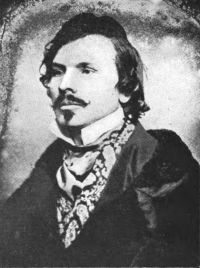
Portrait of Mayne Reid Mayne Reid The man-eaters and other odd people (1860)

Even at the present hour, the Guaraon would not be secure, were he to stray too far from his sheltering marshes,—for, sad though it be to say so, the poor Indian, when beyond the protection of his tribe, is in many parts of South America still treated as a slave. In the delta he feels secure. No slave-hunter,—no enemy can follow him there. Even the foeman of his own race cannot compete with him in crossing the wide flats of spongy quagmire,—over which, from long habit, he is enabled to glide with the lightness and fleetness of a bird.
Source: Gutenberg

Portrait of Mayne Reid Mayne Reid The man-eaters and other odd people (1860)

The Bushmen may escape to the rocks, such of them as are not hit by the bullets; and there the boers know it would be idle to follow them. Like the klipspringer antelope, the little savages can bound from rock to rock, and cliff to cliff, or hide like partridges among crevices, where neither man nor horse can pursue them. Even upon the level plain—if it chance to be stony or intersected with breaks and ravines—a horseman would endeavor to overtake them in vain, for these yellow imps are as swift as ostriches.
Source: Gutenberg

Portrait of Mayne Reid Mayne Reid The man-eaters and other odd people (1860)

An atrocious cruelty,—an instinct for oppression, brutal and ferocious,—a heart pitiless as that of the fiend himself,—a hand ever ready to strike the murderous blow, even though the victim be a brother,—lips that lie in every word they speak,—a tongue ever bent on barbaric boasting,—a bosom that beats only with sentiments of treachery and abject cowardice,—these are the revolting characteristics of the Feegeean. Dark as is his skin, his soul is many shades darker.
Source: Gutenberg

Get perspective with Kwize: daily news enlightened by great literature