Battle of Evesham

Definition and stakes

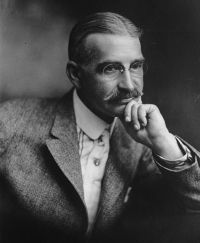
Portrait of Charles Oman Charles Oman,  A History of England

“ Battle of Evesham.—Death of Simon de Montfort.
By a sudden and unexpected attack the prince surprised and scattered young Montfort's army under the walls of Kenilworth; he then hurried off to attack Simon. The earl lay in Evesham town, which is girt round by a deep loop of the river Avon. Edward and Gloucester seized the narrow neck of this loop, while another royalist force, under Mortimer, crossed the river and watched the only bridge which leads southward out of the town. Simon awoke to find himself surrounded. "God have mercy on our souls," he cried, "for our bodies are our enemy's."
”
Source: Gutenberg

Gordon Home,  The Motor Routes of England: Western Section

“ Lawrence was practically rebuilt a century ago, but All Saints, which existed in 1223, has an Early English north aisle and chancel, and examples of the succeeding periods in the other parts of the building. The Battle of Evesham was fought on August 4, 1265, rather less than a mile from the town, on high ground to the north, marked by an obelisk. Simon de Montfort, who held Henry III. prisoner, was crushingly defeated by Prince Edward, and both he and his son Henry were killed, their bodies being buried in Evesham Abbey Church before the high-altar.
Town Plan No. 10—Tewkesbury.
”
Source: Gutenberg

Great leaders: Historic portraits from the great historians

“ He was obliged to throw himself on the support of the people. In the last Parliament he convoked, in the year of his death, he summoned knights and burgesses to sit by the side of the barons and bishops, thus creating a new force in the English constitution, which wrought a great change in the political system of the country. He was slain and his army defeated some months later at the battle of Evesham by Prince Edward. ”
Source: Gutenberg

Get perspective with Kwize: daily news enlightened by great literature