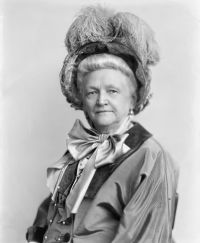
Elizabeth Cady Stanton

Definition and stakes

Portrait of Elizabeth Cady Stanton Elizabeth Cady Stanton History of Woman Suffrage/Volume 1 (1887)

Who of our literary women has yet ventured one word of praise or recognition of the heroic enunciators of the great idea of woman's equality of Mary Woolstonecraft, Frances Wright, Ernestine L. Rose, Lucretia Mott, Elizabeth Cady Stanton? It matters not to those who live for the race, and not for self alone, who has the praise, so that justice be done to woman in Church, in State, and at the fireside—an equal everywhere with man—they will not complain, though even The New York Observer itself does claim to have done for them the work.
Source: Wikisource

Woman of the Century — Elizabeth Cady Stanton (1893)

She was a child of marked intelligence, and her cultured parents gave her the benefit of a thorough education. She took the course in the academy in Johnstown, and then went to Mrs. Emma Willard's seminary, in Troy, N. Y., where she was graduated in 1832. She had, in her youth, in her father's law office, heard much talk of the injustice of the laws, ELIZABETH CADY STANTON. and she early learned to rebel against the inequity of law, which seemed to her made only for men.
Source: Wikisource

Portrait of Elizabeth Cady Stanton Elizabeth Cady Stanton History of Woman Suffrage/Volume 1 (1887)

In her girlhood, alone, heart-led, she comforts the slave in his quarters; mentally struggling with the problems his position wakes her to. Alone, not confused, but seeking something to lean on, she grasps the Church, which proves a broken reed. No whit disheartened, she turns from one sect to another, trying each by the infallible touchstone of that clear, childlike conscience. The two old lonely Quakers in their innocence rest her foot awhile. But the eager soul must work, not rest in testimony. Coming North, at last, she makes her own religion, — one of sacrifice and toil.
Source: Wikisource

Get perspective with Kwize: daily news enlightened by great literature