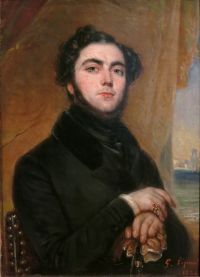
Johan de Witt

Definition and stakes

Charles H. Caffin,  The Story of Dutch Painting

“ Fortunately for the republic, his death occurred two years later, a few days before the birth of his son, who eventually became Stadtholder and subsequently William III of England. Meanwhile, during the prince’s minority, the government was in the hands of Johan de Witt, whose book “The Interest of Holland” is an able summary of the political and commercial conditions of the republic at the time. ”
Source: Gutenberg

Littell's Living Age — Volume 163…

“ On the other hand, France would have been spared the fierce and protracted strife with Europe, which left her exhausted at the Peace of Utrecht; her sovereign would have died the chief of the Continent; and the seeds might never have grown on her soil, of which the Revolution was the deadly harvest.
The life and career of John de Witt are not, we believe, well known in England, partly because most of the accounts of them were written in the Dutch tongue; and partly because his fame has suffered from the discredit that follows a defeated cause.
”
Source: Wikisource

Henry Offley Wakeman,  The ascendancy of France, 1598-1715 (1897)

“ Called at the age of twenty-eight to the post of first minister of Holland, John de Witt brought to his task qualities of mind and character singularly fitted to the part he had to play. In him the virtues of Dutch republicanism shone pre-eminent. Homely and frugal in life, straightforward in policy, patient in temper, dignified in manner, persevering in action, no reverse could daunt his spirit, no success destroy his self-control. To the somewhat phlegmatic temper of the Dutch character de Witt added also the finer qualities of the Latin races. ”
Source: Gutenberg

Get perspective with Kwize: daily news enlightened by great literature