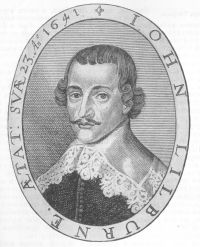
John Lilburne

Definition and stakes

Edward Peacock Notes and Queries, Series 7, Volume 5…

For upwards of thirty years I have had it in my mind to write a biography of John Lilburne. Whether he was a mere noisy agitator and fanatic, as the popular history books for the most part represent him, or an honest and resourceful person who, from the year 1638, when he was whipped at the cart’s tail from the Fleet Ditch to Westminster, to the time of his death, in August, 1657, devoted himself with single-minded earnestness to what he believed to be the highest interests of the English people, I do not now wish to inquire, though I hold the latter opinion with some confidence.
Source: Wikisource

Baron Edward Bulwer Lytton Lytton Night and Morning, Volume 4

Yet, in spite of all this, John Lord Lilburne was not only esteemed but liked by the world, and set up in the chair of its Rhadamanthuses. In a word, he seemed to Vaudemont, and he was so in reality, a brilliant example of the might of Circumstance—an instance of what may be done in the way of reputation and influence by a rich, well-born man to whom the will a kingdom is. A little of genius, and Lord Lilburne would have made his vices notorious and his deficiencies glaring
Source: Gutenberg

David Masson The Life of John Milton Volume 3 1643-1649

For example, one finds that John Lilburne had been a reader of the Areopagitica, and had imbibed its lesson, and even its phraseology. "If you had not been men that had been afraid of your cause," is one of Lilburne's addresses to the Presbyterians and the Westminster Assembly Divines, "you would have been willing to have fought with us upon even ground and equal terms—namely, that the Press might be as open for us as for you, and as it was at the beginning of this Parliament
Source: Gutenberg

Get perspective with Kwize: daily news enlightened by great literature