Le Puy-en-Velay

Definition and stakes

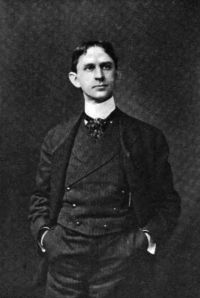
Portrait of Sabine Baring-Gould Sabine Baring-Gould,  A Book of the Cevennes (1907)

“ And it was precisely this that created the industry of Le Velay–lacemaking.
So soon as the first snows appeared, the men abandoned their farms and cottages, and went, some to Le Puy, where they occupied an entire quarter, and gained their livelihood as tapsters, farriers, weavers, carpenters, pin-makers, etc., or else departed for Lyons, Nîmes Montpellier, and Toulouse, to work as masons. All the women of the country pressed into Le Puy. There they formed congregations under the name and age of some saint.
”
Source: Wikisource

S. Baring-Gould,  A Book of the Cevennes

“ Le Puy was occupied by the Leaguers, who made themselves masters of nearly every stronghold in Velay, and it was not till some years after Henry IV. had come to the throne that it submitted to his authority.
The Revolution brought the same results in Velay as elsewhere; the cathedral of Le Puy was pillaged, the monasteries destroyed, and a certain amount of blood was shed; sixty priests were hung or shot, and many nobles guillotined. Since then it has enjoyed tranquillity, only recently ruffled by the taking of the Inventories, leading to the breaking open of the church doors.
”
Source: Gutenberg

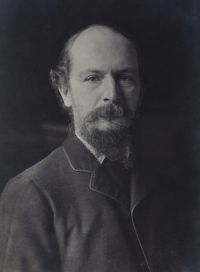
Portrait of Anatole France Anatole France,  The Merrie Tales of Jacques Tournebroche

“ The pardon of the Grand Friday drew a great crowd of pilgrims and traders to Le Puy-en-Velay. As early as mid February folk from distant lands set out thither in cold and wind and rain. For the most part they fared on foot, staff in hand. Whenever they could, these pilgrims travelled in companies, to the end they might not be robbed and held to ransom by the armed bands that infested the country parts, and by the barons who exacted toll on the confines of their lands. ”
Source: Gutenberg

Get perspective with Kwize: daily news enlightened by great literature