Royal Flying Corps

Definition and stakes

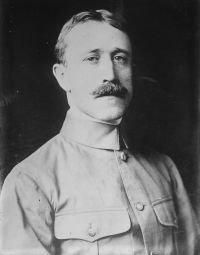
Rowland Walker,  Dastral of the Flying Corps

“ In no country was this recognised more than in England, and at early dawn even remote villages were often stirred, and the inhabitants thrilled by the advent of the whirring 'planes and air-scouts, whose daring pilots were preparing to wrest the mastery of the air from the enemy.
The most daring of our English youths left the public schools and universities, and strained every nerve, risking death a hundred times, to gain the coveted brevet of a pilot's "wings" in the Royal Flying Corps.
”
Source: Gutenberg

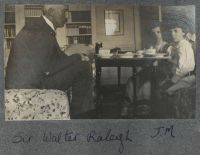
Portrait of Sir Walter Alexander Raleigh Sir Walter Alexander Raleigh,  The War in the Air; Vol. 1

“ The work to be done by the Royal Flying Corps had outgrown its strength. Each of the British armies on the front had allotted to it at this time one brigade of the Royal Flying Corps, consisting of two aeroplane wings, namely, a corps wing and an army wing, and two kite balloon sections. But in practice it had been found necessary to use the squadrons of the corps wing to help the army wing in patrol work, army reconnaissance, and bombing, so that corps commanders were often deprived of the essential services of the Flying Corps in artillery work and photography. ”
Source: Gutenberg

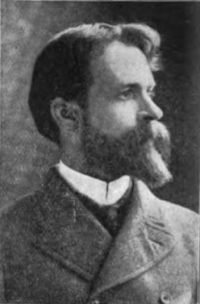
Portrait of Frederick Palmer Frederick Palmer,  My Second Year of the War

“ He is strangely helpless, a human being borne through space by a machine, and when he returns to the mess he really has little to tell except as it relates to mechanism and technique.
The Royal Flying Corps, which is the official name, never wants for volunteers. Ever the number of pilots is in excess of the number of machines. Young men with embroidered wings on their breasts, which prove that they have qualified, waited on factories to turn out wings for flying. Flight itself is simple, but the initiative equal to great deeds is another thing.
”
Source: Gutenberg

Get perspective with Kwize: daily news enlightened by great literature