Boll weevil

Definition and stakes

John Porter Fort,  John Porter Fort: A Memorial, and Personal Reminiscences

“ At the present time the boll weevil has made its [77] appearance in most of the cotton fields in southwest and middle Georgia. I believe that the ravages of the weevil cannot be stopped, but they can be checked and reduced to a minimum. In studying the history of this insect, I find that it is food for birds of the class hirundo, or swallow. When the boll weevil, which is one of cuculio, makes its first flight over the cotton fields before depositing its eggs in the cotton squares is the time that it is caught by the swallows and martins. The weevil is slow in flight and easily caught. ”
Source: Gutenberg

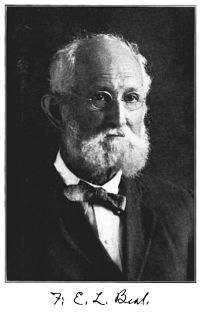
Portrait of F. E. L. Beal F. E. L. Beal,  Some Common Birds Useful to the Farmer…

“ In the adult stage they feed upon the foliage of trees and other plants, and in this way add to the damage which they began in the earlier form. As these enemies of husbandry are not easily destroyed by man, it is obviously wise to encourage their natural foes.
Among the weevils found in the stomachs the most important economically are the cotton-boll weevil and the recently introduced alfalfa weevil of Utah. Several hundred meadowlarks were taken in the cotton-growing region, and the boll weevil was found in 25 stomachs of the eastern meadowlark and in 16 of the western species.
”
Source: Gutenberg

George Howard Alford,  How to Prosper in Boll Weevil Territory

“ Of course the heavy rains have been favorable to the weevil, and nothing else could have been expected in weevil territory than the weevil should appear and be rather plentiful on the young cotton. But our experience in this boll weevil fight is that it is far better to have a wet period at this time than later, when the plant is much larger and the squares more numerous. The farmer is inclined to look at the dark side of things. ”
Source: Gutenberg

Get perspective with Kwize: daily news enlightened by great literature