Gray wolf

Definition and stakes

Sir Charles G. D. Roberts,  The Watchers of the Trails: A Book of Animal Life

“ Their long white fangs snapped, and the fire in their eyes took a different hue.
Very well the dark wolf knew the meaning of the halt, the turn, the change in his fellows' eyes. He knew the stern law of the pack—the instant and inevitable doom of its hurt member. The average gray wolf knows how to accept the inevitable. Fate itself—the law of the pack—he does not presume to defy. He will fight—to justify his blood, and, perhaps, to drug his despair and die in the heat of the struggle.
”
Source: Gutenberg

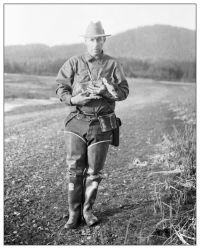
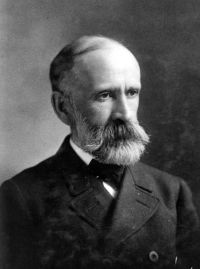
Portrait of William T. Hornaday William T. Hornaday,  Popular Official Guide to the New York Zoological Park…

“ Excepting for his stock-killing propensities, the Gray Wolf is now a skulking creature. In the United States this animal possesses the courage of a coyote, but in the Barren Grounds it is still fierce and dangerous. However much the wolf may skulk and flee when the way is open, when brought to bay he knows how to fight. One snap of his powerful jaws and shear-like teeth is enough to disable almost any dog, and send it howling to the rear. It is no wonder that western dogs of experience are shy of approaching a Gray Wolf within snapping distance. ”
Source: Gutenberg

Portrait of Alfred Henry Lewis Alfred Henry Lewis,  The Black Lion Inn

“ No, it is not the lost Catbird—good squaw though she was—that embitters the tobacco and haunts the moods of Gray Wolf. It is something more awful than death—that merest savage commonplace; something to touch the important fiber of pride.
Gray Wolf is proud, as indeed he has concern to be. Not alone is he eminent as an Osage; he is likewise an eminent Indian. Those two thin ragged lines of blue tattoo which, on each side from the point of the jaw, run downward on the neck until they disappear beneath his blanket, prove Gray Wolf’s elevation.
”
Source: Gutenberg

Get perspective with Kwize: daily news enlightened by great literature