AI-generated from sources
Glory and Gore, The Duality of War in the Societal Imagination
In Brief
- The societal perception of war is deeply split between a romanticized narrative of glory and the brutal reality of industrialized conflict.
- Cultural narratives often entice young people into war with promises of adventure, honor, and self-discovery, while obscuring its devastating human cost.
- After conflict, societies frequently suppress, sanitize, or allow traumatic memories to fade, enabling the myths of glory to re-emerge for new generations.
- The stories a society chooses to tell its children—whether valorizing warrior heroes or emphasizing war's horror—are crucial in determining future paths of conflict or peace.
Main authors

The perception of war is fundamentally marked by a profound and persistent duality. On one side stands a powerful narrative of romanticized glory, where conflict is framed as a crucible for heroism, a thrilling adventure that bestows honor upon its youthful participants. This vision presents war as a necessary, even noble, enterprise that forges character and defends high ideals. On the other side lies the stark, brutal reality of industrialized slaughter—a domain of visceral horror, profound suffering, and dehumanization that strips away all pretense of chivalry. This schism is not merely a historical curiosity; it is an active tension that shapes how societies understand, remember, and ultimately either perpetuate or renounce organized violence.
This conceptual conflict has its most significant impact on the young, who are consistently called upon to be the principal actors and victims of war. Cultural narratives often present the call to arms as an exhilarating opportunity for self-discovery and patriotic fulfillment, an escape from the mundanity of civilian life into a realm of high purpose [1, 3]. Yet, these same narratives frequently obscure the true cost of this supposed glory, which is paid through physical and psychological devastation [13, 14]. The gulf between the promise of heroic sacrifice and the agonizing reality of loss creates a deep societal dissonance, raising critical questions about how memory is constructed, how truth is conveyed, and how future generations are educated about the ultimate nature of conflict.
The Allure of Glory, War as Youthful Aspiration
For many young people, particularly men, the prospect of war ignites a spirit of adventure, offering an escape from a life that might otherwise seem tame or predictable . This appeal is often cultivated from an early age through childhood games and the cultural transmission of war stories, which instill a desire to emulate legendary warriors and achieve personal renown [2, 4]. The ceremonial and musical trappings of military life—the booming guns and martial strains—can create an atmosphere of excitement that stirs the blood and elevates the spirits, making the call to battle seem an irresistible summons to a grander existence [8, 11]. This enthusiasm is further fueled by tales of past conflicts, transforming distant historical events into legends that inspire a new generation to follow the example of their forebears [6].
Beyond personal adventure, war is frequently framed as an act of profound patriotism and a defense of abstract ideals like freedom [5]. The sacrifice of young soldiers is often elevated into a sacred act, a moment of high exaltation where individuals renounce their lives to become their country's shield [7]. This narrative of noble self-sacrifice is reinforced by public memorials and ceremonies that honor fallen heroes, presenting their path as one of glory open to all heroic souls . The power of this patriotic ardor can be so enduring that even veterans, long removed from the battlefield, can feel its fire rekindled when their country once again calls for soldiers, demonstrating the deep-seated cultural resonance of this ideal [9].
The romantic vision of war also emphasizes its role in personal and moral development. Conflict is presented as a definitive test of a man's worth, an opportunity to discover his capacity for courage, faith, and fortitude in the face of extreme adversity [10]. Some proponents, like Reginald Bateman, argued that the very horrors of war give it an inestimable value, teaching blessings that cannot be learned in peace and saving youth from a dishonorable, mundane existence . In this view, the battlefield becomes a heavenly as well as a hellish place, a unique theater for experiencing a joy and sense of purpose unavailable in ordinary life . The intense excitement of combat itself can serve to obscure its grim consequences, creating a state where all sense of fear and danger is lost, at least for a time .
The Savage Reality, Dehumanization and Destruction
The idealized image of war shatters upon contact with its visceral reality. In the aftermath, the rhetoric of victory and glory fades, replaced by an understanding of its immense and horrifying cost [12]. The true legacy of conflict is not honor but a landscape of human devastation: a generation of young men left armless, legless, or psychologically broken, and a nation filled with widows, orphans, and grieving families [16]. This destruction of the
Reconciling Memory, The Struggle Between Idealism and Disillusionment
In the wake of conflict, societies face the complex challenge of reconciling the glorious ideals that motivated soldiers with the disillusioning reality of the war's outcome. Many young men entered the fight with a sincere belief that they were serving a noble cause, an emotional conviction that later historical accounts tend to dismiss, recasting them as deluded tools of larger, impersonal forces [17]. This disconnect creates a profound tension between the lived, idealistic experience of the participants and the cynical interpretations that often follow, leaving their sacrifice in a state of ambiguous meaning.
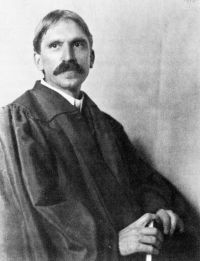
A common societal response to the trauma of war is the gradual process of forgetting. As Philip Gibbs observed in the 1920s, a new generation quickly grows up with little personal connection to past conflicts, naturally preferring to look forward rather than dwell on morbid memories [18]. While this collective amnesia can be seen as a sign of moral health, it comes at a cost, leaving veterans and the permanently wounded feeling that their service and suffering have been too quickly discarded . However, the act of remembering can also sanitize the past. Thinkers like John Dewey noted that memorialization, such as a ritual war dance, can re-enact the emotional triumphs of battle without the actual strain and danger, transforming traumatic events into a more palatable, vicarious experience [19].
Societies also develop spiritual and ideological frameworks to give meaning to mass death. One such response is to redefine death not as an end but as a transition, positing that the veil between life and death has thinned and that the fallen have bequeathed their glory to the survivors in an ongoing story [20]. This perspective attempts to redeem the sacrifice by framing it within a narrative of eternal life and honor. This view stands in stark contrast to the interpretation offered by critics like Romain Rolland, who saw such idealizations as grotesque and fraudulent images. In his 1920 analysis, these narratives were deliberately manufactured to conceal the truth: the martyrdom of a generation of young men sacrificed to gratify the destructive impulses of their elders [21].
Perpetuating the Cycle, Education and Propaganda in Shaping Perceptions
The way a society perceives war is actively shaped and transmitted from one generation to the next, with education and public discourse serving as the primary mechanisms. For many, a major war becomes the first significant event that introduces them to the realities of the wider world, leaving an indelible mark on their consciousness from childhood [22]. Recognizing this formative power, various actors use channels like newspapers to influence the young, sometimes deliberately stirring up patriotic fervor and making them, as Hermann Hagedorn warned,
The societal understanding of war remains caught in a deep and unresolved contradiction, oscillating between a compelling narrative of glorious adventure and the grim reality of human suffering [15]. This schism fuels a perilous cycle where the promise of honor, romance, and self-discovery continually entices new generations to the battlefield, armed with ideals that are often shattered by the experience of industrial-scale violence . In the aftermath, societies struggle to process this trauma. The brutal memories may be actively suppressed, sanitized through heroic memorialization, or simply allowed to fade as a new, inexperienced generation emerges . This collective amnesia allows the potent myths of glory to regain their power, setting the stage for future conflicts.
Ultimately, the decision to perpetuate or renounce this cycle rests upon the stories a society chooses to tell its children [24, 25]. The fundamental debate pits two pedagogical visions against each other: one that venerates warrior heroes to ensure a continued willingness for sacrifice, and another that seeks to instill a profound horror of war to prevent its recurrence [23, 26]. How a culture navigates this tension—whether it prioritizes the memory of heroic ideals or the unvarnished testimony of brutal futility—is perhaps the most crucial factor in determining its path toward a future of repeated conflict or one of concerted peace.