AI-generated from sources
Proof Beyond Her Word, Resistance, Corroboration and the Long Distrust of Rape Complainants
In Brief
- Rape law was long built on distrust of the woman who reported the crime: Blackstone's 1770 Commentaries on the Laws of England repeated an earlier judge's warning that rape was “an accusation easy to be made, hard to be proved.”
- Because a complainant's word was presumed fragile, courts looked for proof elsewhere: force beyond “mere lack of acquiescence,” corroborating evidence, or a chaste reputation, without which a woman could be treated as a discredited witness.
- Some medical and criminological writers turned legal caution into diagnosis, declaring most rape accusations false and blaming perversion, hysteria or imagination, or ascribing to hysterical women a compulsion to lie.
- Rape shield laws and the end of corroboration rules dismantled several of these tests, but where consent is disputed a trial can still turn on her word against his.
Main authors
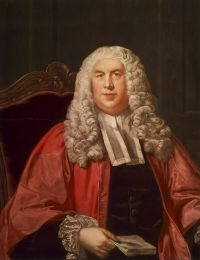

In 1770, praising the jury in his Commentaries on the Laws of England, William Blackstone gave it a double office: to judge the truth of the facts and the credit of the witnesses [1]. A few lines later he copied an earlier judge's warning about rape. The crime was detestable and deserved death, that judge conceded, but it was “an accusation easy to be made, hard to be proved,” and harder still for an innocent man to answer [1]. The sentence did not define the offence. It defined the attitude a court should take toward the woman who reported it.
From that attitude followed a long search for proof outside her own testimony. If her word was presumed fragile, something else had to carry the case: signs of force, a corroborating witness, an unblemished reputation, a physician's opinion. The requirement that she resist belongs to this family, though the surviving texts show it mostly at its edges—in the exceptions that excused it and in definitions that asked for more than silence [2, 3]. When an American federal court in 2002 listed rape shield laws and the elimination of corroboration requirements as proof that the law now meant to protect rather than blame victims [4], it was disowning tests that earlier law had treated as ordinary prudence.
Easy to Be Made, Hard to Be Proved, the Warning Blackstone Inherited
The doctrine rested on an anecdote. Blackstone's judge supported his warning with two very extraordinary cases of malicious prosecution he had witnessed himself [1]. Robert Holloway retold the same two cases, naming their narrator as Sir M. Hale, and repeated his conclusion: courts should take special care in such trials, where court and jury might “with so much ease be imposed upon” [5]. Two personal observations had become a general instruction to doubt. Holloway even carried the reasoning to another sexual offence, which he judged, like rape, easy to charge and hard to disprove [5]. The caution was portable. It attached to a type of accusation, not to the evidence of any given case.
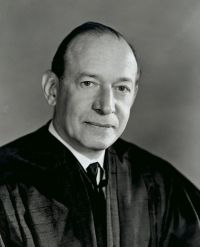
Suspicion and severity grew together. The same judge who doubted the accuser held that rape should be punished with death [1], and the gravity of the penalty made the doubt look like a matter of conscience. Alexis de Tocqueville observed that American legislators, who had softened almost every other criminal penalty, still made rape a capital offence, because nothing seemed more precious to Americans than a woman's honor and independence [6]. The stakes were real for the accused as well. Concurring in Giles v. Maryland, Abe Fortas noted that the petitioners were on trial for their lives, and that their fate turned on whether the jury believed their story of consent or her claim of rape [7]. With a life in the balance and two accounts in conflict, demanding proof beyond her testimony could pass for elementary fairness.
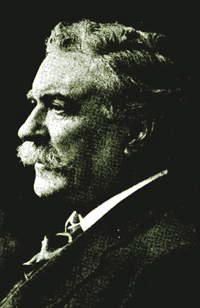
The fear of the false charge was the constant of this literature; writers differed only on its weight. The author of a collection of surgical tracts, William Beckett, took it as given that malicious prosecutions for rape were so frequent that the benefit of the law itself was disputed, and worried about cases where a woman need only say she had been over-persuaded [8]. In 1908 Ernest Belfort Bax pushed the fear to its polemical extreme. The accused man, in his account, stood helpless before a woman able to summon “a power no man can resist” [9]. The image inverted the courtroom scene, making the man the one unable to fight. Richard Arthur, writing on the age of consent, granted that any man was exposed to false accusation, but observed that doctors, the most exposed of all, had never clamoured for more protection and had simply regulated their conduct [10].
The authority behind the maxim was less solid than its longevity suggested. When English judges in Regina v R, in 1991, examined another of Hale's propositions—that a husband could not be convicted of raping his wife—they found nothing to support it in Glanvill, Bracton, Dalton or Coke [11]. If Hale had merely been recognising a well-known principle, they remarked, it was surprising that he cited no authority for it [11]. The finding concerned marriage, not credibility. It suggests, all the same, how one jurist's pronouncements could pass, through repetition, for settled common law.
More Than Mere Lack of Acquiescence, Force as the Measure of Refusal
The demand that she resist appears most clearly where the law excused it. William J. Robinson explained that a man who threatened death or severe bodily injury committed rape even if the woman offered no resistance [2]. The exception presupposes the rule. The threshold Robinson names is high: death or severe bodily injury, nothing less.
Legal definitions translated the same expectation into the vocabulary of force. Executive Order 12960 makes force and lack of consent both necessary to the offence, and specifies that the lack of consent required is “more than mere lack of acquiescence” [3]. The phrase says what silence was worth: the absence of consent had to amount to more than a failure to acquiesce. The Soviet criminal code of 1960 reached a similar result by another path, defining rape by the man's means—physical force, a threat, or advantage taken of the victim's helpless state—without naming her consent at all [12]. In both texts, force is what makes the crime visible.
Helplessness was the law's admission that resistance could not always be asked. The Soviet code listed the victim's helpless state alongside force and threat [12]. Nearly six decades later, an Arkansas court applied a statute under which a person is physically helpless if unconscious, unable to communicate, or unaware that a sexual act is happening [13]. Such categories protect those who could not fight.
Marriage exposed the logic of resistance at its starkest, because there consent was presumed in advance. In Regina v R, English judges followed the presumption to its end: logically, it might be thought, if a wife had consented by marrying, she was not entitled to refuse, and if she resisted her husband could use reasonable force to overcome her [14]. They called this “the absurdity of the fiction of implied consent” [14]. Carried through, the fiction would have turned her resistance into a licence for the violence that answered it. The exceptions the judgment reviewed show how much the old structure demanded: a wife's refusal counted once a decree nisi had revoked her implied consent [15]—that is, once a court rather than the woman herself had spoken.
The Discredited Witness, Corroboration, Chastity and Hysteria
Where her word was not enough, the law could simply require another. In Iowa, as Jennie L. Wilson set out, a man charged with rape or assault with intent to rape could not be convicted on the testimony of the injured woman unless other evidence corroborated it and connected him to the offence [16]. The rule was not universal. The 1911 Encyclopædia Britannica noted that in many of the states the woman's uncorroborated evidence was enough to sustain a conviction [17]. The patchwork matters. Corroboration was a choice some legislatures made, not a necessity of proof.
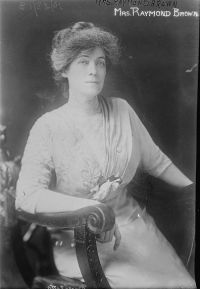
Reputation worked as a second corroboration, in reverse. In 1885 an informant told William Thomas Stead that a girl trapped in a brothel could hardly prosecute, since a woman who had lost her chastity was “always a discredited witness,” and her very presence in such a house might be taken as evidence of her consent [18]. Iowa's offences of seduction and enticement protected only women of previously chaste character [16]. In 1918 the suffragist Gertrude Foster Brown, writing of women accused of a crime against morality, observed that a prostitute stood outside the protection of the law and that her word had no value in court [19]. The sexual past served as a proxy for credibility. The less chaste a woman was held to be, the more freely she could be assaulted.
The scale of credibility was also drawn along a color line. Ida B. Wells-Barnett set the alleged rape cases against Black men beside a silence: the same crime committed by white men against Black women was never punished, by mob or by law [20]. She quoted a South Carolina journal claiming that a Black woman had “no finer feelings nor virtue to be outraged” [20]. The honor that Tocqueville saw Americans guarding with the death penalty [6] was not extended to every woman. Whose word stood, and whose injury counted, had been decided before any trial began.
Medicine gave the old caution a clinical vocabulary. Havelock Ellis reported Lawson Tait's view that violent assaults on women were much rarer than the frequency of the charges suggested, adding that many medico-legal authorities agreed, among them G. Vivian Poore's 1901 treatise on medical jurisprudence [21]. William J. Robinson went further, asserting that only about ten rape accusations in a hundred were true and attributing the rest to a perversion, to hysteria or to imagination [2]. Gina Lombroso, presenting the classification of Cesare Lombroso, counted nine false rape accusations among 21 women convicted of slander, and ascribed to hysterical women a compulsion to lie [22]. Robinson's passage gives no source for his proportion, and Lombroso's count concerned only women already convicted of slander. A judge's prudence had become a diagnosis.
The tribunal that weighed these accusations was itself male. Havelock Ellis, discussing prosecutions under an age of consent raised to eighteen, found it natural that juries should require clear evidence of rape when the complainant was a grown girl in full possession of her faculties, possibly a clandestine prostitute [23]. Susan B. Anthony, as Alma Lutz recounts, wanted the vote so that women could help make the laws on rape—laws framed and administered by men, before judges, jurors and lawyers who were all men [24]. Blackstone's jury, the judge of credit, was a body of men weighing the credit of women. What Ellis presented as natural, Anthony saw as a structure.
Four Chances in a Hundred, the Maxim Turned Around
Figures gathered at the end of the 20th century turned the old maxim on its head. Dissenting in United States v. Morrison in 2000, David Souter cited reports finding that a man who commits rape has about four chances in a hundred of being arrested, prosecuted and convicted of any offence, and that fewer than 1 percent of victims ever collected damages [25]. Rape was still hard to prove. But the difficulty now appeared as a failure of justice toward victims, not as a shield for the innocent accused. The study behind the first figure bore a telling title, Jurors and Rape [25]: what juries were willing to believe remained at the heart of the matter.
Rape shield statutes attacked the reputation test directly. Michigan, like most states, adopted one to protect victims from harassing or irrelevant questions about their past sexual behavior at trial [26]. The Council of Europe's convention on violence against women goes further in principle, allowing evidence of a victim's sexual history only when it is relevant and necessary [27]. The target is precisely the discredited witness of Stead's informant. A woman's sexual past no longer decides, by itself, whether she can be believed.
The shield narrowed the contest without ending it. Recounting the reasoning of a Michigan appeals court, John Paul Stevens noted that when victim and defendant had a prior sexual relationship, that history may bear on a defence of consent, and that the pretrial hearing then risks becoming a contest of her word against his [28]. The structure Fortas described in a capital case reappears intact: everything turns on whom the tribunal believes [7, 28]. The federal court of 2002 acknowledged that debate continued over how consent and force should be handled in rape cases [4]. The resistance requirement had lost its rule, not its question.
That same court saw a national consensus that laws should “protect, not blame, victims,” and cited as evidence the spread of rape shield laws and the elimination of corroboration requirements [4]. Consensus on the rules did not end the suspicion behind them. In a 2013 House speech, Representative Louise Slaughter reported that a police reporting requirement for rape victims had been defended in committee partly on the ground that women would lie [29]. The reasoning could have come from Hale's courtroom. The doctrine had been dismantled piece by piece; the presumption it served still found voices.
For more than two centuries, English and American law treated the woman who reported a rape first as a witness to be doubted. From a judge's warning, repeated by Blackstone in 1770, that the charge was easy to make and hard to disprove came a family of tests designed to find proof outside her word [1, 5]: force beyond mere non-acquiescence, corroborating evidence, a chaste reputation, a medical suspicion of hysteria and, inside marriage, a presumed consent whose logic, English judges observed, would have entitled a husband to overcome her resistance by force [3, 16, 18, 2, 14]. Rape shield statutes and the abandonment of corroboration rules took several of these instruments apart [4, 26].
Their disappearance did not settle the question that had produced them. Where two accounts of consent collide, a court must still decide whom to believe, and the handling of force and consent remained disputed well after the reforms [4, 28]. What changed was the starting presumption, and the evidence of who had in fact been hard to bring to justice: a man who committed rape stood about four chances in a hundred of being convicted [25]. The old maxim was right that rape is hard to prove. It was wrong about whom the difficulty protected.