AI-generated from sources
The Number Drawn by Outrage, How Campaigns Rather Than Principle Set the Age of Consent
In Brief
- England's age of consent was born of a committee bargain: in 1875 a bill to protect girls up to fourteen was cut down to thirteen before Parliament accepted it, and the line rose to sixteen only in 1885.
- In the American states the age climbed from as low as ten to sixteen or eighteen through organized pressure, above all from women's associations such as the Women's Christian Temperance Union, and proposals to lower it again were possible.
- Raising the age very high could hollow out the law: where it was set at eighteen, few prosecutions succeeded, because juries hesitated to convict when the girl was grown up.
- The reformers argued for the line as a protection for girls, while their opponents described it as a weapon placed in girls' hands against men.
Main authors

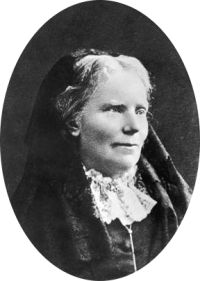

In 1875 a bill came before Parliament to give girls legal protection up to the age of fourteen. It left committee at thirteen and, “thus mutilated,” in the words of Elizabeth Blackwell, it was accepted [1]. Writing in 1883, Blackwell did the arithmetic the legislators had preferred to skip. A law that protects up to thirteen only guards children of twelve, so a girl of thirteen could give legal consent to her own corruption [1]. Nothing in that line came from a study of childhood. It came from a bargain struck in a committee room.
The age of consent, as a legal writer quoted in George Elliott Howard's history of matrimonial institutions defined it, is the age at which a girl may lawfully consent to sexual relations; below it, a man is punished whether or not she agreed [2]. Such a threshold looks like a fact of nature, the point where childhood ends. The record of its making tells another story. In England and in the American states, the line moved when pamphleteers, petitioners and women's organizations forced it to move, and it moved by as much as an assembly would concede. Their opponents, for their part, read every new figure as a weapon. The age of consent is less a measure of maturity than the trace of a political fight.
Stead and the legal women of thirteen
Thirteen was not even the reformers' own figure. Blackwell set it against Continental law, under which, she wrote, no minor boy or girl up to twenty-one could legally consent to his or her own corruption; the adult who debauched was held responsible and could not plead the minor's consent [3]. She cast the English exception as a sign of modern decline from Christian civilization, a moral and religious diagnosis rather than a physiological one [3]. Fourteen in the bill, thirteen in the statute, twenty-one across the Channel. Three numbers were on the table at once, and the one adopted was the one a committee would accept.
Ten years later the question returned as a scandal. In The Maiden Tribute of Modern Babylon, published in 1885, William Thomas Stead turned the statute against itself: the law, he wrote, seemed framed to let dissolute men outrage these “legal women of thirteen” with impunity [4]. The phrase works by sarcasm. A child becomes a woman by Act of Parliament, and the law then treats her as one. Stead added a technical grievance drawn from Stephen's Digest: a rape in fact was not a rape in law if consent was obtained by fraud from a girl ignorant of the nature of the act [4]. His argument was not about when girls mature. It was about what the existing text allowed men to do.
Stead's pamphlet was also advocacy for a bill then before Parliament, and it shows how the battle was fought. The advocates of the Criminal Law Amendment Bill, he complained, were met by “two mutually destructive assertions” [5]. One held that raising the age was useless, since the streets were full of young prostitutes under thirteen. The other held that juvenile prostitution under fifteen had practically ceased to exist [5]. Both objections were claims about the street, not about childhood. The contest turned on what could be shown and believed, which gave the advantage to whoever could make the public see.
The Criminal Law Amendment Act became law in 1885. The 1911 Encyclopædia Britannica counted it as a considerable change in the law of rape, procurement and similar offences, in the direction of increased protection to women [6]. The new line stood at sixteen. Ernest Belfort Bax, writing in 1908, described the Act as raising the age under which a girl's consent is not recognised, and spoke of girls who do not appear to be sixteen [7]; Ethel Snowden noted in 1912 that a girl could consent at sixteen though she answered for her property only at twenty-one [8]. In ten years, the age had moved from thirteen to sixteen. The texts that accompany the change argue about loopholes, fraud and prostitution, not about the growth of girls.
From ten to eighteen, the American legislatures under pressure
In the American states the starting point was lower still. In New York, according to Georgeanna Gardenier, the laws until 1887 were such that a child ten years old could “consent to her own ruin,” while the man who seduced her went unpunished; that April the penal code raised the age to sixteen [9]. Florida shows how fragile such gains were. A bill raising its age of ten to seventeen was defeated in 1887, and Florida's law distinguished two thresholds: rape, punishable by death or life imprisonment, up to ten, and a separate age of protection up to sixteen, carrying at most a year in prison or a fine [10]. The single number split into a scale of penalties. That split is a measure of how little agreement lay beneath it.
The line might also have moved downward, which would be the clearest sign that it answered to pressure rather than to knowledge. Helen Gardener warned that in some states it had become possible to pass a bill reducing to ten the age at which a girl is held responsible for her own ruin [11]. She blamed the ignorance in which wives and daughters were kept, together with the silence that sheltered men's vice [11]. Her sharpest argument was one of consistency. The same men who held a girl too young before eighteen to consent to marriage or to the sale of property held her old enough, at ten, to consent to her own degradation [12]. Gardener offered no theory of maturity; she exposed the absence of one.
What moved the number upward was organization. Richard Arthur credited a well-organised agitation, led in good part by the Women's Christian Temperance Union, with winning the age of eighteen in eight states within eighteen months [13]. The History of Woman Suffrage drew the same lesson from a longer view: the large organizations of women had made a determined effort in every state, and “Legislatures have yielded to pressure” [14]. A critic of the suffragists gave another account. Helen Kendrick Johnson, who reproached them for doing little against vice, attributed a change in some of the laws concerning social vice to social opinion and observed that nearly every state legislature had raised the age [15]. Where Arthur and the suffragists' history saw organised women, she saw social opinion.
Who sat in the assembly mattered as much as who marched outside it. Snowden pointed out that in many of the states where women voted, the age of consent stood at eighteen and even twenty-one [8]. Cicely Hamilton read the extreme reluctance of a purely male electorate to raise it as a habit of shifting men's misdeeds onto other shoulders—even onto the shoulders of a child [16]. The reluctance had its scenes. When a woman legislator in Colorado proposed to raise the age from sixteen to twenty-one, Eugene Hecker recounts, her male colleagues raised such a storm of protest that the measure was abandoned [17].
Havelock Ellis and the law juries would not apply
The upward movement provoked its own objection, and it came from a writer on sex and social hygiene rather than from the defenders of vice. Havelock Ellis described a swing between extremes. Until about twenty-five years before he wrote, the tendency had been to set a very low age, even ten; since then, the tendency was to raise it to a very late age, which he judged an equally unfortunate extreme [18]. His ground was physiological: the sexual precocity of girls, he argued, bore directly on the question [18]. Here a theory of maturity enters the debate as a brake on the campaigns.
Ellis's strongest evidence was practical. He cited the Committee of Fourteen, a body he stressed was not hostile to moral legislation, which found that since the age had been raised to eighteen there had been few successful prosecutions, the age clause being “practically inoperative” [19]. Juries, he explained, wanted clear evidence of rape when the girl was grown up and in full possession of her faculties, “possibly even a clandestine prostitute” [19]. One judge had sworn never to impose the full penalty while he sat on the bench, and rape itself, Ellis feared, was losing the opprobrium that rightly belonged to it [20]. In his reading, a number stretched beyond what juries would accept did not protect more girls. It weakened the law for all of them.
Complaints of unenforced protective laws were not Ellis's alone. An 1899 article in Appletons' Popular Science Monthly called a law framed in the interest of “the young of both sexes” a dead letter, broken constantly and with impunity, and blamed the indifference of the public [21]. Its remedy was organised effort: protective associations in every town or at least every county, a cause it called worthy of “the noblest and most cultivated women in our land” [21]. The passage does not name the age of consent, and the law it describes was framed for boys as well as girls.
Beneath the quarrel over the figure lay the question of its purpose. For Hecker, a girl in the slippery period of puberty could seldom realise what she was doing, and the age should be uniformly twenty-one [17, 22]. The logic of protection, followed to its end, stretches a girl's sexual minority to the threshold of civil adulthood. Frederic Jesup Stimson, discussing legislation bearing on the morals of young women, expected courts to sustain it under the police power even though it interfered with the personal liberty of women and their means of earning a living [23]; the passage cited does not name the age of consent.
Opponents of the reform turned the number into a grievance of their own. In The Legal Subjection of Men, Bax argued that the 1885 Act put a “dangerous weapon” into the hands of the girl, who had only to show that she did not appear to be sixteen [7]. Almroth Wright, writing against women's suffrage in 1913, claimed that the law fixing the age discriminated against man, exposing him to a criminal charge while woman escaped scot-free—though, he insinuated, she might be the more frequent offender [24]. A line meant to protect a child became, in these pages, an instrument in a contest between the sexes.
Thirteen again, the line in later codes
The arithmetic Blackwell denounced in 1883 resurfaced more than a century later, far from England. A 1987 amendment to the Thai Penal Code explained that because the specially protected age was merely “not over thirteen years,” offenders could cite the consent of a child over thirteen to be exonerated or to have their penalty reduced [25]. The text reads like the Victorian complaint transposed. A line drawn low did not mark the end of childhood. It marked the start of a defence.
Later courts also recognised that the number could carry a moral judgment unrelated to age. In 2008 the Constitutional Court of South Africa held that a differential age of consent for same-sex partners perpetuated a damaging stereotype of their conduct as disgraceful or of less value, and that its effect was demeaning and contrary to the Constitution [26]. An age of consent says which acts a society respects, not only when young people are ready.
The suspicion that age lines are arbitrary is not confined to sex. Dissenting in 2005 from a ruling that barred the death penalty for offenders under eighteen, Justice Sandra Day O'Connor wrote that chronological age is not an unfailing measure of psychological development, and called the age-based line drawn by the court “indefensibly arbitrary” [27]. Her case concerned punishment, not consent, and she used the argument to resist a protective line rather than to defend one. Yet it names the difficulty that the age of consent has never escaped. A single birthday stands in for a development that differs from person to person, so the choice of birthday must be justified on other grounds.
England's age of consent rose from thirteen in 1875 to sixteen in 1885; in American states it climbed from ten to sixteen or eighteen. None of these figures came from a demonstration of when a girl becomes able to consent. Bills were cut down in committee, pamphlets shamed legislators, and women's organizations pressed until assemblies gave way. Principles were invoked on every side—consistency with the age of property, Continental precedent, the precocity of girls, the exposure of accused men—but they arrived to defend a figure or to resist it, rarely to produce it.
Enforcement exposed the limits of a number made this way. Where it outran what juries would believe, prosecutions dwindled; where it stayed low, offenders sheltered behind the consent of children just over the line, in Victorian England as in a late-20th-century penal code. Such a threshold cannot be read as a fact about childhood. It is a truce, signed at a given moment, and it holds only as long as the public chooses to keep it.