
“ Mankind had suddenly unmasked and shown itself for what it was—still only a precocious child, with a terrible precocity. For its growth had been one sided. Its strength was growing at a speed breathless and astounding. ”
Precocity
Definition and stakes
The theme of “precocity” has been addressed by authors such as Ernest Poole, Boris Sidis, John Percival, Mosiah Hall and Marion Foster Washburne. It is often associated with terms like growth, brain, human, youth and maturity.
Quotes about “precocity”
 Boris Sidis,
Philistine and genius
(1917)
Boris Sidis,
Philistine and genius
(1917)
“ Like all rare phenomena, precocity, or early child development, is considered as unique, as abnormal, and even as pathological. In fact, many still regard precocity as some form of malady akin to mental alienation. ”
John Percival, Sermons at Rugby
“ During the stage of earliest growth it would be a sign of unhealthy precocity if a child were much occupied with the continuity of things, or the close union of to-day with to-morrow, or of all our thoughts, acts, pleasures, and tastes, with the bent of character which is being silently but surely formed in us; and it would be equally unnatural if his thoughts were to dwell much on the essential shortness of our life, and the flight of opportunity which does not come back to us. ”
Mosiah Hall, Parent and Child Volume III., Child Study and Training
“ Our business as teachers is always so to stimulate, by proper exercise, the growing organs that they shall grow faster and further than they ever could without our aid. We are not to always hasten it. This is one thing we must bear in mind: precocity is the worst foe of a sound education. It is the boy and the girl who mature slowly but mature surely that in the end possess the earth. We must not hasten the process, but when we find the organ is ready to grow and develop, then we must give it adequate stimulus. ”
Marion Foster Washburne, Study of Child Life
“ Such forcing will limit the child's future development to the few faculties whose growth is thus early stimulated. Precocity in a child, therefore, is a thing to be deplored. His early ripening foretells a early decay and a wise mother is she who gives her child ample opportunity for growing, but no urging. ”
Various, Popular Science Monthly (1897)
“ It assures us that too early and rapid organization of the nervous system through undue stimulation or educative influence of any kind finally results in arrested growth. Precocity is usually succeeded by mediocrity, if by nothing worse. ”
 Herbert Spencer,
Essays: Scientific, Political, & Speculative…
Herbert Spencer,
Essays: Scientific, Political, & Speculative…
“ Rate of mental development.—In conformity with the biological law that the higher the organisms the longer they take to evolve, members of the inferior human races may be expected to complete their mental evolution sooner than members of the superior races; and we have evidence that they do this. Travellers from many regions comment, now on the great precocity of children among savage and semi-civilized peoples, and now on the early arrest of their mental progress. ”
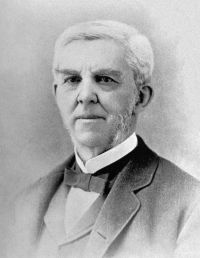 Oliver Wendell Holmes Sr.,
The Autocrat of the Breakfast-Table…
Oliver Wendell Holmes Sr.,
The Autocrat of the Breakfast-Table…
“ It is very presumptuous to attempt to add to it, yet I have been struck with the fact that life admits of a natural analysis into no less than fifteen distinct periods. Taking the five primary divisions, infancy, childhood, youth, manhood, old age, each of these has its own three periods of immaturity, complete development, and decline. I recognize on old baby at once, - with its “pipe and mug,” (a stick of candy and a porringer,) - so does everybody; and an old child shedding its milk-teeth is only a little prototype of the old man shedding his permanent ones. ”
 Guglielmo Ferrero,
Ancient Rome and Modern America…
Guglielmo Ferrero,
Ancient Rome and Modern America…
“ You make a great mistake, however, if you think that the contrast between the rapidity of your growth and your changes and the slowness and immutability of Europe is any proof of your own nearer approach to perfection. That rapidity is a phenomenon of youth.123 A child’s weight and height double themselves every six months, year, two years, or three years in the first years of its life; while an adult stops growing or grows so slowly as to be hardly aware that he is doing so. ”
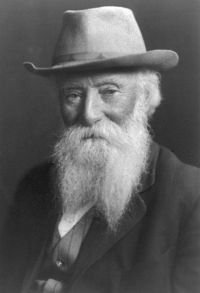 John Burroughs,
Time and Change
John Burroughs,
Time and Change
“ During what cycles upon cycles the great mother-forces of the universe must have brooded over the inorganic before the organic was brought forth! The archean age, during which the brooding seems to have gone on, was probably as long as all the ages since. How we are baffled when we talk about the beginning of anything in nature or in our own lives! In our experience there must be a first, but when did manhood begin; when did puberty, when did old age, begin? When did each stage of our mental growth begin? ”
 George M. Gould,
Anomalies and Curiosities of Medicine
George M. Gould,
Anomalies and Curiosities of Medicine
“ Precocious development is characterized by a hasty growth of the subject, who at an early period of life attains the dimensions of an adult. In some of these instances the anomaly is associated with precocious puberty, and after acquiring the adult growth at an early age there is an apparent cessation of the development. In adult life the individual shows no distinguishing characters. ”
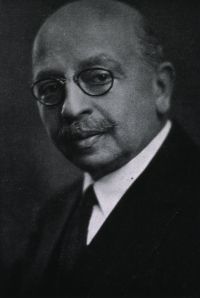 Joseph Jastrow,
Popular Science Monthly
(1904)
Joseph Jastrow,
Popular Science Monthly
(1904)
“ The normal growth of the body, the special development of different portions thereof concerned with adolescence, the variations from such normal development and their aberrations in disease and crime, the great rôle that periodicity plays in human growth—these constitute the physical basis which conditions through and through the nature of mental growth, as well as determines the spirit of educational progressions. ”
 G. Stanley Hall,
Senescence, the Last Half of Life
(1922)
G. Stanley Hall,
Senescence, the Last Half of Life
(1922)
“ My own life work, such as it is, as a genetic psychologist was devoted for years to the study of infancy and childhood, then to the phenomena of youth, later to adulthood and the stage of sex maturity. To complete a long-cherished program I have now finally tried, aided by the first-hand knowledge that advancing years have brought, to understand better the two last and closing stages of human life. ”
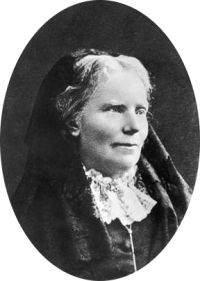 Elizabeth Blackwell,
Essays in medical sociology, Volume 1…
(1902)
Elizabeth Blackwell,
Essays in medical sociology, Volume 1…
(1902)
“ One of the first lessons, then, that Physiology [Pg 186] teaches us in relation to the healthy growth of the human being, is the slow and successive development of the various faculties. Although the complete type of the future man exists potentially in the infant, long time and varying conditions are essential to its establishment, and the type will never be attained, if the necessary time and conditions are not provided. ”
James Burt Miner, Deficiency and Delinquency: An Interpretation of Mental Testing
“ When we think of curves of general ability we must, therefore, keep in mind the light which might be thrown on them by an analysis of the various processes tested in the particular scale used.Another feature of all developmental curves which is apparent as soon as the causes of development are considered, is that growth in an individual is the result of several factors. ”
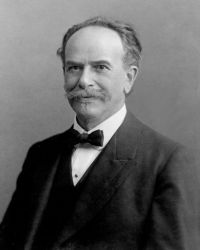 Franz Boas,
The mind of primitive man
(1911)
Franz Boas,
The mind of primitive man
(1911)
“ These facts relating to growth are of fundamental importance for a correct interpretation of the oft-discussed phenomena of early arrest of growth. We have seen that among members of the same race a prolonged period of growth goes hand in hand with unfavorable development, while an abbreviated period of growth results in larger dimensions of all physical measurements, and in a superiority of mental activity. ”
Various, Popular Science Monthly (1893)
“ Whether we consider the embryonic preparatory stage of life, or whether we regard as the beginning of existence the entrance to the environment of Nature, and speak of the preparatory stage as that which intervenes between birth and maturity, we shall find it measurably true that in proportion to the complexity of mental development to which the individual may eventually attain will this pre-adult period be lengthened. ”

“ They have extended the level years far into the seventies, and age, when it comes, comes swiftly and easily. The feverish hurry of our earth, the decay that begins before growth has ceased, is replaced by a ripe prolonged maturity. ”
Elizabeth Blackwell,
Essays in medical sociology, Volume 1…
(1902)
“ A physiologist remarks, ‘In youth the affinity of the tissues for vital stimuli seems to be greater when the development is less complete.’ That which the strong adult may endure with comparative impunity destroys the growing youth, whose nature, from the very necessities of development, possesses a keener sensitiveness to all vital stimuli. ”
Joseph Le Conte, Popular Science Monthly (1879)
“ Thus, in the individual human organism, there rise, culminate, and decline, first in childhood the nutritive functions; then in youth and early manhood, the reproductive and muscular functions; and, lastly, in full maturity, the cerebral functions. Or, in the development of the mind, there rise, culminate, and decline, first in childhood, the perceptive faculties and the memory; then in youth and young manhood, the imaginative and æsthetic faculties ”
G. Stanley Hall,
Youth: Its Education, Regimen, and Hygiene
“ After the critical transition age of six or seven, when the brain has achieved its adult size and weight, and teething has reduced the chewing surface to its least extent, begins a unique stage of life marked by reduced growth and increased activity and power to resist both disease and fatigue, which suggests what was, in some just post-simian age of our race, its period of maturity. ”
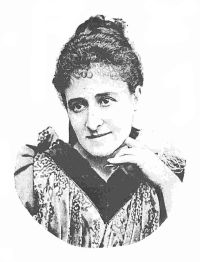 Ada S. Ballin,
Science of Dress
(1885)
Ada S. Ballin,
Science of Dress
(1885)
“ The whole period of growth is important; but, since from birth to about the age of seven years the growth and development of bodily and mental functions are immensely more rapid than at any period of after-life, it follows that greater care is required during these early years, when the consequences of a step in a wrong direction are more injurious than at any other time. ”
Dorothy Josephine Collier, The Girl in Industry
“ In late adolescence contrasted with earlier life there is more variation in growth, much greater liability to retrogression, and increased susceptibility to outside influences, unfavourable surroundings, and conditions more readily causing arrest of growth and preventing perfect maturity. ”
Mary L. Read, The mothercraft manual (1916)
“ During the entire growth period the proportions of different parts are constantly changing because of their uneven rate of growth. The awkwardness, easy fatigue, and weakness during childhood and adolescence are in no small measure due to these changing proportions and their inadequacy as compared with their adjustment in maturity. ”
 Aristotle,
On Life and Death
(350 BCE)
Aristotle,
On Life and Death
(350 BCE)
“ Part 24 Generation is the initial participation, mediated by warm substance, in the nutritive soul, and life is the maintenance of this participation. Youth is the period of the growth of the primary organ of refrigeration, old age of its decay, while the intervening time is the prime of life. ”
Charlotte Marie Mason, Home Education (Mason) — Part II: Out-Of-Door Life For The Children
“ For we are an overwrought generation, running to nerves as a cabbage runs to seed; and every hour spent in the open is a clear gain, tending to the increase of brain power and bodily vigour, and to the lengthening of life itself. ”
Herbert Spencer,
Illustrations of Universal Progress…
“ This classification, here roughly indicated and capable of further expansion, will be found in harmony with the 324 results of detailed analysis aided by development. Whether we trace mental progression through the grades of the animal kingdom, through the grades of mankind, or through the stages of individual growth; it is obvious that the advance, alike in cognitions and feelings, is, and must be, from the presentative to the more and more remotely representative. ”
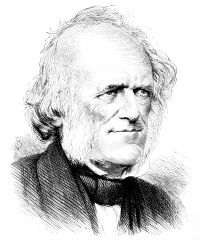 Charles Lyell,
Geological Evidences of the Antiquity of Man
(1863)
Charles Lyell,
Geological Evidences of the Antiquity of Man
(1863)
“ The same physiologist suggests, that as there is considerable plasticity in the human frame, not only in youth and during growth, but even in the adult, we ought not always to take for granted, as some advocates of the developement theory seem to do, that each advance in psychical power depends on an improvement in bodily structure, for why may not the soul, or the higher intellectual and moral faculties, play the first instead of the second part in a progressive scheme? ”
Edwin Seward Puller, Your boy and his training (1916)
“ Juvenile psychology may be divided into child psychology, covering the period from birth to puberty, and adolescent psychology, covering the period from puberty to maturity. Boyhood is the interval between birth and physical maturity, the latter being reached at the age of twenty-four or twenty-five, when the bones, muscles, and organs of the body have attained their complete development. ”
 Charlotte Perkins Gilman,
Concerning Children
Charlotte Perkins Gilman,
Concerning Children
“ Since we have so carefully and thoroughly beaten back the new brain-growth which should distinguish each successive generation, and fostered in every way the primitive mental habits of our forefathers, the natural consequence is a prolonged survival of very early tendencies. ”
James Burt Miner, Deficiency and Delinquency: An Interpretation of Mental Testing
“ An increase in development may refer to at least five different things depending upon the scale of measurement to which reference is made. Besides an increase measured by the physical scale, the scales for adults, for the immature or for all ages, to which we have already referred, it may mean an increase judged by the distribution of increases which individuals of the same life-age and capacity make in the same period of time. ”
Elizabeth Blackwell,
Essays in medical sociology, Volume 2…
(1902)
“ Equally remarkable is the system of general unvarying laws by which this living structure is governed. The first law we notice in human growth is the precedence of physical over mental growth. We observe that physical development, though never separate from mental development, is always in advance of it. This is shown by the wonder and delight with which the parent receives the first sign of awakening intelligence in the young infant, the first smile, the first indication of observation. ”
C. W. Saleeby, Parenthood and Race Culture: An Outline of Eugenics
“ The rise of parenthood.—Consistently with this fact and with the argument of the previous chapter is the tendency towards the lengthening of infancy, a very characteristic condition of the evolution of the higher forms of life. This lengthening and accentuation of infancy makes for variety of development, and, as we have seen, is supremely instanced in man, where it depends upon, and makes possible, the transmutation of fixed instincts into the plastic thing we call intelligence. ”
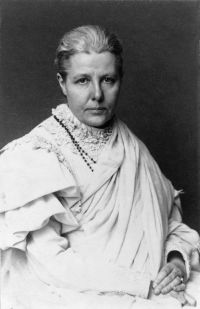 Annie Wood Besant,
An Autobiography
(1893)
Annie Wood Besant,
An Autobiography
(1893)
“ As the body grows, the mind grows with it, and the childish mind of the child develops into the hasty, quickly-judging, half-informed, unbalanced youthful mind of the youth; with maturity of years comes maturity of mind, and body and mind are vigorous and in their prime. As old age comes on and the bodily functions decay, the mind decays also, until age passes into senility, and body and mind sink into second childhood. ”
B. G. Jefferis, Searchlights on Health: The Science of Eugenics
“ It is obvious that if the most vital physical force of a boy's life is being spent through this degrading habit—a habit, be it observed, of rapid growth, great strength, and difficult to break—he must develop badly. ”
G. Stanley Hall,
Senescence, the Last Half of Life
(1922)
“ Here we must recall the very pregnant sense in which, as I have tried in my Adolescence to set forth at greater length, education in its various implications began in the initiations of youth by their elders into the pubertal stage of life and slowly extended upward toward the university, and downward toward the kindergarten, as civilization advanced. ”
Ray Vaughn Pierce, The People's Common Sense Medical Adviser in Plain English
“ If this portion of the brain indicates a full development, we [pg 155] say of such a temperament that it is VITAL, because the functions of its nerve-centers are favorable to evolution. As degeneration observes conditions, so endurance and development conform to certain laws, and it is the duty of all truthful inquirers, who believe not only in the progress of human intelligence, but in physical improvement from generation to generation, to ascertain and comply with these essential conditions. ”
William T. Preyer, The Mind of the Child, Part II
“ Very important, too, for psychogenesis, are reports concerning the physiological condition and activity of children whose mental development has seemed to be stopped for months, or to be made considerably slower, or to be unusually hastened. ”
L. W. Rogers, Elementary Theosophy
“ The process consists of alternating periods of objective and subjective activity. How does the body of a child grow? It consumes food, the objective activity. It then digests and assimilates it, the subjective activity. These periods must alternate or there can be no growth, because neither alone is the complete process. ”
William T. Preyer, The Mind of the Child, Part II
“ The early morning hours, in which the sensibility of the brain is at its highest, are the best adapted to such experiments; but these experiments were not multiplied, in order that the independent development might not be disturbed. ”
