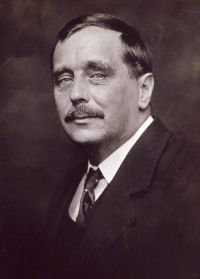
Senility, defined as a decline or impairment associated with old age, has been a recurring theme in literature and psychology, reflecting societal and individual engagements with aging. Authors like H.G. Wells contrasted physical deterioration with spiritual growth, while John Kendrick Bangs portrayed senility as an obstacle to believability, and Hans Gross approached it through simplified psychological classifications.
These differing viewpoints highlight how senility is both a biological condition and a metaphor for reduced autonomy, yet Woodrow Wilson’s reflection suggests that old age need not imply deterioration, offering instead a route to "serene maturity" beyond mere physical decline.
 John Kendrick Bangs,
The Water Ghost and Others
John Kendrick Bangs,
The Water Ghost and Others