Senescence

Definition and stakes

Portrait of G. Stanley Hall G. Stanley Hall,  Senescence, the Last Half of Life (1922)

“ So, too, we speak of middle age and think vaguely of it as half way between birth and death or between adolescence and senescence. If we think of life as a binomial curve rising from a base line at birth and sinking into it at death, midway is the highest point with the longest ordinate; and as the crest of a wave has its spindrift, so life at this point often foams, or at least shows emulsive tendencies. We come in sight of the descent while the ascent behind is still visible. ”
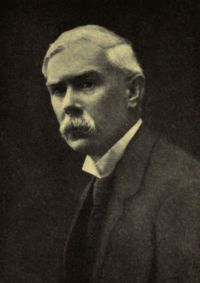
Source: Gutenberg

Portrait of G. Stanley Hall G. Stanley Hall,  Senescence, the Last Half of Life (1922)

“ Life is growth; the retardation of growth is old age; and its cessation is death. “Senescence is at its maximum in the very young stages, and the rate of senescence diminishes with age” (p. 250) . The embryo in its earliest stages rushes toward old age at an almost inconceivable velocity, the new-born infant runs, the child walks rapidly, youth saunters, the adult mopes, and old age only crawls on toward death. In other words, the momentum of life given by impregnation at the age of zero is retarded—most at first and with a diminishing rate at every stage. ”
Source: Gutenberg

Portrait of G. Stanley Hall G. Stanley Hall,  Senescence, the Last Half of Life (1922)

“ Very likely domestic animals expend less energy than their wild congeners but it is certainly difficult to correlate these results with Minot’s criteria of age as measured by the decrease of growth.
Child concludes that senescence is more continuous in man than in the lower forms. His long evolution has given a physiological stability to the protoplasmic substratum and a high degree of individuation results from this.
”
Source: Gutenberg

Get perspective with Kwize: daily news enlightened by great literature