Summary

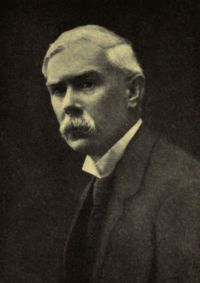
Portrait of John Arthur Thomson John Arthur Thomson The Outline of Science — Part II

Organic evolution means that the present is the child of the past and the parent of the future. It is not a power or a principle; it is a process--a process of becoming. It means that the present-day animals and plants and all the subtle inter-relations between them have arisen in a natural knowable way from a preceding state of affairs on the whole somewhat simpler, and that again from forms and inter-relations simpler still, and so on backwards and backwards for millions of years till we lose all clues in the thick mist that hangs over life's beginnings.
Source: Wikisource

Portrait of John Arthur Thomson John Arthur Thomson The Outline of Science — Part II

It is difficult not to admit the ring of truth in the closing words of Darwin's _Descent of Man_:
"We must, however, acknowledge, as it seems to me, that man, with all his noble qualities, with sympathy which feels for the most debased, with benevolence which extends not only to other men but to the humblest living creature, with his God-like intellect which has penetrated into the movements and constitution of the solar system--with all these exalted powers--man still bears in his bodily frame the indelible stamp of his lowly origin."
Source: Wikisource

Portrait of John Arthur Thomson John Arthur Thomson The Outline of Science — Part II

Our domesticated breeds of pigeons and poultry are the results of evolutionary change whose origins are still with us in the Rock Dove and the Jungle Fowl; but in most cases in Wild Nature the ancestral stocks of present-day forms are long since extinct, and in many cases they are unknown. Evolution is a long process of coming and going, appearing and disappearing, a long-drawn-out sublime process like a great piece of music.
Source: Wikisource

Get perspective with Kwize: daily news enlightened by great literature