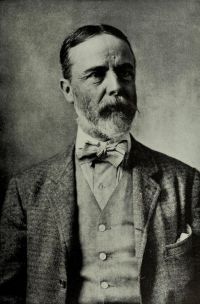
Frederic Jesup Stimson

Frederic Jesup Stimson

Summary

Portrait of Frederic Jesup Stimson Frederic Jesup Stimson Popular Law-making

It has always been the custom of our ancestors to regulate the prices of wages by law, and the notion that it was either unconstitutional or inexpedient dates from a very few years back; yet all such attempts at legislation have utterly disappeared from any modern statute-book. In no State of our forty-six States is any one so unintelligent, even in introducing bills in the legislature, as to-day to propose that the price of a ton of coal or a loaf of bread shall be so much. Nor is any modern legislature so unintelligent or so oppressive as to propose sumptuary laws
Source: Gutenberg

Portrait of Frederic Jesup Stimson Frederic Jesup Stimson Popular Law-making

Hitherto the principle that seems to have been accepted by organized labor, at least in America, is that of being organized for purposes of offence, not for defence; like a mob or rabble which can attack united, but retreats each for himself; which demands, but cannot give; which, like a naughty child or person non compos, is not responsible for its own actions. Still there is, as yet, no legislation aimed at or permitting a definite contract in ordinary industrial employment
Source: Gutenberg

Portrait of Frederic Jesup Stimson Frederic Jesup Stimson Popular Law-making

The modern question, therefore, has become really the question of the large corporation, its regulation and its control; further complicated, of course, by the fact that hitherto there has been no power to control such large corporations except the very State which creates them, which is usually quite indifferent to their acts so long as they pay the corporation tax. It is therefore a question not only of the large corporation, but of the powers of the States over each other's corporations and of the Federal government over all.
Source: Gutenberg

Get perspective with Kwize: daily news enlightened by great literature