AI-generated from sources
Who Chooses the Accusers, the Grand Jury and the Long Struggle over Its Panel
In Brief
- A grand jury's power to shield a citizen has depended less on the courage of its jurors than on who draws up the panel: when a London grand jury refused to indict Shaftesbury for treason, King Charles took control of the sheriffs who chose the jurors, and Shaftesbury fled.
- Governments unable to choose the accusers tried to bypass or reshape them: in colonial New York the printer Peter Zenger was prosecuted by information after a grand jury refused to indict him, and an 1882 federal law barred from Utah juries in polygamy and unlawful cohabitation prosecutions anyone who believed polygamy was right.
- Excluding a group from the jury box has often been defended as a protection against bias, so the line between guaranteeing impartiality and packing a jury has always been fought over.
- American courts came to treat a grand jury free of systematic racial exclusion as a constitutional right of the accused, yet, as Justice Douglas observed in one case, dismissing an indictment for error in selecting the grand jury would only lead to resubmission to a properly selected one.
Main authors

Shaftesbury did not wait for his trial. Charged with treason, he had already been saved once, because the grand jury would not bring in a bill against him [1]. King Charles did not try to win those jurors over. He took away the charter of London and appointed the Lord Mayor and the sheriffs himself [1]. Shaftesbury drew the conclusion at once. The king's sheriffs would “pack the jury against him,” and he fled the country [1]. Nothing in the episode, as a school history of England and Canada retold it in 1892, turns on new evidence or on a change of heart in the jury room. It turns on a change in the hands that wrote the list.
The grand jury is usually judged by its conscience: brave when it refuses an indictment, servile when it signs whatever the prosecutor brings. Henry Hallam, the historian of the English constitution, saw both failings, and would not pretend to determine whether Shaftesbury's jurors had sufficient grounds for their refusal [2]. Courage is the wrong place to look. Across three centuries of English and American texts, the independence of the accusing jury appears less as a quality of its members than as a consequence of how they were chosen. Kings, governors, Congress and court officials all understood this, and each fought over the panel rather than over the verdict. The courts that later tried to neutralize the choice discovered that no selecting hand is entirely innocent, and that policing the panel carries a price of its own.
Shaftesbury and the king's sheriffs
The grand jury's protection was local by design. The eleventh edition of the Encyclopaedia Britannica explains that it prevented the Crown, at the height of its power, from removing an unwanted subject from among his neighbors and trying him in a strange place where royal influence was stronger [3]. The shield, in other words, was made of neighbors. It held only as long as the neighbors in the jury box were not the Crown's own choice. The same article adds that once magistrates conducted preliminary inquiries, the grand jury's functions became of secondary importance [3]. A safeguard against monarchs looks idle when monarchs no longer press.
The real lever lay upstream of the jury room. Thomas Babington Macaulay describes the chain in three links: juries were nominated by sheriffs, and sheriffs, in most parts of England, were nominated by the Crown [4]. London was the exception. In the main theater of political conflict, the people chose the sheriffs [4]. That exception explains both the refusal of the grand jury and the reply of the king. A panel the Crown had not drawn up could say no to the Crown, so the remedy was not to argue with jurors but to seize the charter that let the city name its own officers [1, 4]. The Crown did not need to corrupt a single juror. It needed to own the man who wrote down their names.
Independence from the king, however, was not the same thing as impartiality. Hallam would not pretend to decide whether the grand jury of London had sufficient grounds for its incredulity toward the charge against Shaftesbury [2]. He saw two ways in which such a body betrays its oath. It can become “the mere conduit-pipes of accusation,” sending a prisoner to trial on evidence too slender to require a defense. Or, in political causes, it can reject indictments fully supported by testimony [2]. A panel chosen by the city's own sheriffs had escaped the first danger; whether it fell into the second, Hallam would not say. Hallam goes further elsewhere: the corruption of sheriffs and juries had made some controlling authority necessary, and in Wales especially no jury would return a verdict against a man of good family [5]. Local capture was still capture.
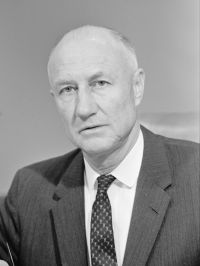
Rulers learned two ways of handling juries, and the second outlasted the first. A passage in Strom Thurmond's 1957 filibuster against the Civil Rights Act sets them side by side: the Tudor monarchs imprisoned jurors who refused to convict, while Napoleon had jurors “selected by his agents” [6]. Punishment comes after the verdict, in plain view. Selection comes before it and leaves no trace in the record. The same passage calls the jury, like universal suffrage, an instrument of the supremacy of the majority [6]. That it was invoked in a fight against a civil rights bill points to the obvious corollary. An instrument of the majority serves whichever majority fills it.
Zenger, John Adams and the jury no officer should pick
When a government cannot choose the accusers, it is tempted to do without them. In colonial New York, the printer Peter Zenger was arrested on the order of the Council and denied pens, ink and paper; the grand jury then refused to indict him [7]. Governor Cosby's attorney-general answered by filing an information against Zenger for seditious libel, a charge that went around the grand jury altogether [7]. The panel had said no, and the prosecution went on without it. The trial jury could not be removed, and it acquitted Zenger after thirty-five weeks of imprisonment, to the applause of a crowd gathered outside [8].
John Adams saw why a hand-picked jury defeats its own purpose. In the pamphlet exchange collected as Novanglus, and Massachusettensis, he argued that a standing difficulty of colonial government would not be cured by “a sheriff's jury,” if one should ever sit [9]. Should such a jury convict, the people would never bear the punishment, for government cannot be carried on against the settled inclination of the people [9]. The argument moves the question from outcomes to legitimacy. A panel chosen by an officer may well return the verdict the government wants. What it cannot return is a verdict the community accepts as its own.
If no officer can be trusted to choose, chance must. Lysander Spooner, in his Essay on the Trial by Jury, put the principle at its starkest: the government must stay so clearly within justice that “twelve men, taken at random,” will all agree it is right, or else it runs the risk of resistance it has no power to punish [10]. The agreement of twelve men taken at random, in his account, is what keeps the government from falling into the hands of a party or a faction [10]. Spooner was writing of the trial jury, and his conclusions went further than most jurists would follow. Yet his reasoning bears with even more force on the body that decides whether a citizen will be accused at all.
In calm times the grand jury can look like a formality, and that is precisely the trap. Simeon E. Baldwin, surveying the American judiciary, thought it less needed in the United States than in England, since criminal proceedings there were brought by a public officer rather than at a private individual's will [11]. He still credited it with real merits. A body of citizens is more apt to throw out a groundless charge than a single magistrate [12], and the institution keeps its plain uses wherever political feeling leads to public disorder [11]. Its value is therefore intermittent. It matters most when politics is inflamed, which is exactly when someone has the strongest motive to choose its members.
Utah's barred believers and the grand juries of the Edmunds law
In territorial Utah the panel was shaped not by a sheriff's whim but by statute, and the criterion was a belief. The law Congress passed in March 1882, known as the Edmunds Act, barred polygamists from voting and holding office and punished living with more than one wife [13]. According to B. H. Roberts, in his life of the Latter-day Saint John Taylor, it also declared incompetent as jurors, in any prosecution for polygamy or unlawful cohabitation, not only actual polygamists but those who believed in the rightfulness of the practice [14]. The ballot box and the jury box were closed in a single stroke. The passage Thurmond would read some seventy-five years later treats the two as instruments of equal power, born of the same popular sovereignty [6]; in Utah the same law withdrew both from actual polygamists, and the jury seat, in these prosecutions, from believers as well.
Those excluded described the result as a packed panel, and their testimony is partisan but precise. John Taylor complained that the whole weight of the law fell on those who believed in plural marriage, while the others, exempt from it, became the jurors who would indict, try and condemn what he called the far more honorable class [15]. Roberts contrasts his people's lot with that of a young couple whom no marshals hounded, and on whose account no “packed grand juries with unanimous alacrity” did the bidding of over-zealous prosecutors [16]. This is the language of a besieged community. Yet the grievance it names is not only the harshness of the law. It is the composition of the body that applied it.
The Supreme Court, for its part, treated the exclusion of believers as a safeguard of impartiality rather than a breach of it. In Miles v. United States, Justice William Burnham Woods wrote that a jury of men sharing the accused's belief could not have been free from bias at the trial of a man whose offense was living in polygamy [17]. The reasoning has real force: no one would expect co-religionists to condemn a practice they hold to be right. But it runs in one direction only. Bias was presumed in the believer, never in the unbeliever. The opinion also treated the triers' finding of bias as conclusive, whether or not the evidence sufficed [17], which left little room to contest who sat.
The same logic of political exclusion appears in another setting. Section 820 of the Revised Statutes disqualified as a juror anyone who had voluntarily taken part in the rebellion, and in United States v. Gale Justice Joseph P. Bradley declined to rule on its constitutionality [18]. The defendants had pleaded not guilty without objecting to the way the grand jury was selected, and had thereby waived the point [18]. Bradley added a revealing remark. No one claimed the jury actually impaneled was a bad one, only that other men equally good had a right to sit on it, and “These persons do not complain” [19]. The right to sit was treated as the excluded men's affair, the defendant's objection as a question of timing. A test of political loyalty could thus survive without ever being judged.
From Recorder Goff to Reece v. Georgia, the panel on trial
Manipulation did not need a statute; it could hide in the routine of the jury list. Arthur Train, writing on the administration of criminal justice, observed that jurors must be selected with at least an appearance of impartiality, since a grand jury open to political influence would make justice worse than a farce, and such a condition had not been unknown [20]. He recalls how Recorder Goff noticed, at a politically charged moment, that certain representative gentlemen who had served on the grand jury for years were no longer being drawn, and resolved to investigate in person [20]. Patronage could also run the other way. In 1890 William Jennings Bryan welcomed a new law making it a misdemeanor to ask for appointment as a juror, or for an attorney to seek a place for a friend [21]; between the partisan juror and the professional one, he wrote, lay only a choice between evils [22].
The sharpest form of selection was exclusion by race, and against it the courts built their strongest remedy. In Reece v. Georgia, Justice Tom C. Clark wrote that the Court had held for fifty years that valid grand jury selection is a constitutionally protected right [23]. An indictment returned by a grand jury from which members of the defendant's race had been systematically excluded denied him the equal protection of the laws [23]. William O. Douglas, citing an earlier holding, drew the consequence: where a timely objection lays bare discrimination in the selection of grand jurors, the conviction cannot stand, because the Constitution forbids the procedure that produced it [24]. The remedy is remarkable. The accused's guilt does not save the verdict; the way his accusers were chosen is enough to undo it. The word timely, though, echoes the waiver in Gale: the right protected only those who claimed it early [18, 24].
The demand for a fair sample reached beyond race to the very idea of a select jury. Speaking for a minority that included Justices Black, Douglas and Rutledge, Justice Murphy condemned so-called blue ribbon panels, which systematically excluded all but the best or most learned of the general jurors [25]. Such panels, he argued, were at war with the democratic theory of the jury, because an accused is entitled to “a fair sampling of all one's neighbors” who are qualified [25]. The formula echoes the institution's origin. The grand jury, the Britannica recalls, kept the Crown from removing a subject from among his neighbors and trying him in a strange place [3]. Murphy's minority asked of a democracy's selectors that they draw on all of one's qualified neighbors, not merely the best or the most learned.
The older fear of a government-made panel also returned in modern dress. Dissenting in Beck v. Washington, Douglas asked whether any court could sustain a conviction when the grand jury that brought the charge was composed of the accused's political enemies; to do so would sanction prosecution for private rather than public purposes [26]. In Cammer v. United States, the questions at issue were addressed to grand jurors who were government employees, to learn whether bias or fear might lead them to indict people charged with ties to the Communist Party [27]. Hugo Black stated the ideal behind both concerns: the grand jury is meant to be an independent body that even the judge may not interfere with or control [28]. The same question was being asked of new masters.
Policing the panel carries its own cost, and judges have said so. Robert H. Jackson, dissenting in Cassell v. Texas, complained that objections to the composition of juries were increasingly used for delay, and that the spectacle of a defendant “putting the grand jury on trial” before his own trial discredited the administration of justice [29]. Douglas pointed to a subtler limit in Ballard v. United States. Dismissing an indictment for error in selecting the grand jury would simply lead the government to resubmit the case to a properly selected one, setting the whole machinery of criminal justice in motion again [30]. Correcting the panel, in that case, would have acquitted no one. It would have rebuilt the accuser and started over.
The grand jury was meant to stand between a government and the citizen it wished to accuse, and its record shows that it did so only when the government did not hold the list. In England, sheriffs named the juries and the Crown named most sheriffs; when one grand jury refused a bill of treason, the king took over the sheriffs who had escaped him [1, 4]. In colonial New York, a governor whose grand jury would not indict a printer went around it [7]. In territorial Utah, a federal law barred from the panel, in prosecutions for polygamy or unlawful cohabitation, anyone who believed plural marriage was right [14]. American courts later voided indictments because the defendant's race had been systematically kept off the grand jury [23]. Yet no selector proved neutral. Grand juries could become mere conduit-pipes of accusation or, in political causes, reject well-founded charges; sheriffs and juries could be corrupt, local juries shelter the powerful, and exclusions were defended in the name of impartiality [2, 5, 17].
The answer urged by Spooner and by Murphy's minority has been to give the choice to chance and to the whole community: men taken at random, a fair sampling of all one's neighbors rather than the best or the most learned [10, 25]. That answer is costly. It invites delay, and, as Douglas foresaw in one case, dismissing a tainted indictment would only send the case to a properly selected grand jury [29, 30]. But it rests on the one lesson that every party to the struggle, from the Crown to Congress, understood. A grand jury does not become independent by being brave. It becomes independent when no one in particular has chosen it.