AI-generated from sources
The unseen accuser: The constitutional conflict between the right to confrontation and protecting vulnerable witnesses
In Brief
- The Confrontation Clause guarantees the accused the right to face their accuser, ensuring cross-examination and allowing the jury to assess witness credibility through demeanor.
- A profound legal conflict arises when states prioritize protecting vulnerable child victims from psychological trauma, potentially requiring exceptions to direct, in-court confrontation.
- The core jurisprudential debate centers on whether courts are permitted to apply an 'interest-balancing' analysis to explicit constitutional guarantees, or if those guarantees must remain absolute, as argued by textualists.
- Legal accommodations like screens or remote testimony attempt to preserve the functional elements of confrontation (oath and cross-examination) while mitigating harm, but critics argue they fundamentally alter the right itself.
Main authors

A cornerstone of the American legal system, guaranteed by the Constitution, is the right of an accused person to be confronted with the witnesses against them [1]. This principle is not merely a procedural formality but is considered a fundamental aspect of due process, designed to ensure fairness by allowing for cross-examination under oath and enabling the jury to assess a witness's credibility firsthand [2]. Historically, the ideal of justice has included the accuser and the accused meeting face-to-face before a tribunal, a practice seen as essential for uncovering the truth [3]. This right, seemingly absolute, is designed to apply universally to all defendants, irrespective of the nature of the charges they face [4].
However, this foundational right faces a profound challenge when the witness is particularly vulnerable, such as a child who has been the victim of abuse [5]. In these sensitive cases, the state has a compelling interest in protecting the physical and psychological well-being of the witness, an interest that may be at odds with the demands of a direct, in-court confrontation . This creates a scenario where deeply held societal values collide: the procedural rights of the defendant versus the imperative to prevent further trauma to a victim [6]. The dilemma forces courts to weigh the defendant's constitutional guarantees against what some consider a form of social injustice—placing the entire burden of a traumatic experience on the victim [7].
This tension crystallizes into a central question for modern jurisprudence: To what extent can the right to confrontation be modified to accommodate the needs of vulnerable witnesses without eroding a defendant's constitutional protections? The debate pits a strict interpretation of the law against a more pragmatic approach that seeks to balance competing interests [8]. The resolution has significant implications, testing whether explicit constitutional guarantees can be adapted to mitigate human suffering or if they must remain unyielding pillars of the judicial process, even in the most difficult of circumstances [9].
The Pillars of Confrontation: Oath, Cross-Examination, and Demeanor
The right to confrontation is rooted in a long-standing belief that the most reliable way to test the veracity of an accusation is to have it presented openly, with the accuser present. This allows the defendant to challenge the testimony directly and in person . This principle is embedded within the broader framework of constitutional protections that constitute due process of law [10]. The presence of the accuser is not merely symbolic; it serves specific, functional purposes that are considered essential to a fair trial. Legal scholars and courts have identified three primary functions that physical confrontation serves in the pursuit of truth.
First, it ensures that the witness gives their statement under oath, which impresses upon them the seriousness of the proceedings and introduces the potential penalty of perjury for false testimony . Second, and most critically, it forces the witness to submit to cross-examination, a tool described as the 'greatest legal engine ever invented for the discovery of truth' . This adversarial process allows the defendant to probe for inconsistencies, expose biases, and challenge the basis of the accusations. Third, confrontation permits the jury to observe the demeanor of the witness as they testify, providing invaluable, if subtle, clues about their credibility . The combination of these three elements is what gives courtroom testimony its unique standing as evidence.
The importance of this right is such that any deviation from it is viewed with extreme caution. Courts have held that depriving an individual of the ability to confront their accusers, especially when it affects their liberty or ability to practice a chosen profession, can only be justified if explicitly authorized by Congress or the President . The protections are not meant to be selective; they are afforded to any accused person as a fundamental safeguard against the power of the state . This standard is echoed in international legal principles, which also affirm an accused person's right to full access to evidence and the ability to examine witnesses testifying against them [11].
The State's Interest: Shielding Witnesses from Trauma
Opposing the absolute application of confrontation rights is the state's significant and widely recognized interest in protecting vulnerable individuals from harm . This is particularly acute in cases involving child abuse, where the act of testifying in the presence of the alleged abuser can inflict severe and lasting psychological trauma. In recognition of this, a majority of states have enacted specific statutes designed to shield child witnesses from the distress of direct testimony, signaling a broad consensus on this public policy priority .
The argument for such protections extends beyond mere compassion; it touches on a broader concept of justice that considers the well-being of all parties involved in a legal proceeding. From this perspective, a legal system that forces a victim to endure further emotional hardship to secure a conviction may be perpetuating a 'form of social injustice' . Proponents of witness protection measures contend that the government has a responsibility to enact legislation that provides 'fuller protection to those who may be called as witnesses,' ensuring that the judicial process itself does not become an instrument of harm [12].
This protective impulse gives rise to a direct 'confrontation with other values' within the judicial system . On one side stands the defendant, armed with a constitutional right to a specific form of trial procedure. On the other stands the state, acting as a protector of its most vulnerable citizens. The judiciary is thus placed in the difficult position of mediating this conflict, tasked with safeguarding constitutional provisions while also responding to the compelling human need to prevent further suffering [13]. The resulting legal innovations, such as allowing testimony via closed-circuit television, represent an attempt to navigate this complex ethical and constitutional landscape.
Weighing Justice: The Controversy over a Flexible Constitution
The core of the legal debate revolves around whether it is permissible for courts to engage in an 'interest-balancing' analysis when an explicit constitutional guarantee is at stake . The approach that allows for modified testimony, such as remote video feeds, is predicated on the idea that the state's interest in a child witness's well-being can be sufficiently important to justify an exception to the defendant's right to face-to-face confrontation . This pragmatic view seeks to preserve the essential elements of testimony—such as the oath and cross-examination—while removing the single element deemed most harmful: direct physical presence.
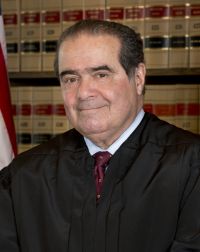
However, this balancing act has drawn sharp criticism from jurists who argue that the text of the Constitution does not permit such flexibility. Justice Antonin Scalia famously argued that courts are not free to conduct a 'cost-benefit analysis of clear and explicit constitutional guarantees' and then alter their meaning to fit contemporary policy goals . According to this view, the right to confrontation means precisely that: confrontation. To deny it on the grounds that it would cause a witness distress is seen as logically equivalent to denying a defendant the right to effective counsel or exculpatory witnesses because those rights might lead to an acquittal [14].
This critique posits that while procedures designed to protect vulnerable witnesses may be well-intentioned and provide nearly all the components of the Confrontation Clause, they necessarily omit the indispensable element of direct, face-to-face interaction . The danger, as some see it, is that these accommodations fundamentally alter the nature of the right itself. This raises concerns that the administration of justice could devolve into a mere 'game of wits' where foundational rules are adjusted based on the perceived equities of a particular case, potentially weakening the robust protections designed for all accused persons [15]. The debate thus centers on whether such adaptations are a reasonable evolution of legal practice or a perilous erosion of a fundamental civil liberty.
The inherent conflict between the constitutional right of confrontation and the imperative to protect vulnerable witnesses presents one of the most significant challenges in modern criminal law . This clash forces a direct reckoning between a foundational principle of the American justice system—ensuring a fair trial through direct adversarial testing of evidence—and a compelling public policy goal of mitigating psychological harm . The result is a legal and ethical quandary that admits no easy answers, pushing the judiciary to define the boundaries of constitutional rights in the face of profound human suffering.
Ultimately, the path forward reflects a larger societal choice about the nature of its Constitution. One perspective holds that the document's clear commands must be upheld, warning that a jurisprudence of 'interest-balancing' can lead to the erosion of essential liberties meant to protect every citizen from the power of the state . Another view contends that the law must be responsive to human realities, capable of adapting its procedures to shield the innocent from further trauma . The ongoing debate over the unseen accuser is therefore more than a procedural dispute; it is a profound reflection on the balance between rigid principle and compassionate pragmatism in the administration of justice.