AI-generated from sources
The Unquiet Peace, Inside the Survivor's Mind
In Brief
- The cessation of physical conflict initiates a profound internal war for survivors, marked by altered psychological states and emotional detachment.
- War trauma induces a natural, yet often ultimately futile, impulse for psychological repression, leading to persistent neuroses and intrusive memories.
- Survivors frequently grapple with immense guilt over their own survival and moral injury from wartime actions, a burden often misunderstood by society.
- Despite profound suffering, a primal will to live and complex forms of resilience emerge, alongside increased vulnerability to mental health crises, including suicide.
Main authors
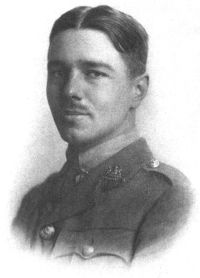

The cessation of hostilities on the battlefield often marks the beginning of a new, more intimate war within the minds of those who survive. This internal conflict is not fought with weapons but with memories, a struggle against specters of the past that can transform one's inner world into a place of torment and a ghastly chamber of horrors [7, 8]. For the combatant, and especially for the captive, the experience of war fundamentally reshapes their entire basis of thought, breaking something essential within them and leaving them to navigate a life where the old emotional certainties no longer apply [10]. The survivor's journey is therefore not a linear path from trauma to recovery but a complex negotiation with a self that has been irrevocably altered by what it has seen, done, and endured.
This profound internal struggle challenges simplistic public narratives of heroism and victimhood. Beyond the haunting nature of traumatic memory, survivors grapple with the immense psychological weight of their own survival, a burden often compounded by intense guilt and moral confusion [11]. Yet, confronting this despair is a powerful and inherent will to live, a drive that manifests in diverse and sometimes paradoxical acts of resilience [16, 17]. The survivor is often caught between a deep-seated need to repress the unimaginable and a solemn duty to bear witness, a responsibility to the fallen and to the future [3, 26]. Their experience thus becomes a crucial, if painful, testament to the complexities of human psychology under duress, demanding a more nuanced understanding of what it means to come home from war.
The Haunted Mind, Memory and Repression
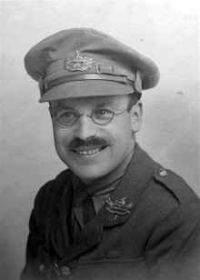
Faced with the profound horror of war, the human mind possesses a natural and powerful impulse to protect itself through repression . Wounded soldiers often try to shake off their experiences as one would a fevered nightmare, actively turning their thoughts away from the privations and suffering they have endured [2]. Writing in the early 20th century, W.H.R. Rivers observed that this tendency to banish distressing memories is especially pronounced in those whose psychological defenses have been worn down by the sustained strain of combat . This is not a passive forgetting but an active, if often unconscious, effort to build a barrier against the overwhelming pain of the past.
On the front lines, this psychological self-preservation can manifest as a form of normalization. Constant exposure to violence, destruction, and death can cause the initial shock to recede, allowing these events to become casual, part of the day's work [1]. This acclimatization, supported by the stoic attitude of veteran soldiers, helps newcomers endure an otherwise unbearable reality . The horror becomes familiar, its sharpest edges dulled by routine. This coping mechanism, while essential for survival in the moment, lays the groundwork for future psychological conflict by treating the abhorrent as ordinary.
Ultimately, repression often fails to contain the trauma. For many survivors, especially those held in captivity, memory becomes both a source of deep longing and an instrument of perpetual torment [6]. The mind can become a tortured landscape, replaying scenes of carnage and death, where the dead seem to ravish the minds of the living . These intrusive memories can turn sleep into a dreaded event, transforming dreams into such frightful nightmares that survivors may fear closing their eyes [9]. The effort to forget proves futile when the mind's own negative has recorded the terrible scenes too vividly to be effaced.
The long-term consequences of this internal battle are significant and lasting. As Rivers noted, the process of repression can continue long after a soldier has been removed from the battlefield, actively maintaining a state of neurosis and even creating new symptoms [5]. Decades after a conflict, veterans may continue to suffer in silence, hiding their pain because they feel the war is too distant for their suffering to claim sympathy [4]. This ongoing struggle results in a profound and permanent alteration of the self, a sense that something fundamental has broken, leaving survivors detached from the people they were before the war .
The Weight of Survival, Guilt and Moral Injury
For many survivors, the act of living itself becomes a source of profound self-condemnation, a phenomenon often termed survivor's guilt. The simple fact of having outlasted fallen comrades can create an internal logic of profound inequity. This sentiment was articulated with poetic force by Oscar Wilde, who observed prisoners who felt they should have died in another's place, as if their own survival was a transgression that compounded the original tragedy . This internal torment shifts the focus from the trauma inflicted by the enemy to a moral injury inflicted upon the self.
The extreme environments of war and captivity can force individuals into situations that defy conventional morality, leaving deep psychological scars. In the face of overwhelming atrocity, the desire to maintain a pure heart and act with clarity can be lost amidst the sheer scale of the carnage and moral decay [14]. Historical accounts from other brutal contexts, such as 19th-century penal colonies, illustrate how the desperate struggle for survival can lead to horrific acts that extinguish the last vestiges of self-respect and human feeling [12]. A person who has passed through such an ordeal may feel they no longer have a right to be calm, their nervous system permanently rewired for a state of hyper-vigilance and unease [15].
This internal reality of shame and self-blame stands in stark contrast to the external perceptions of heroism or victimhood often placed upon survivors. An interesting, if contentious, perspective was offered by the early psychoanalyst Karl Abraham, who observed that prisoners of war seemed to display fewer signs of traumatic neurosis than other soldiers [13]. He controversially suggested this was because, as captives, they lacked the social incentives of sympathy and financial compensation available to soldiers at home . While a product of its time, this analysis underscores the complex interplay between an individual's internal psychological state and the social context of their recovery, suggesting that the expression of trauma is not merely a biological response but is also shaped by its audience.
The Paradox of Resilience
Coexisting with the immense weight of trauma is a primal and powerful will to live. Amidst the ghastliness of war, the simple desire 'To live!' can emerge as a tremendous, almost sacred cry from the soul . This instinct is often stronger than any事先 stated resolve. Soldiers who had previously boasted they would choose death over capture were observed to surrender when the moment arrived, because life, even in the most dreadful circumstances, is sweet, and the chance of escape always remains a possibility . This fundamental drive for self-preservation forms the bedrock of human resilience in the face of annihilation.
Resilience, however, manifests in complex and sometimes paradoxical ways that go beyond mere survival. Some accounts suggest that enduring extreme suffering can lead to a form of spiritual or psychological victory. The martyr under torture, for instance, could experience a 'triumphant delight' not from the pain itself, but from the confirmation of their soul's strength against an oppressor's attempts to break it [18]. A similar form of defiance is seen in the tradition of the warrior who, while being subjected to incredible torture, continues to chant their death song, viewing an unflinching death as the noblest triumph and a final act of agency [23].
Yet, the line between resilience and despair is perilously thin, and the will to live is not always triumphant. The same combat stress and traumatic memories that forge endurance in some can lead directly to severe mental health crises—including PTSD and depression—in others [19, 20, 21]. This vulnerability is reflected in the higher rates of suicide among veterans . In such cases, suicide may not represent a failure of will but a desperate search for peace from the vehement storms raging within the soul [22]. It can become the final escape from a personal hell that is no longer bearable, a tragic act of agency that profoundly challenges simplistic notions of healing and strength .
Bearing Witness, The Survivor's Final Duty
For many who endure captivity or witness mass atrocity, survival becomes intertwined with a profound and solemn duty: the imperative to bear witness. Among those in the most horrific conditions, such as Nazi concentration camps, a singular, unifying wish often emerged—that at least one person would escape alive to tell the world the truth of what had happened . This desire is not merely for personal vindication but is born from a conviction that anyone who has seen such things has a sacred duty to dedicate themselves to preventing a recurrence [25]. The act of testifying becomes a final service to the fallen and a warning to future generations.
This imperative, however, is fraught with immense difficulty. The very act of speaking about the unspeakable can be alienating. Many veterans are deeply reluctant to recount their experiences, finding the sympathy of others to be shallow or even sickening [24]. There is a recognition that mere words can never fully convey the reality of war stripped of its glamour—a visceral truth that perhaps only fellow prisoners can fully comprehend [29]. A gap of understanding separates the witness from the listener, making the duty to speak a lonely and often frustrating burden.
Furthermore, the survivor's testimony exists in a precarious tension with societal reception. While modern society makes official gestures to honor the memories of victims and the resilience of survivors [27], there is a persistent danger that their stories will be misinterpreted, sanitized, or exploited. A sharp critique emerges against those who would loot 'false inspiration from the grave,' using the suffering of the dead to score rhetorical points or gain applause [28]. The survivor's final battle, therefore, is for the integrity of their memory—to ensure their experience is honored authentically, not used as a tool by 'chattering daws' who cannot possibly guess the uttermost of what was given .
The internal world of the war survivor is not a story with a clear resolution but an enduring landscape of conflict. It is a psyche defined by the ceaseless haunting of memory , the corrosive weight of guilt for having lived , and the perpetual struggle between the natural impulse to forget and the solemn duty to remember . This journey reveals that healing is not a return to a former state but a difficult, lifelong process of integrating a fundamentally altered and often fragmented identity . The survivor does not simply recover from the past; they carry it with them, navigating a world that can no longer be seen through the same eyes.
Ultimately, the testimonies of those who have endured war's extremities serve as more than just historical records. They are vital human documents that chart the limits of psychological endurance and challenge our most basic assumptions about trauma, morality, and resilience. In a world that continues to be shaped by conflict, listening to these complex narratives is a moral imperative. It requires us to move beyond simplistic labels of hero or victim and instead engage with the difficult, contradictory truths they embody, ensuring that their sacrifice is met not with hollow praise, but with the profound and difficult work of genuine understanding .