Summary

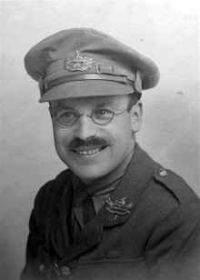
Portrait of F. W. Harvey F. W. Harvey Gloucestershire Friends: Poems From a German Prison Camp (1917)

And the maximum of danger means the minimum of pay.
You put some men inside a trench, and call them infantrie,
And make them face ten kinds of hell, and face it cheerfully;
And live in holes like rats, with other rats, and lice, and toads,
And in their leisure time, assist the R.E.’s with their loads.
Then, when they’ve done it all, you give ’em each a bob a day!
For the maximum of danger means the minimum of pay.
Source: Gutenberg

Portrait of F. W. Harvey F. W. Harvey Gloucestershire Friends: Poems From a German Prison Camp (1917)

Those who know and love “A Gloucestershire Lad” would resent any lengthy attempt to praise the quality of Lieutenant Harvey’s verses. Some of the poems from a German prison camp may reach a far higher standard of lyric excellence than any in the earlier volume. The two ballades on war and “The Bugler” grip one by the throat. But all the verses have a sweetness and beauty entirely their own.
The poems are all short—too short. Lieutenant Harvey sings like the wild birds of his own dear Gloucestershire because he cannot help doing so. He stops short—as they do—and like them begins again.
Source: Gutenberg

Portrait of F. W. Harvey F. W. Harvey Gloucestershire Friends: Poems From a German Prison Camp (1917)

But it will be strange if such readers do not find better things than they expected. Transpose any other county of this land for Gloucestershire, or any other home for the tree-encircled house at Minsterworth, then they will learn what the best of England’s captive sons are thinking, and so take heart of grace from the true love-songs of a Gloucestershire soldier, written first and foremost for his mother.
Source: Gutenberg

Get perspective with Kwize: daily news enlightened by great literature