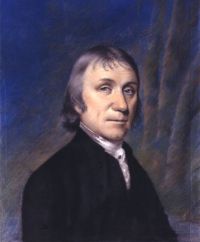
Children of the Dear Cotswolds
“ Nowhere has the spirit of place been more insistent and persistent. Surely no county has more melodious names than Gloucestershire. They chime in the ears of those that love them like a peal of old mellow bells. ”
Gloucestershire, a historic county of England, has long fascinated writers with its landscapes and heritage. Authors such as F. W. Harvey celebrated its "melodious names" and enduring spirit, while J. Arthur Gibbs captured its rural charm and transformations in agricultural life.
Shakespeare referenced the region in King Richard II, and others, like the anonymous contributor to Lippincott's Magazine, emphasized its seasonal beauty. These varied portrayals highlight Gloucestershire’s dual role as a timeless emblem of English rural life and a constantly evolving setting shaped by historical and environmental change.
Children of the Dear Cotswolds
“ Nowhere has the spirit of place been more insistent and persistent. Surely no county has more melodious names than Gloucestershire. They chime in the ears of those that love them like a peal of old mellow bells. ”
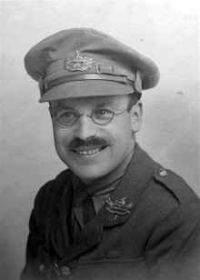 F. W. Harvey,
Gloucestershire Friends: Poems From a German Prison Camp
(1917)
F. W. Harvey,
Gloucestershire Friends: Poems From a German Prison Camp
(1917)
“ But it will be strange if such readers do not find better things than they expected. Transpose any other county of this land for Gloucestershire, or any other home for the tree-encircled house at Minsterworth, then they will learn what the best of England’s captive sons are thinking, and so take heart of grace from the true love-songs of a Gloucestershire soldier, written first and foremost for his mother. ”
Various, Lippincott's Magazine of Popular Literature and Science…
“ The part of the county that joins Gloucestershire is rich in apple-orchards, which I remember one year in the blossoming-time, while the early grass, already green and wavy, fringed the foot of the trees, and by the road as we passed we looked through hedges and over low walls into gardens full of crocuses, snowdrops, narcissuses, early pansies and daffodils, for spring gardens have become rather a mania in England within ten or twelve years. ”
 William Shakespeare,
King Richard II
William Shakespeare,
King Richard II
“ BUSHY. That's as York thrives to beat back Bolingbroke. GREEN. Alas, poor Duke! the task he undertakes Is numb'ring sands and drinking oceans dry. Where one on his side fights, thousands will fly. Farewell at once-for once, for all, and ever. BUSHY. Well, we may meet again. BAGOT. I fear me, never. ExeuntSCENE 3 Gloucestershire [Enter BOLINGBROKE and NORTHUMBERLAND, forces] BOLINGBROKE. How far is it, my lord, to Berkeley now? NORTHUMBERLAND. Believe me, noble lord, I am a stranger here in Gloucestershire. ”
J. Arthur Gibbs, A Cotswold Village; Or, Country Life and Pursuits in Gloucestershire
“ It swells out into fishable proportions just above Lord Eldon's Stowell property, steals gently past his beautiful woods at Chedworth and the Roman villa discovered a few years ago, then onward through the quaint old-world villages of Fossbridge to Winson and Coln-St-Dennis. Though not a hundred miles from London, this part of Gloucestershire is one of the most primitive and old-fashioned districts in England. ”
J. Arthur Gibbs, A Cotswold Village; Or, Country Life and Pursuits in Gloucestershire
“ So careless are some of these Gloucestershire folk that sooner than do as I had ordered and put the mowing-machine in the barn hard by, they must leave it in the open air and under this ill-fated tree. Down came my last beloved elm, smashing the mowing-machine and putting an end to all thoughts of cricket here this summer. It will be ages before the village carpenter will come with his timber cart and draw the tree away. A Gloucestershire man cannot do a job like this in under two years; they are always so busy, you see, in Gloucestershire--never a moment to spare to get anything done! ”
J. T. Barber, A Tour throughout South Wales and Monmouthshire
“ Eastward, over Gloucestershire and the neighbouring counties, such a variety of hills and valleys, verdant lawns and waving woods, embowered hamlets and handsome villas appeared, that the eye was at a loss where to rest for pre-eminent beauty. ”
Mrs. A. T. Thomson, The Wits and Beaux of Society. Volume 2
“ Anybody who has passed a day in the dull city of Gloucester, which seems to break into anything like life only at an election, lying dormant in the intervals, has been glad to rush out to enjoy air and a fine view on Robin Hood's Hill, a favourite walk with the worthy citizens, though what the jovial archer of merry Sherwood had to do with it, or whether he was ever in Gloucestershire at all, I profess I know not. ”
J. Arthur Gibbs, A Cotswold Village; Or, Country Life and Pursuits in Gloucestershire
“ Now that farming is no longer remunerative, the whole country seems to be given up to hunting. Depend upon it, it is this sport alone that circulates money through this deserted land.Time was when the uplands of Gloucestershire were almost entirely under the plough, when good scenting days seldom gladdened the heart of the hunting man, and when, in a ride over the Cotswold tableland, the excitement of a fast gallop on grass was an impossibility. Those were the days when land at thirty shillings an acre was eagerly sought after and the wheat crop amply repaid those who cultivated it. ”
Mary Roberts, Ruins and Old Trees, Associated with Memorable Events in English History
“ The forest, one of their great bulwarks, had been curtailed during successive generations, and much of the moor country having been brought into cultivation, towns and villages were built, and roads were made from place to place. This opened a communication with the thickly peopled parts of Gloucestershire, with such counties also as lay contiguous: the quiet of the valleys was therefore broken up, and the cities of Gloucester and of Worcester, having taken active parts in the stirring incidents of the time, bands of armed men overspread the country. ”
J. Arthur Gibbs, A Cotswold Village; Or, Country Life and Pursuits in Gloucestershire
“ Altogether the town of Cirencester is a very fascinating old place. The lot of its inhabitants is indeed cast in pleasant places. The grand bracing air of the Cotswold Hills is a tonic which drives dull care away from these Gloucestershire people; and when it is remembered that they enjoy the freedom of Lord Bathurst's beautiful park, that the neighbourhood is, in spite of agricultural depression, well off in this world's goods, it is not surprising that the pallid cheeks and drooping figures to be met with in most of our towns are conspicuous by their absence here. ”
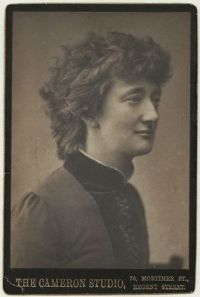 Alice Stopford Green,
Henry the Second
Alice Stopford Green,
Henry the Second
“ There is a record of over five hundred pleas of the Gloucestershire fifty years later, and among all these there is outside the town of Gloucester but one case which deals with the lawful width for weaving cloth, and one or two as to the sale of bread, ale, or wine. The agricultural peasants seem, from the glimpses which we catch here and there, to have for the most part lived on the very verge of starvation. ”
1911 Encyclopædia Britannica (1911)
“ The physical characteristics of the three natural divisions of Gloucestershire have given rise in each to a special industry, as already indicated. The forest district, until the development of the Sussex mines in the 16th century, was the chief iron-producing area of the kingdom, the mines having been worked in Roman times, while the abundance of timber gave rise to numerous tanneries and to an important ship-building trade. ”
J. Arthur Gibbs, A Cotswold Village; Or, Country Life and Pursuits in Gloucestershire
“ A narrow lane or path between two walls is a "tuer" in Gloucestershire vernacular. Another local word I have not heard elsewhere is "eckle," meaning a green woodpecker or yaffel. The original spelling of the word was "hic-wall." In these days of education the real old-fashioned dialect is seldom heard; among the older peasants a few are to be found who speak it, but in twenty years' time it will be a thing of the past.The incessant use of "do" and "did," and the changing of o's into a's are two great characteristics of the Gloucestershire talk. ”
J. C. Snaith, Willow the king (1899)
“ This sinister reference afflicted me with an [185] overpowering disinclination to pursue the subject farther.Before Gloucestershire began their innings there was an interval for tea. There is no doubt that this question of afternoon tea has become quite a vexed one with the counties, and as Elphinstone—or was it Carteret?—observed, there are counties in existence who resolutely refuse to countenance the innovation. But Gloucestershire was never one of these. ”
P. Austin Nuttall, The Nuttall Encyclopædia
“ Gloucestershire (600) , a west midland county of England, which touches Warwick in the centre of the country, and extends SW. to the estuary of the Severn; it presents three natural and well-defined districts known as the Hill, formed by the Cotswold Hills in the E.; the Vale, through which the Severn runs, in the centre; the Forest of Dean (the largest in England) in the W.; coal is wrought in two large fields, but agricultural and dairy-farming are the main industries; antiquities abound; the principal rivers are the Wye, Severn, Lower and Upper Avon, and Thames; Bristol (q. v.) ”
J. Arthur Gibbs, A Cotswold Village; Or, Country Life and Pursuits in Gloucestershire
“ In Gloucestershire many an honest yeoman goes out twice a week and endeavours to drown for a while all thoughts of hard times and low prices, content for the day if the fates have left him a sound horse and the consolation of a gallop over the grass. Let it here be said that there are no grooms in the world who better understand conditioning hunters than those of Leicestershire. Nowhere can you see horses better bred or fitter to go; and he who rides a-hunting on fat horses must himself be fat. ”
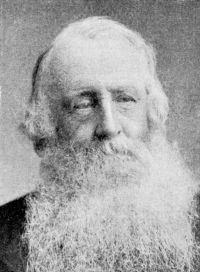 Edward A. Freeman,
The Reign of William Rufus and the Accession of Henry the First…
(1882)
Edward A. Freeman,
The Reign of William Rufus and the Accession of Henry the First…
(1882)
“ His estates in Somerset are very large. See Domesday, 87 a et seqq. In Gloucestershire (165) he appears as “Episcopus de Sancto Laudo”—the older seat of the bishopric of Coutances. [99] Domesday, 163. Under “Bertune apud Bristou,” now Barton Regis, we read, “Hoc manerium et Bristou reddit regi c. et x. markas argenti. Burgenses dicunt quod episcopus G. habet xxxiii. markas argenti et unam markam auri propter firmam regis.” This looks like the Earl’s third penny; but Geoffrey certainly had no formal earldom in Gloucestershire. ”
 Frederic William Maitland,
Domesday Book and Beyond: Three Essays in the Early History of England
Frederic William Maitland,
Domesday Book and Beyond: Three Essays in the Early History of England
“ The sheriff of Gloucestershire, for example, accounts for a round sum which is the farm of his county; neither he nor any one else accounts to the king for any farm of the borough of Gloucester. If, as is most probable, the borough is being farmed, it is being farmed by some person or persons to whom, not the king, but the sheriff has let it for a longer or shorter period at a fixed rent. Here, again, we see the likeness between a borough and a hundred. The king lets the shire to farm; the shire includes hundreds and boroughs; the sheriff ‘lets the hundreds to farm ”
Ancient Poems, Ballads, and Songs of the Peasantry of England
“ This ancient Gloucestershire song has been sung at the annual dinners of the Gloucestershire Society, from the earliest period of the existence of that institution; and in 1776 there was an Harmonic Society at Cirencester, which always opened its meetings with George Ridler’s Oven in full chorus. ”
J. Arthur Gibbs, A Cotswold Village; Or, Country Life and Pursuits in Gloucestershire
“ A word now about the farmers of Gloucestershire.It is often asked, How do the Cotswold farmers live in these bad times? I suppose the only reply one can give is the old saw turned upside down: They live as the fishes do in the sea; the great ones eat up the little ones. ”
“ The Gloucestershire people have no notion of dying with hunger; and it is with great pleasure that I remark that I have seen no woe-worn creature this day. The sub-soil here is a yellowish ugly stone. The houses are all built with this; and, it being ugly, the stone is made white by a wash of some sort or other. The land on both sides of the valley, and all down the bottom of it, has plenty of trees on it; it is chiefly pasture land, so that the green and the white colours, and the form and great variety of the ground, and the water and altogether make this a very pretty ride. ”
 Leslie Stephen,
Dictionary of National Biography…
(1897)
Leslie Stephen,
Dictionary of National Biography…
(1897)
“ RUDDER, SAMUEL (d. 1801) , topographer, was born at Cirencester, Gloucestershire, where he carried on business as a printer. For many years he collected materials for a new history to supersede ‘The Ancient and Present State of Gloucestershire’ (1712) of Sir R. Atkyns. ”
1911 Encyclopædia Britannica (1911)
“ In the north-east are Stow-on-the-Wold, standing high, and Moreton-in-the-Marsh near the headwaters of the Evenlode. In a northern prolongation of the county, almost detached, is Chipping Campden. Winchcomb (2699) lies 6 m. N.E. of Cheltenham. In the north-west, Newent (2485) is the only considerable town. Gloucestershire is in the Oxford circuit, and assizes are held at Gloucester. It has one court of quarter sessions, and is divided into 24 petty sessional divisions. The boroughs of Bristol, Gloucester and Tewkesbury have separate commissions of the peace and courts of quarter sessions. ”
The Statutes of Wales (1908)
“ And that the Lordships Towns and Parishes of Wollastone, Tidnam, and Bechley, in the said Marches of Wales, and all Honours Lordships Castles Manors Lands Tenements and Hereditaments, lying or being between Chepstow Bridge in the said Marches of Wales and Gloucestershire, in whose Possession soever they be or shall be, and every Part thereof, shall stand and be guildable from and after the said Feast of All-Saints, and shall be united annexed and joined to and with the said County or Shire of Gloucester, as a Member Part or Parcel of the same. ”
Mrs. A. T. Thomson, The Wits and Beaux of Society. Volume 2
“ The Selwyns were a powerful family in Gloucestershire, owning a great deal of property in the neighbourhood of Gloucester itself. The old colonel had represented that city in Parliament for many years. On the 5th of November, 1751, he died. His eldest son had gone a few months before him. This son had been also at Eton, and was an early friend of Horace Walpole and General Conway. His death left George sole heir to the property, and very much he seemed to have needed the heritage. ”
Frederic William Maitland,
Domesday Book and Beyond: Three Essays in the Early History of England
“ If London is in Middlesex [702] , it is Middlesex’s one borough. In Hertfordshire is Hertford. In Buckinghamshire is Buckingham, but no aid can be expected from it. In Oxfordshire is Oxford. In Gloucestershire is Gloucester, but Winchcombe also asserts its burghal rank. In Worcestershire is Worcester, while Droitwich appears occasionally with a small gift. Hereford is the one borough of Herefordshire. Turning to the third zone, we pass rapidly through Cambridgeshire, Huntingdonshire, Bedfordshire and Northamptonshire; each has its borough. ”
Gilbert Slater, The English Peasantry and the Enclosure of Common Fields
“ Having thus entered Gloucestershire, he came through Worcester and Lichfield, and so re-entered Warwickshire from the north, and found—“Colishull to Meriden 4 m. by enclosed ground having some corne, wood and pasture. 3 miles by like ground to Coventry” (190 a) . To Southam was “4 m. good corne and pasture in Champion,” thence to Banbury in Oxfordshire “10 m. by champaine, noe wood but exceedinge good Pasture and corne.” ”
“ From Malmsbury I first came, at the end of five miles, to Tutbury, which is in Gloucestershire, there being here a sort of dell, or ravine, which, in this place, is the boundary line of the two counties, and over which you go on a bridge, one-half of which belongs to each county. And now, before I take my leave of Wiltshire, I must observe that, in the whole course of my life (days of courtship excepted, of course) , I never passed seventeen pleasanter days than those which I have just spent in Wiltshire. ”
1911 Encyclopædia Britannica (1911)
“ During the 18th century the commercial importance of the town increased, though, owing to its distance from any of the great highroads and to the localization of the clothing trade in scattered factories near water power, it was never a great centre of population. By the Reform Act of 1832 Stroud became a borough and returned two members to parliament until 1885, when it was merged in the Stroud division of Gloucestershire. ”
“ No man appears to fat an ox, or hardly a sheep, except with a view of sending it to London, or to some other infernal resort of monopolizers and tax-eaters. Here, as in Wiltshire and Gloucestershire and Herefordshire, you find plenty of large churches without scarcely any people. ”
William Hunt, Dictionary of National Biography… (1886)
“ BUTTON, or BITTON, WILLIAM I (d. 1264) , bishop of Bath and Wells, came of a family that took its name from Bitton in Gloucestershire, where a chantry chapel of great beauty is still to be seen, built on the north side of the parish church by Thomas Button, bishop of Exeter, nephew of this William, and consecrated 1299 (Somerset Archæol. Society's Proc. xxii. 67) . William was rector of Sowy, sub-dean, and afterwards archdeacon of Wells. ”
Leslie Stephen,
Dictionary of National Biography…
(1895)
“ He was one of the assistant commissioners for Gloucestershire to the ‘expurgators’ (appointed by ordinance of 28 Aug. 1654) . Wood says he was ‘anabaptistically inclin'd,’ which means that, in accordance with the terms of his commission, baptists (who abounded in Gloucestershire) were not as such excluded from the ministry. At the Restoration he was driven from his rectory by royalists, and his goods were plundered. He put in a curate to do duty for him, ‘but he being disturbed, they got one to read the common prayer’ (Wood) . ”