AI-generated from sources
The papacy: The eternal tension between divine mandate and worldly power
In Brief
- The Papacy bases its authority on a doctrine of spiritual supremacy, positioning itself as the 'unfailing mistress of truth' and morally superior to all temporal states.
- This assertion leads to an inevitable and persistent conflict with secular governments, which view papal actions as illegitimate foreign interference and a bid for political control.
- The Church’s deep involvement in temporal affairs—managing vast estates and using political cunning—has historically undermined its spiritual credibility and invited widespread criticism for avarice and luxury.
- The struggle is ultimately philosophical, representing a clash between the ideal of an eternal, divinely ordered cosmos and the messy, immediate realities of human ambition, skepticism, and self-interest.
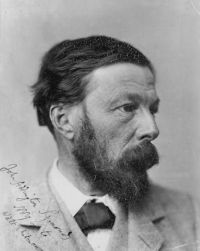
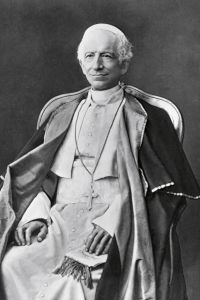
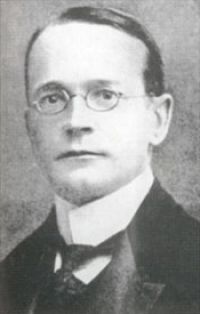
Main authors

The Roman Papacy presents itself as an institution grounded in eternal truth, distinct from the transient and fallible nature of worldly affairs [1, 2]. It asserts a unique authority derived directly from God, positioning itself as the “unfailing mistress of truth” in a world of error and fluctuating opinion . This claim forms the basis of its spiritual supremacy, a mandate that theoretically places the Church and its associated bodies beyond the control of secular rulers [3, 4]. According to this doctrine, the state’s duty is not to govern the Church, but to respect, cherish, and defend it . This worldview establishes a clear hierarchy, with divine law, as interpreted by the Papacy, holding precedence over civil power.
This assertion of divine right, however, exists in a world driven by secular ambitions, political pragmatism, and human vanity [5, 6]. The Papacy’s claim to be the ultimate moral arbiter inevitably clashes with the sovereignty of temporal states, which have historically resisted any surrender of their own principles of authority [7]. This inherent tension is further complicated by the Papacy’s own deep entanglement in worldly politics, where it has acted not just as a spiritual guide but as a temporal power with vast estates, political aims, and a history of military and diplomatic conflict [8, 9]. Consequently, the papal tiara represents not only a symbol of spiritual leadership but also the immense weight of navigating the perennial conflict between a divine mandate and the corrosive realities of earthly power, public scorn, and political intrigue [10, 11].
The Doctrine of Spiritual Supremacy
The conceptual foundation of papal authority rests on a distinct separation between the earthly and the heavenly . The temporal world is depicted as a place of exile, a preparatory stage for an eternal life where worldly goods like riches hold little ultimate significance . Within this framework, the Church positions itself as the sole and divinely sanctioned guide for humanity, possessing a truth based on the authority of God, which transcends the flawed and limited capacity of the human mind . This perception grants the institution an exclusive right to moral and spiritual governance, answerable only to God and not to any secular power . The Church, therefore, views itself as the central pillar of a well-ordered society, teaching that obedience to civil authority is a duty, but one that is ultimately subordinate to the primary obligation to obey God .
This spiritual authority is envisioned as the basis for a global theocracy, a unified Christian world order under papal oversight [12]. In this model, secular princes and states are not fully sovereign but are members of a larger body politic governed by God's law, with the Pope acting as the supreme arbiter and liege lord . The legitimacy of temporal rulers is seen as being mediated through the Church, which bestows divine sanction upon them . The Church's hierarchical structure is thus conceived as fundamentally different from any secular state, appearing as if it “hung from heaven,” with its authority flowing downward from a consecrated head rather than rising from the consent of the governed [13].
This doctrine reached its zenith when the principles of sacerdotal government were fully elaborated, establishing a comprehensive code of ecclesiastical law and bringing European princes to recognize the overlordship of the Pope [14]. The result was an institution that functioned as a “vast, admirably organized, spiritual world-empire,” whose power was not dependent on a small Italian principality but on the force of Catholic sentiment across nations [15]. The papacy achieved this through a combination of unswerving resolution, political cunning, and inexorable determination, creating a system of centralized power that overwhelmed the more fragmented opposition of secular authorities [16].
The Inevitable Clash with Secular Sovereignty
The papal assertion of universal authority inevitably provokes conflict with secular states, which jealously guard their own sovereignty . From the state's perspective, papal decrees can appear as foreign interference designed to undermine national law and order [17]. Attempts by governments to regulate Church affairs—such as marriage laws, censorship, or the administration of religious orders—are viewed by Rome as illegitimate encroachments upon its divine prerogative . This fundamental disagreement over the limits of power creates a persistent antagonism, where the Church’s claim to spiritual independence is seen by the state as a bid for political supremacy [18].
This struggle for dominance was not merely theoretical. The papacy historically employed powerful spiritual weapons to achieve political ends, threatening rulers with excommunication and their subjects with damnation if they remained loyal to a state deemed defiant to Rome [19]. Such actions reinforced the perception of the Pope not merely as a pastor but as a king aiming for universal political control [20]. In response, secular powers often came to view the Papacy as just another political entity, and its spiritual claims as a pretext for temporal ambition [21]. This tension was particularly acute during events like the Council of Trent, where representatives from Spain, France, and Germany challenged papal supremacy and advocated for episcopal independence, a move the Papacy only overcame through diplomatic maneuvering and the numerical superiority of Italian prelates [22].
The Papacy’s credibility as a purely spiritual institution was further undermined by its deep immersion in temporal affairs. The management of immense papal estates across Europe, complete with concerns over crop yields and the wages of serfs, blurred the line between pontiff and feudal lord . This accumulation of wealth and secular power led to widespread criticism of the Roman court for its perceived avarice and luxury, fueling resentment, especially in northern Europe [23]. This entanglement in worldly matters meant that the Papacy was frequently embroiled in secular conflicts, such as the War of the Spanish Succession, which resulted in the loss of significant papal territories and rights, despite official protests .
The Corrosive Force of Secular Scorn and Human Nature
Beyond the high politics of Church-state conflict, papal authority faces a more intimate challenge from the fundamental aspects of human nature . The secular world is often driven by pride, ambition, and a love of pleasure, forces that are inherently at odds with the Christian virtues of humility and detachment from earthly concerns . This worldview, where individuals act as the center of their own universe and view the divine merely as an instrument for selfish ends, represents a profound philosophical opposition to the Church's teachings [24]. The pursuit of social status, material wealth, and personal envy, as depicted in secular narratives, paints a picture of a society motivated by forces that the Church officially condemns but in which it is also deeply entangled [25, 26].
This disconnect between the Church’s ideals and its worldly practices has historically invited skepticism and scorn. As the papacy consolidated its power and its abuses became more visible, a critical backlash emerged from intellectuals and the public alike . Learning, research, and wit became weapons used to expose frauds and ridicule the pretensions of a power that seemed more concerned with earthly domination than spiritual salvation . The inner workings of the Vatican were often perceived by outsiders not as a sacred process but as a theater of cynical political maneuvering, where the death of a pope was an opportunity for betting on his successor [27]. Even the popes themselves were seen as human beings, subject to the constraints of time and the desire to leave a personal mark through worldly projects [28].
This tension between the spiritual and the secular was not solely an external critique; it existed within the Church itself. Many believers remained devoted to the spiritual core of their faith while feeling repugnance toward the “secular spirit of the Papacy” and its quest for an “earthly empire” [29]. The pursuit of worldly power sometimes led factions within the Church, such as the Jesuits, to form alliances with despotic secular rulers, confusing the mission of serving the Papacy with serving a temporal court [30]. This willingness to subordinate ethical law to political expediency demonstrated a crisis of priorities, suggesting that the drive for influence often overshadowed the institution's spiritual purpose .
The history of the Papacy is defined by an irresolvable tension between its claim to be a divine institution and its reality as a worldly power. Its assertion of absolute spiritual authority, intended to place it above the fray of secular politics, instead thrust it directly into conflict with temporal rulers . In its efforts to build and maintain a “spiritual world-empire,” the Papacy adopted the very tools of secular statecraft—diplomacy, political maneuvering, and the pursuit of wealth—which in turn exposed it to accusations of hypocrisy and corruption that have echoed through centuries . The sacred ideal of the tiara is perpetually weighed down by the earthly necessities of power.
Ultimately, the conflict transcends the simple dichotomy of Church versus State. It is a clash between two fundamentally different conceptions of life: one centered on an eternal, divinely ordered cosmos, and another driven by the immediate, often messy, realities of human ambition, skepticism, and self-interest [31]. While the Papal throne has demonstrated a unique resilience, appearing to be the only one on earth that never changes its occupant [32], it remains perpetually besieged. It is assailed not only by defiant kings and critical scholars, but by the enduring secular impulses of human nature itself, which consistently challenge the very foundations of its otherworldly authority .