Summary

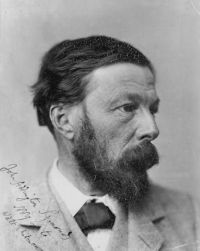
Portrait of John Addington Symonds John Addington Symonds Renaissance in Italy, Volumes 6 and 7…

After tracing the origin of modern music at its fountain head in Palestrina, it requires some courage to approach the plastic arts at this same epoch.
Music was the last real manifestation of the creative genius in Italy. Rarefied to evanescent currents of emotional and sensuous out-breathings, the spirit of the race exhaled itself in song from human throats, in melody on lute and viol, until the whole of Europe thrilled with the marvel and the mystery of this new language of the soul. Music was the fittest utterance for the Italians of the Counter-Reformation period.
Source: Gutenberg

Portrait of John Addington Symonds John Addington Symonds Renaissance in Italy, Volumes 6 and 7…

It is difficult to trace the history of Tasso's loves through the labyrinth of madrigals, odes and sonnets which belong to this epoch of his life. These compositions bear, indeed, the mark of a distinguished genius; no one but Tasso could have written them at that period of Italian literature. Yet they lack individuality of emotion, specific passion, insight into the profundities of human feeling. Such shades of difference as we perceive in them, indicate the rhetorician seeking to set forth his motive, rather than the lover pouring out his soul.
Source: Gutenberg

Portrait of John Addington Symonds John Addington Symonds Renaissance in Italy, Volumes 6 and 7…

Without freedom, without the living mythology of Hellas, without a triumphant national cause, in the very death of independence, at the end of a long age of glorious but artificial culture, how could Chiabrera dare to pose as Pindar? Instead of the youth of Greece ascending with free flight and all the future of the world before it, decrepit Italy, the Italy so rightly drawn by Marino in his Pianto, lay groveling in the dust of decaying thrones.
Source: Gutenberg

Get perspective with Kwize: daily news enlightened by great literature