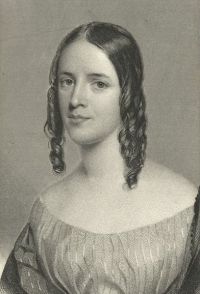
Giovanni Pierluigi da Palestrina

Definition and stakes

William Smyth Rockstro and Donald Francis Tovey,  1911 Encyclopædia Britannica, Volume 20… (1911)

“ There is probably no respectable school piece of the 16th century, which, if properly performed in a Roman Catholic church, would be quickly distinguishable by ear from the style of Palestrina. But when we find that every addition to our acquaintance with Palestrina's works is an acquisition, not to our notions of the progressive possibilities of 16th-century music, but to our whole sense of style, we may then recognize that we are in the presence of one of the greatest artists of all time. ”
Source: Wikisource

James George Frazer, Robert Seymour Conway, and Thomas Ashby,  1911 Encyclopædia Britannica (1911)

“ Praeneste was the native town of Aelian, and in modern times of the great composer (Giovanni) Pierluigi da Palestrina.
The modern town of Palestrina, a collection of narrow and filthy alleys, stands on the terraces once occupied by the temple of Fortune. On the summit of the hill (2471 ft.) , nearly a mile from the town, stood the ancient citadel, the site of which is now occupied by a few poor houses (Castel San Pietro) and a ruined medieval castle of the Colonna. The magnificent view embraces Soracte, Rome, the Alban Hills and the Campagna as far as the sea.
”
Source: Wikisource

Get perspective with Kwize: daily news enlightened by great literature