Pietro da Cortona

Definition and stakes

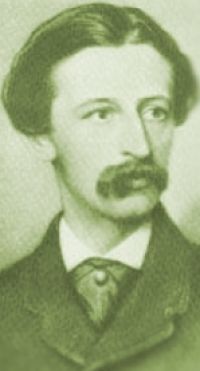
Portrait of Luigi Lanzi Luigi Lanzi,  The History of Painting in Italy…

“ Pietro da Cortona and his followers. After the middle of the seventeenth century, the Florentine school, and also that of Rome, underwent a remarkable revolution, occasioned by the vast number of the followers of Pietro da Cortona. Sects in painting have the same fate as sects in philosophy: one succeeds another; and the new principles are propagated more or less rapidly, according to the degree of opposition they have to encounter where they happen to be diffused. The manner of Cortona met with considerable opposition in Rome, as we shall find in the proper place. ”
Source: Gutenberg

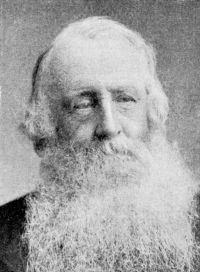
Thomas Ashby,  1911 Encyclopædia Britannica (1911)

“ Pietro Berettini (Pietro da Cortona, 1596–1669) is hardly represented here at all. Below the town is the massive tomb chamber (originally subterranean, but now lacking the mound of the earth which covered it) known as the Grotta di Pitagora (grotto of Pythagoras) . To the E. is the church of S. Maria del Calcinaio, a fine early Renaissance building by Francesco di Giorgio Martini of Siena, with fine stained glass windows.
The foundation of Cortona belongs to the legendary period of Italy. It appears in history as one of the strongholds of the Etruscan power
”
Source: Wikisource

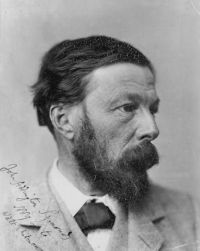
Portrait of Luigi Lanzi Luigi Lanzi,  The History of Painting in Italy…

“ Pietro da Cortona also contributed some good scholars to Genoa. A doubtful celebrity remains to Francesco Bruno of Porto Maurizio, who left in his native country some altar-pieces in the style of Pietro, and a copy of one of the pictures of that master. He is an unequal painter, if, indeed, we may not conclude, with Sig. Ratti, that some inferior works are improperly ascribed to him by common report. With still less foundation Francesco Rosa of Genoa is conjectured to have sprung from this school, who studied about the same time in Rome. ”
Source: Gutenberg

Get perspective with Kwize: daily news enlightened by great literature