AI-generated from sources
Why Proving That Conquest Does Not Pay Has Never Ended It
In Brief
- Liberal thinkers argued that commerce had made conquest a losing venture: once wealth came from exchange rather than from slaves, tribute and seized land, even a victorious war cost more than it returned.
- Many of the motives behind conquest never appear on a balance sheet—the wish of the strong to be feared, the authority rulers gain at home from war, and an honor that doubles as a warning to predators.
- Benjamin Constant, who announced in 1816 that an age of commerce must replace the age of war, traced commerce itself to the discovery that one is not always the stronger, so his argument holds only if experience teaches even powers confident in their strength that they are not always the stronger.
- A conquest that impoverishes a nation can still enrich some of its members: critics of colonial wars pointed to bondholders, speculators and investors in search of markets as their real beneficiaries.
Main authors
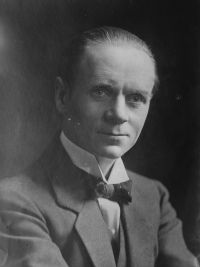

A man who was always the stronger, Benjamin Constant observed in 1816, would never have conceived the idea of commerce [1]. Trade, in his account, is what strength learns from failure. Experience shows the warrior that force meets resistance and defeat, so he turns to a milder and surer way of getting from others what suits him [1]. From this genealogy Constant drew a historical verdict: war is "all impulse," commerce is calculation, and an age had come in which the second replaces the first [1]. More than half a century later, with Germany's indemnity on France in 1871 behind him, Norman Angell restated the case for an industrial world. A nation's commerce no longer depends on its frontiers, he argued, and no state can seize another's wealth or trade by force [2, 3].
The proof is sound as accounting. Its weakness lies elsewhere. It treats conquest as a business venture whose losses, once exposed, would close the firm. The texts that answer it rarely dispute the arithmetic; they dispute the motive. Power over others, honor and the fear of appearing weak keep books of their own, which no balance of trade can close [4, 5, 6]. And where conquest did pay, it tended to pay someone other than the nation that bore its costs [7, 8]. Constant's own formula already holds the objection, though he drew the opposite conclusion from it: if war is impulse, a calculation alone may not stop it.
Constant, Angell and the Ledger of Conquest
The liberal case begins with a comparison between two economies. Among the ancients, Constant argued, a successful war enriched both state and citizen in slaves, tributes and shared-out lands [9]. Among the moderns, even a successful war infallibly costs more than it is worth [9]. The point is less that conquest has become wicked than that its rewards have dried up. Once there are no slaves among European nations and free men must fill every trade, the spoils that once made victory rewarding are gone [9]. Conquest, on this view, was rational in a world of captive labor and plunder, and has become irrational in a world of exchange.
Angell sharpened the comparison into a challenge. His book set out to show that a nation's political and economic frontiers no longer coincide, and that military power bears no relation to the prosperity of the people who wield it [3]. He asked the statesmen of Europe to explain the modus operandi by which armed strength advances the commercial interest of citizens, instead of offering vague talk about weight in the councils of nations [10]. Until they did, he held, their vocabulary was a mere survival from a state of things that had passed away [10]. The move is shrewd. It shifts the burden of proof onto those who defend conquest.
The stumbling block was the visible gain. Angell conceded that "ten dollars which can be seen" bulk larger in the public mind than a million out of sight [2]. The billion-dollar indemnity Germany exacted from France in 1871 was therefore taken as conclusive evidence that a nation can make money by war [2]. Against that sum the liberal could set only diffuse and delayed losses. Arthur Greenwood recalled one of them: after the Napoleonic Wars, English manufacturers expecting eager continental buyers discovered that impoverished nations are poor customers [11]. The lesson was real. But it arrived years after the victory and spread across a whole economy, while the indemnity came as a single figure.
Angell believed the obstacle was an error of belief. Peace propaganda had failed, he argued, because it was universally assumed that national power means national wealth and that expanding territory means opportunity for industry [12]. Correct the error, and the motive would go with it. A contributor to Popular Science Monthly had made the same wager in 1899, with a revealing hedge. Wars would never be abolished, he granted, since passion and folly would at times prevail over reason; yet the idea that conquest is the quickest road to prosperity was false and would not last [13]. The hedge is the whole problem. If passion makes wars, refuting the profit motive strikes only at part of the cause.
What Richard Price Found at the Bottom of the Ledger
Carried through to its end, the economic argument does not dissolve the war. It exposes the motive. Richard Price, writing against Britain's war with America, began with trade: it was folly, next to insanity, to think commerce could be promoted by impoverishing one's customers and fixing in them a lasting abhorrence [4]. Once gain had been ruled out, only one explanation remained. The war, Price concluded, could have no other object than "the extension of power"—forcing a happy people to acknowledge British supremacy [4]. The proof of unprofitability had turned into a proof of something else.
Samuel Johnson described an adversary for whom the order of motives was simply reversed. Such a power, he wrote, had more martial than mercantile ambition and seldom let its military schemes be entangled with projects of gain; it wished only for conquest and considered riches its consequence, not its aim [14]. Johnson added a colder observation. Because the contest would be fought on the defender's territory, the defender stood to lose more by a victory than the invader would suffer by a defeat [14]. The invader's ledger and the victim's are not the same ledger. A war fought on the enemy's soil can be a cheap gamble for the one who starts it.
The beneficiary of conquest need not be the nation at all. Jean-Jacques Rousseau, writing on political economy, warned that the desire for conquest is not always what it appears to be [15]. Its real motive, he suggested, is often less the aggrandizement of the nation than a secret wish to increase the authority of the rulers at home—through more troops, and through the distraction that war offers to the minds of citizens [15]. A war that impoverishes the country can still strengthen the government that wages it. No national balance sheet records that profit.
A century after Constant, Bertrand Russell located the impulse in human character. Men who feel themselves strong enough, he observed, set to work to make themselves "feared rather than loved"; the wish for the good opinion of others belongs mostly to those without secure power [5]. It is this impulse to self-assertion, he argued, and not calculated self-interest, that produces war [5]. Set beside Constant's genealogy, the remark is damaging. Constant derived commerce from the discovery that one is not always the stronger [1]. His argument therefore holds only if experience teaches even those confident in their strength—the very powers able to conquer—that they are not always the stronger.
The objection did not come only from the defenders of war. In 1915 a contributor to The Scientific Monthly accepted the liberal arithmetic outright—there is no money in war—and drew the opposite moral [16]. Commercial envy and the need for expansion were excuses, not causes, and the old strategists cared no more for a nation's financial exhaustion than for the slaughter of its young men [16]. Angell's own pages record the doubt, as others raised it against him. He named, as the commonest objection to his case, the claim that nations fight from vanity, rivalry, pride of place, the desire for power or prestige [17]. A critic quoted in The Great Illusion put it more harshly: nations harbor no illusion about the unprofitableness of war itself, and the book misreads human action [18].
Honor, a Currency No Accountant Can Audit
Honor enters the debate as the good on which all others depend. August Niemann, in The Coming Conquest of England, held that a nation has its honor like an individual, and must not shrink from war when that honor is at stake [6]. His reasoning is not purely chivalric. A nation that keeps the peace at any price, he argued, will gradually lose the blessings of peace and fall prey to its neighbors [6]. Honor here works as deterrence, a reputation that keeps predators at bay. Honor and fear, on this reading, turn out to be one calculation seen from two sides.
Patriotism also changes what counts as a loss. Edward Osler, the biographer of an admiral, wrote that patriotism throws a veil over the horrors of war, gives victory its splendor and "sheds lustre even on defeat" [19]. A defeat that confers luster is not a loss in any currency trade can measure. Osler drew the corollary himself: a man who fights the battles of another state can win no honor even from victory [19]. Honor attaches to the bond between a fighter and his country, not to the outcome. A ledger records only outcomes.
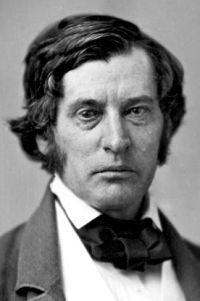
The opponents of war mostly did not meet honor with arithmetic. They contested its meaning. In a debate preserved in the Abridgment of the Debates of Congress, one speaker expressed surprise that a colleague would rather have war than lose the national honor [20]. "This thing called national honor," he retorted, had ruined more than half the people in the world; only the liberty and happiness of the nation ought to lead it to war [20]. Charles Sumner moved the concept rather than discarding it. A nation's true honor, he wrote, appears only in deeds of justice and beneficence, and the victories of war are vain, its spoils infamous [21].
The most candid formulation came from an orator of the Intercollegiate Peace Association. Men will have war only so long as they want war, he declared; the remedy was a public opinion holding that national honor itself demands the arbitration of every dispute [22]. The sentence concedes what the economic proof denied. The lever is desire, not interest, and the work is to change what a nation wishes to be admired for. Yet the same speaker hoped to free legislators from the grip of financial interests [22]. Money had not left the scene.
Bernhardi, the Bondholders and the Wars That Paid
A second objection was more awkward, because it accepted the terms of the debate: sometimes conquest did pay. Friedrich von Bernhardi, in Germany and the Next War, reproached German industrialists for believing that peace is the essential condition of commerce [23]. They failed to reflect, he argued, that Germany's victorious wars had never disturbed its business life, and that the political power regained by war had made the vast progress of its trade possible [23]. Where Angell saw an illusion fed by a single visible indemnity, Bernhardi saw a record of returns [23, 2]. The arithmetic itself was contested.
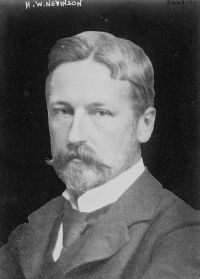
Other critics moved the question from the nation to the interests inside it. G. Lowes Dickinson granted that power may be sought for its own sake, but held that modern states commonly seek it as a means to wealth—markets, concessions, outlets for capital—with governments prompted or controlled by financial interests [7]. His examples are blunt: the British went to Egypt for the bondholders, the French to Morocco for its minerals [7]. Henry Woodd Nevinson conceded nearly every point of the liberal proof, from the futility of indemnities to the impossibility of capturing an enemy's trade. He still concluded that the object of many recent wars had been private gain [8]. A nation can lose while some of its citizens win.
Gain and fear can also feed each other. Hudson Maxim held that the wealth of a defenseless nation is "a standing casus belli" to others, since some nation has always stood ready to plunder another whenever the profit would repay the trouble [24]. On this view conquest is not irrational at all; it is rational for the strong against the weak, and the title of his book, Defenseless America, names the danger. Carl Schurz, opposing an American policy of conquest and rule over subject provinces, feared the same appetite at home. He pictured a people constantly taught that a rich country lay within its grasp, with lots of money to be made in it [25]. Profit needs only to be believed in to do its work.
Nor did commerce stand reliably on the side of peace. Benjamin Franklin, in the 18th century, defended a conquest made for the whole people, repaid to all in increased trade and lighter taxes [26]. A war to protect commerce and secure the export of manufactures, he argued, could not fairly be dismissed as blood spent for the weavers of Yorkshire [26]. Here trade is a reason for war, not its alternative. Much later, a passage in William Loftus Hare's book on Watts (1817-1904) turned Constant upside down: competition breeds ambition, envy and jarring interests, and the goddess Trade, "the modern Pandora," holds all the evils that afflict mankind [27]. Impulse and calculation, which Constant opposed, run together.
Democracy offered no sure exemption either. An American orator had already mocked, as his country embarked on a war for territory and subjects, the doctrine that republicans are destitute of ambition and wedded to peace [28]. Schurz's fear went further than corruption. He worried that a war of conquest waged by the United States would vindicate those who said democratic government was no guarantee of peace—that it was capable of the worst kind of war, and of waging it as a hypocrite and false pretender [29]. If popular government could covet territory and disguise the desire, widening the franchise would not retire conquest.
The argument that commerce had turned conquest into a losing venture, carried from Benjamin Constant in 1816 to Norman Angell's The Great Illusion, was right about what it measured. Once wealth came from exchange rather than from slaves, tribute and seized land, even a victorious war cost a nation more than it returned, and a ruined neighbor made a poor customer [9, 11, 3]. Its blind spot was everything it did not measure. Conquest was sought to extend power, to make the strong feared, to entrench rulers at home, and to keep an honor that also warned off predators [4, 5, 15, 6]. Where it paid, it often paid bondholders and speculators rather than the nation whose blood and taxes funded it [7, 8].
The most lucid opponents of war drew the consequence. If men have war only as long as they want it, the task is not to recompute its costs but to change what nations wish to be honored for—justice rather than victory [22, 21]. That work is slower than a demonstration and less certain of success. It also explains why the demonstration, however often repeated, kept failing to persuade. A ledger can show that conquest is a bad investment. It cannot show that conquest was ever meant as one.