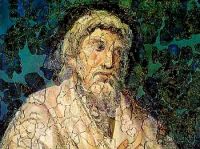
Alexander of Alexandria

Biographical details

Alexander of Alexandria Ante-Nicene Fathers Vol. VI, Epistles on the Arian Heresy… (1885)

Doubtless the very aspect of death begets sadness; for we behold in a dead man the face changed, the figure dead, the body shrunk up with emaciation, the mouth silent, the skin cold, the carcase prostrate on the ground, the eyes sunken, the limbs immoveable, the flesh wasted away, the veins congealed, the bones whitened, the joints dissolved, all parts of him reduced to dust, and the man no longer existing.
Source: Wikisource

Alexander of Alexandria Ante-Nicene Fathers Vol. VI, Epistles on the Arian Heresy… (1885)

Who compelled God to come down to earth, to take flesh of the holy Virgin, to be wrapped in swaddling clothes and laid in a manger, to be nourished with milk, to be baptized in the Jordan, to be mocked of the people, to be nailed to the tree, to be buried in the bosom of the earth, and the third day to rise again from the dead; in the cause of redemption to give life for life, blood for blood, to undergo death for death? For Christ, by dying, hath discharged the debt of death to which man was obnoxious.
Source: Wikisource

Alexander of Alexandria Ante-Nicene Fathers Vol. VI, Epistles on the Arian Heresy… (1885)

When, therefore, the most pious John contemplated the essence of the divine Word at a very great distance, and as placed beyond all conception of those things that are begotten, he thought it not meet to speak of His generation and creation; not daring to designate the Creator in the same terms as the things that are made. Not that the Word is unbegotten, for the Father alone is unbegotten, but because the inexplicable subsistence of the only-begotten Son transcends the acute comprehension of the evangelists, and perhaps also of angels.
Source: Wikisource

Get perspective with Kwize: daily news enlightened by great literature