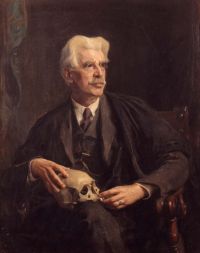
Alfred Cort Haddon

Biographical details

Portrait of Alfred Cort Haddon Alfred Cort Haddon,  Folk-Lore (1919 (vol. 30), 1920 (vol. 31))

“ The doctrine of evolution is so strong upon us that we are apt to apply its leading ideas insensibly to almost every branch of human history. But folklore being what it is, namely, the survival of traditional ideas or practices among a people whose principal members have passed beyond the stage of civilisation which these ideas and practices once represented, it is impossible for it to have any development. ”
Source: Wikisource

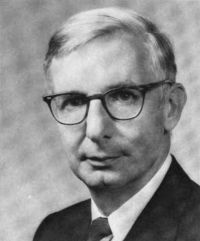
Portrait of Alfred Cort Haddon Alfred Cort Haddon,  Folk-Lore (1919 (vol. 30), 1920 (vol. 31))

“ Our ultimate aim is not merely to reconstruct a ceremony or rite, but to establish it and all that is related to it in a culture complex and thus demonstrate its significance. After I had written this, I find, as so often has been the case, that Sir Laurence Gomme had previously expressed the idea that was in my mind. He says, “In India primitive economics and religion go hand in hand as part of the village life of the people; in England primitive economics and survivals of old religions, which we call folklore, go hand in hand as part of the village life of the people. ”
Source: Wikisource

Portrait of Alfred Cort Haddon Alfred Cort Haddon,  Folk-Lore (1919 (vol. 30), 1920 (vol. 31))

“ Comparative religion is saturated with examples of the intermixing and transformation of semi-sacred and sacred personages, whether they be ancestors, heroes, spirits, godlings, gods, or what not, and here we are well within the rightful domain of folklore, however we may define it.
Instead of the adjustment acting by integration it may act by inhibition, as is often the case in the struggle for existence between religions. The religious practices of the conquered or subordinate element of a mixed population may be, so-to-speak, trampled underground, and can be carried on only surreptitiously
”
Source: Wikisource

Get perspective with Kwize: daily news enlightened by great literature