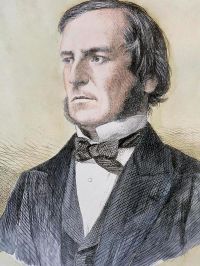
Anna H. Taylor and M. F. Washburn

Biographical details

Anna H. Taylor and M. F. Washburn The American Journal of Psychology (1910)

And if, in general our discussion and analysis of the experiences of our observers appears to be far from thorough, our excuse must lie in the fact that their introspective records were not full enough to warrant us in interpreting the results further. If the observers had been trained in introspection we should have gained much, but we should have also lost something, in that our subjects would have been alike less numerous and less naïve.
Source: Wikisource

Anna H. Taylor and M. F. Washburn The American Journal of Psychology (1910)

Four observers found the chief source of unpleasantness in the fourth argument to lie in the thought of other kinds of property being taxable besides private property. Here the discomfort seems to arise from the fact that the thought process, which should pass smoothly along the course: 'church property other than private property not taxed,' is led off from the middle term 'other than private property' to the thought of cases of public property that are taxed. None of the observers, however, reported that they thought of specific instances of public property being taxed
Source: Wikisource

Anna H. Taylor and M. F. Washburn The American Journal of Psychology (1910)

Such a mental process must be of frequent occurrence in purely mathematical reasoning. It probably varies from a practically unanalyzable 'relational' process, through a more complex process associated with some vague ideas of the omitted factors, the other parts of the class which have not been taken into account, and thus by imperceptible gradations may pass into a process involving definite thought of the neglected ideas, such as we have discussed under (c) . It is to be noted that the mere 'conscious- ness of inequality' would not of itself be a source of unpleasantness
Source: Wikisource

Get perspective with Kwize: daily news enlightened by great literature