“ But all men wrought together without greed or striving,And all the store of all to each man was his own.From all that busy land, grey town, and peaceful village,Where never jar was heard, nor wail, nor cry of strife,From every laden stream and all the fields of tillage,Arose the murmur and the kindly hum of life.At morning to the fields came forth the men, each neighbourHand linked to other, crowned, with wreaths upon their hair,And all day long with joy they gave their hands to labour,Moving at will, unhastened, each man to his share. ”
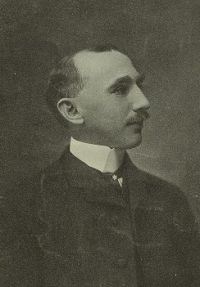
Archibald Lampman
Biographical details

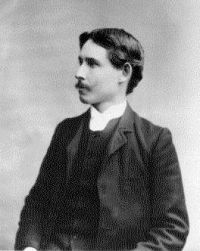
Archibald Lampman (1861–1899) was a Canadian poet renowned for his nature-inspired verse, a key figure among the Confederation Poets. His work, shaped by Keats and Wordsworth, contrasted the calm of rural life with reflections on urbanization, as seen in poems such as Morning on the Lièvre and The City of the End of Things.
Although his body of work—encompassing Among the Millet, Lyrics of Earth, and Alcyone—remained largely unpublished in his lifetime, his posthumous collections established his reputation as a poet who turned Canadian landscapes into contemplations on beauty, social justice, and existential thought, leaving a lasting impact on national literary identity.
Quotes by Archibald Lampman
 Archibald Lampman,
Among the Millet and Other Poems
Archibald Lampman,
Among the Millet and Other Poems
“ At strife, earth's children, will ye never rest From toils made hateful here, and dawns distressed With ravelling self-engendered misery? And will ye never know, till sleep shall see Your graves, how dreadful and how dark indeed Are pride, self-will, and blind-voiced anger, greed, And malice with its subtle cruelty? How beautiful is gentleness, whose face Like April sunshine, or the summer rain, Swells everywhere the buds of generous thought? So easy, and so sweet it is; its grace Smoothes out so soon the tangled knots of pain. Can ye not learn it? will ye not be taught? ”
Archibald Lampman,
Lyrics of Earth
“ What would'st thou have for easement after grief, When the rude world hath used thee with despite, And care sits at thine elbow day and night, Filching thy pleasures like a subtle thief? [30] To me, when life besets me in such wise, 'Tis sweetest to break forth, to drop the chain, And grasp the freedom of this pleasant earth, To roam in idleness and sober mirth, Through summer airs and summer lands, and drain The comfort of wide fields unto tired eyes. By hills and waters, farms and solitudes, To wander by the day with wilful feet ”