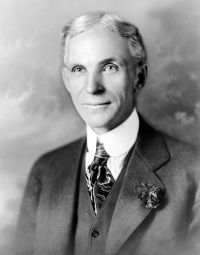
Arthur Ernest Cowley

Biographical details

Arthur Ernest Cowley,  1911 Encyclopædia Britannica, Volume 13… (1911)

“ Rashi was a pupil of Jacob ben Yaqar, and studied at Worms and Mainz. Unlike his contemporaries in Spain, he seems to have confined himself wholly to Jewish learning, and to have known nothing of Arabic or other languages except his native French. Yet no commentator is more valuable or indeed more voluminous, and for the study of the Talmud he is even now indispensable. He commented on all the Bible and on nearly all the Talmud, has been himself the text of several super-commentaries, and has exercised great influence on Christian exegesis. ”
Source: Wikisource

Arthur Ernest Cowley,  1911 Encyclopædia Britannica, Volume 13… (1911)

“ But there was no tradition of Hebrew study apart from the Jews, and in the 15th century when an interest in the subject was awakened, only the most ardent zeal could conquer the obstacles that lay in the way. Orthodox Jews refused to teach those who were not of their faith, and on the other hand many churchmen conscientiously believed in the duty of entirely suppressing Jewish learning. ”
Source: Wikisource

Arthur Ernest Cowley,  1911 Encyclopædia Britannica, Volume 13… (1911)

“ The characteristic of the 18th and 19th centuries is the endeavour, connected with the name of Moses Mendelssohn, to bring Judaism more into relation with external learning, and in using the Hebrew language to purify and develop it in accordance with the biblical standard. Modernizing tendencies. The result, while linguistically more uniform and pleasing, often lacks the spontaneity of medieval literature. It was Moses Mendelssohn’s German translation of the Pentateuch (1780–1793) which marked the new spirit, while the views of his opponents belong to a bygone age. ”
Source: Wikisource

Get perspective with Kwize: daily news enlightened by great literature