Maimonides

Definition and stakes

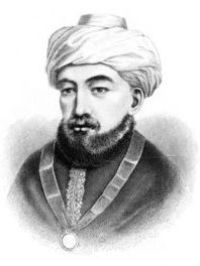
Portrait of Maimonides Maimonides,  The Guide for the Perplexed (1904)

“ Maimonides, faithful to the teaching of the Scriptures, here departs from his master, and holds that the spheres and the intellects had a beginning, and were brought into existence by the will of the Creator. He does not attempt to give a positive proof of his doctrine all he contends is that the theory of the creatio ex nihilo is, froiri a philosoplsieah point of view, not inferior to the doctrine which asserts the eternity of the universe, and that he can refute all objections advanced against his theory (ch. ”
Source: Wikisource

Isaac Husik,  A History of Mediaeval Jewish Philosophy

“ Maimonides fought an obsolete philosophy and obsolete scientific principles. It is possible that he might have found much to object to in modern science as well, on the ground that much is yet unexplained. But an objection of this sort is captious, particularly if we consider what Maimonides desires to place in science's stead. Science is doing its best to classify all natural phenomena and to discover the uniformities underlying their behavior. It has succeeded admirably and is continually widening its sphere of activity. ”
Source: Gutenberg

Portrait of Maimonides Maimonides,  Eight chapters of Maimonides on Ethics (1912)

“ In commenting on the tractate Abot, Maimonides had abundant opportunity to make use of his knowledge of Greek philosophy and particularly of Aristotelian ethics. To this tractate he prefixed an introduction of eight chapters, outlining in a general way a system of ethics based mainly on Aristotle's Nichomachean Ethics, [19] which Maimonides harmonized with rabbinical teachings. This introduction constitutes the most remarkable instance in medieval ethical literature of the harmonious welding of Jewish religious belief and tradition with Greek philosophy. ”
Source: Wikisource

Get perspective with Kwize: daily news enlightened by great literature