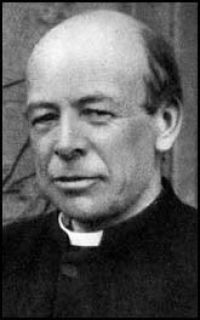
Arthur Wollaston Hutton

Biographical details

Arthur Wollaston Hutton,  1911 Encyclopædia Britannica (1911)

“ His prose style, especially in his Catholic days, is fresh and vigorous, and is attractive to many who do not sympathize with his conclusions, from the apparent candour with which difficulties are admitted and grappled with, while in his private correspondence there is a charm that places it at the head of that branch of English literature. He was too sensitive and self-conscious to be altogether successful as a leader of men, and too impetuous to take part in public affairs ”
Source: Wikisource

Arthur Wollaston Hutton,  1911 Encyclopædia Britannica, Volume 17… (1911)

“ In later years his strenuous advocacy of the claims of the working classes, and his declaration that “every man has a right to work or to bread” led to his being denounced as a Socialist. That he was such he denied more than once (Lemire, Le Cardinal Manning et son action sociale, Paris, 1893, p. 210) , nor was he ever a Socialist in principle; but he favoured some of the methods of Socialism, because they alone seemed to him practically to meet the case of that pressing poverty which appealed to his heart. ”
Source: Wikisource

Arthur Wollaston Hutton,  1911 Encyclopædia Britannica, Volume 17… (1911)

“ Manning’s married life was of brief duration. His young and beautiful wife was of a consumptive family, and died childless (July 24, 1837) . The lasting sadness that thus early overshadowed him tended to facilitate his acceptance of the austere teaching of the Oxford Tracts; and though he was never an acknowledged disciple of Newman, it was due to the latter’s influence that from this date his theology assumed an increasingly High Church character, and his printed sermon on the “Rule of Faith” was taken as a public profession of his alliance with the Tractarians. ”
Source: Wikisource

Get perspective with Kwize: daily news enlightened by great literature