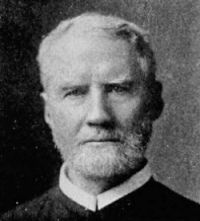
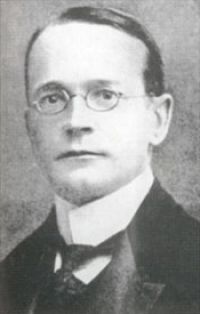
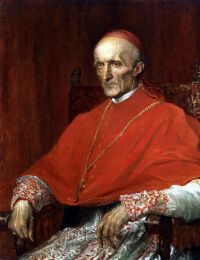
Cardinal Henry Edward Manning

Definition and stakes

Arthur Wollaston Hutton,  1911 Encyclopædia Britannica, Volume 17… (1911)

“ In 1860 he delivered a course of lectures on the pope’s temporal power, at that date seriously threatened, and shortly afterwards he was appointed a papal domestic prelate, thus becoming a “Monsignor,” to be addressed as “Right Reverend.” He was now generally recognized as the able and effective leader of the Ultramontane party among English Roman Catholics, acting always, however, in subordination to Cardinal Wiseman; and on the latter’s death (Feb. 15, 1865) it was felt that, if Manning should succeed to the vacant archbishopric, the triumph of Ultramontanism would be secured. ”
Source: Wikisource

Arthur Wollaston Hutton,  1911 Encyclopædia Britannica, Volume 17… (1911)

“ The Roman Catholic Cathedral at Westminster is his joint memorial with his predecessor, Cardinal Wiseman.
Whatever may have been the value of Manning’s services to the Roman Catholic Church in England in bringing it, as he did, up to a high level of what in earlier years was commonly denounced as Ultramontanism, it is certain that by his social action, as well as by the earnestness and holiness of his life, he greatly advanced, in the minds of his countrymen generally, their estimate of the character and value of Catholicism.
”
Source: Wikisource

Arthur Wollaston Hutton,  1911 Encyclopædia Britannica, Volume 17… (1911)

“ He was received into the Roman Catholic Church by Father Brownbill, S.J., at the church in Farm Street, on Passion Sunday, the 6th of April 1851. On the following Sunday he was confirmed and received to communion by Cardinal Wiseman, who also, within ten weeks of his reception, ordained him priest. Manning thereupon proceeded to Rome to pursue his theological studies, residing at the college known as the “Academy for Noble Ecclesiastics,” and attending lectures by Perrone and Passaglia among others. ”
Source: Wikisource

Get perspective with Kwize: daily news enlightened by great literature