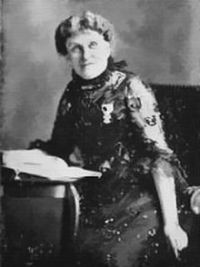
C. I. Eugene Kim

C. I. Eugene Kim,  Pacific Historical Review/Volume 31… (1962)

“ The turbulent life of the Spectator resulted, in large measure, from the effort to publish a nonpartisan newspaper for pioneers who voiced strong political convictions. The American settler was the heir of generations whose shibboleth of freedom firmly embraced public exchange of ideas in the press. The very beginnings of government in the Far West were made in Oregon, yet the divergent opinions about this critical development found no outlet in the only newspaper issued for much of the period from 1846 to 1850. ”
Source: Wikisource

C. I. Eugene Kim,  Pacific Historical Review/Volume 31… (1962)

“ An observer of the events in Korea during this period summed up the influence of the newspaper in the following manner: "The Korean's idea of the daily press is still somewhat crude, and is illustrated by the fact that when some statement is denied, he is very likely to say, 'It must be true. The paper says so.'" [2] Or, according to a Japanese official statement:
The press undoubtedly plays an important part in the mission of civilization, and journalism is decidedly one of the honorable professions. It would be unwise to interfere with freedom of the press in a civilized country.
”
Source: Wikisource

C. I. Eugene Kim,  Pacific Historical Review/Volume 31… (1962)

“ In his final editorial, Curry vehemently reproved the association and its treasurer, Governor Abernethy, saying: "It [The Spectator] . . . has become the property of one individual, subject to his will, pleasure and dictation and intended to be made the advocate of his peculiar doctrines and opinions—the instrument of his petty ambition." [15] He declared that "since the censorship of the press in Oregon" he had lost all desire to edit the Spectator, preferring to "wait until the time shall come when the truth shall not be interdicted, nor the press muzzled." ”
Source: Wikisource

Get perspective with Kwize: daily news enlightened by great literature