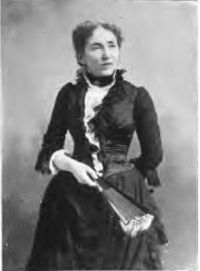
Charles Edward Montague

Biographical details

Charles Edward Montague,  F. R. Benson's Richard II (1899)

“ To shun the dry light, to drench all he sees with himself, his own temperament, the humours of his own moods—this is not his dread but his wish, as well as his bent. 'The eye sees what the eye brings the means of seeing.' 'A fool sees not the same tree that a wise man sees.' 'You shall see the world in a grain of sand and heaven in a wild flower.' This heightened and delighted personal sense of fact, a knack of seeing visions at the instance of seen things, is the basis of art. ”
Source: Wikisource

Charles Edward Montague,  F. R. Benson's Richard II (1899)

“ The simplest feeling is itself changed by issuing in a cry. Attaining a kind of completeness, given, as it were, its rights, it is not the same feeling after the cry that it was before. It has become not merely feeling interpreted by something outside it and separable from it, but fuller feeling, a feeling with more in it, feeling pushed one stage further in definiteness and intensity, an arch of feeling crowned at last. So, too all artistic expression, if one thinks the matter out, is seen to be not merely a transcription of the artist's sense of fact but a perfecting of that sense itself ”
Source: Wikisource

Charles Edward Montague,  F. R. Benson's Richard II (1899)

“ That is the truth of art, to be true less to facts without you than to yourself as stirred by facts. And truth it must bewith a vengeance. To find a glove-fit of words for your sense of 'the glory and the freshness of a dream', to model the very form and pressure of an inward vision to the millionth of a hair's breadth—the vocabulary of mensuration ludicrously fails to describe those infinitesimal niceties of adjustment between the inward feeling and the means of its presentment. And indeed it is only half true to speak as if feeling and its expression were separable at all. ”
Source: Wikisource

Get perspective with Kwize: daily news enlightened by great literature