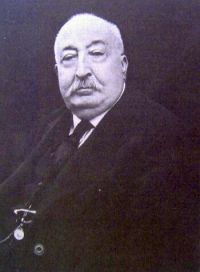
Charles Ernest Beulé

Biographical details

Portrait of Charles Ernest Beulé Charles Ernest Beulé Popular Science Monthly (1873)

How is it that every thing proves their decomposition to come only from the effects of time? How has the wood kept its character and color in those parts pierced by spikes and nails, in other words, protected from dampness by iron rust? How do we find manuscripts written on the soft fibres of papyrus-reed, when lava must infallibly have consumed them, and dispersed their ashes like those of a sheet of paper thrown on burning coals?
Source: Wikisource

Portrait of Charles Ernest Beulé Charles Ernest Beulé Popular Science Monthly (1873)

If works of art, bronzes and pictures have been miraculously preserved, it was due to the impenetrable shield of lava, yielding only to a cutting tool, that protected them from the ravages of time." The explanation is tempting. Fancy pictures waves of fire rolling upon the city, rising like the tidal swell, surging in through doors and windows, sweeping around and moulding every thing, then slowly cooling, and preserving for posterity treasures that labor must unveil, repaid by their recovery in unharmed beauty.
Source: Wikisource

Portrait of Charles Ernest Beulé Charles Ernest Beulé Popular Science Monthly (1873)

We wonder at the unchanging solidity of a substance which once so finely moulded the objects it surrounded. Still, if you try to cut with a knife, not into the impression itself, but into the parts next it, you are amazed to find that nothing is easier, and that it is all mere solidified ashes.
One street of Herculaneum, in the outskirts, on the side nearest the sea, has been regularly excavated, and several houses cleared out—that called the house of the skeleton, the house of Argus, some shops, a slave-prison, and others—all is in the open air, and one can walk as in the streets of Pompeii.
Source: Wikisource

Get perspective with Kwize: daily news enlightened by great literature