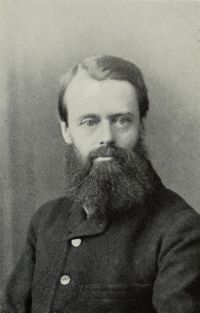
David Binning Monro

Biographical details

Portrait of David Binning Monro David Binning Monro 1911 Encyclopædia Britannica (1911)

The matter of such a science, he held, must be sought in the history and education of some highly cultivated nation, to be studied in written remains, works of art, and whatever else bears the stamp of national thought or skill. It has therefore to do with both history and language, but primarily as a science of interpretation, in which historical facts and linguistic facts take their place in an organic whole. Such was the ideal which Wolf had in his mind when he established the philological semmarium at Halle.
Source: Wikisource

Portrait of David Binning Monro David Binning Monro 1911 Encyclopædia Britannica (1911)

A new school, that of Locke and Rousseau, sought to make teaching more modern and more human, but at the sacrifice of mental discipline and scientific aim. Wolf was eager to throw himself into the contest on the side of antiquity. In Halle (1783-1807) , by the force of his will and the enlightened aid of the ministers of Frederick the Great, he was able to carry out his long-cherished ideas and found the science of philology. Wolf defined philology broadly as “knowledge of human nature as exhibited in antiquity.”
Source: Wikisource

Portrait of David Binning Monro David Binning Monro 1911 Encyclopædia Britannica (1911)

It has all the merits of a great piece of oral teaching—command of method, suggestiveness, breadth of view. The reader does not feel that he has to do with a theory, but with great ideas, which are left to bear fruit in his mind (see Homer) . The publication led to an unpleasant polemic with Heyne, who absurdly accused him of reproducing what he had heard from him at Göttingen.
The Halle professorship ended tragically, and with it the happy and productive period of Wolf's life.
Source: Wikisource

Get perspective with Kwize: daily news enlightened by great literature