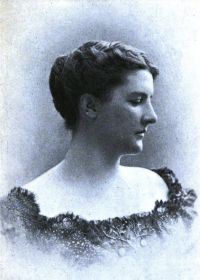
Elizabeth G. Jordan

Biographical details

Elizabeth G. Jordan,  Tales of the Cloister — Under the Black Pall (1901)

“ The lonely life went on. In the world, even in the cloister, there seemed to be drawn around her a circle which no one passed. The mental screen had shown the lonely child, the lonely girl, the lonely woman. The arms of classmates were not thrown around her; the rare caresses of the nuns were not given to her. Admired, deeply respected, she was never loved.
She became suddenly conscious of what and where she was—a nun, making her profession on the floor of the convent chapel, under the black pall, with valedictory strains to the world sighing above her.
”
Source: Wikisource

Elizabeth G. Jordan,  Tales of the Cloister — Her Audience of Two (1901)

“ Somewhere in the great city outside the silent convent Madame Holstein was singing—singing to thousands of music lovers. She would have a great triumph, no doubt; the brilliant audience would call her out again and again, as those in the East had done. The wonder of it, the glory of it, that one human voice could sway so many!
Yet, somehow, the picture the nun took with her when she at last fell asleep was not the radiant figure of the great artist smiling her thanks before the curtain, nor the grandly maternal figure of Fidès.
”
Source: Wikisource

Elizabeth G. Jordan,  Tales of the Cloister — The Surrender of Sister Philomene (1901)

“ She had been a convent girl, and an especial protégée of the Mother Superior. She had no near relatives; she had herself been brought up in the institution, and her last prayer had been that her baby might find a refuge there for a time among the nuns who had been so good to her.
Dying as she was, she had realized what his place would be among them all. Who could fail to love Frederick? She had been right. Only one had resisted his charm, and that was she herself—Sister Philomene. Self-reproach stirred in the woman's soul.
”
Source: Wikisource

Get perspective with Kwize: daily news enlightened by great literature