Frederick Watson

Biographical details

Frederick Watson,  The Story of the Highland Regiments

“ Vast lakes and rivers, mountains and cañons, not unlike to the glens the Highlanders had left in Scotland, confronted them. In the deep stillness of the woods wild animals slipped into the darkness, and savages were a sleepless menace. In the dead of a summer night the long-drawn cry of an Indian brave would chill the blood of some straggling soldier, or from the thicket would fly the arrows of death. It was a country where one force could not hope to keep in touch with another nor guard its lines of communication: an army was swallowed up in a wilderness of forests and rivers. ”
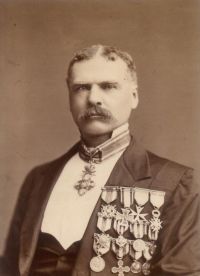
Source: Gutenberg

Frederick Watson,  Muckle John (1914)

“ Weeks of wandering in the wildest Highland country had brought out his finest, most admirable qualities. Hardship, that strange test of man, had made him far dearer and more romantic than he had ever been before. There was no jealousy of Irish favourites now—no dread of English influence when St. James's should be reached—all that was gone never to return. There was instead a Prince in a tattered kilt, and a dirty shirt, bare-footed and with a gun in his hand, a pistol and dirk by his side—a man just like themselves and thrown by the harshness of destiny upon their loyalty and succour. ”
Source: Gutenberg

Frederick Watson,  The Story of the Highland Regiments

“ From the sack of Louvain to the wreck of the Lusitania the policy that has controlled the army and navy of the enemy has bowed neither to pity nor to good faith. In this colossal war, regiments, brigades, armies, even nations have been swallowed up into the dense confusion of ceaseless battle. Upon every frontier, every mountain pass, upon the water, under the water, and in the pure air of heaven the grim struggle is waged night and day. When great peoples sway to and fro in their millions the time has passed for speaking of individual battalions. ”
Source: Gutenberg

Get perspective with Kwize: daily news enlightened by great literature