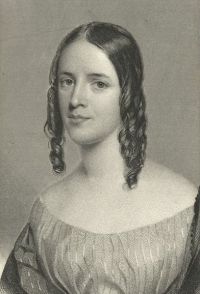
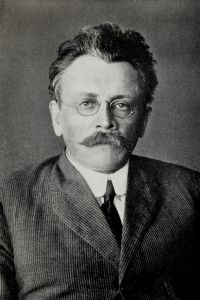
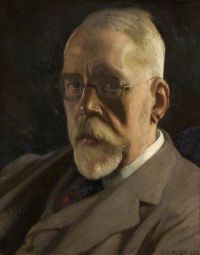
Henry Wilton Thomas

Biographical details

Henry Wilton Thomas,  The sword of wealth (1906)

“ In his own life the tragedy of ages was on for its hour, and the spirit that swayed him was the spirit of the cave-dweller robbed of his female in the dawn of the centuries. The events of the last two weeks rose before him. A vision of all that had come and gone grew vivid in his mind. At first Donna Beatrice and Don Riccardo and Hera were there, each standing in proper relation to the whole; but one by one these faded out to disclose with infuriating boldness the face and figure of Mario Forza.
A few minutes more and Tarsis ceased walking to take a seat at the Napoleonic table.
”
Source: Gutenberg

Henry Wilton Thomas,  The Last Lady of Mulberry: A Story of Italian New York (1900)

“ Bertino had looked on silently during the metamorphosis of the bust, and when the long column of candle-bearers moved he kept abreast of the head. At length they wheeled into Mulberry Street and passed by Casa Di Bello. He had expected to see his uncle’s home in darkness and crape on the door. But the windows showed light, and, standing on the stoop to see the procession, like all the populace of Mulberry, were Aunt Carolina and—he pushed the hat from his brow at the risk of liberty and life, to make sure that his eyes did not beguile him—yes, Marianna and Armando! All in America! ”
Source: Gutenberg

Henry Wilton Thomas,  The sword of wealth (1906)

“ For Hera, she gave no sign. When Tarsis was talking, somewhat heavily, with his air of a rich man, his small, keen eyes looking into hers now and then, she wondered what her life would be with such a companion; but when they were moving homeward past the darkened shop windows of Corso Vittorio Emanuele, out through the Venetian Gate, and speeding in the moonlight of the open country, her reflections took a different cast. Her soul cried out to be free, and to the cry for freedom came an answering call to revolt. ”
Source: Gutenberg

Get perspective with Kwize: daily news enlightened by great literature