J. M. Campbell

Biographical details

J. M. Campbell,  Notes on the natural history of the Bell Rock (1904)

“ At high water they come quite close to the tower, and their antics are seen to advantage from our balcony. Rolling over each other, they make for the bottom, gliding along the rocks like hounds hunting in couples; then with a rush they are on the surface, floating bolt upright, with their muzzles almost touching, staring with their large, expressive eyes into each other’s face. An almost human touch was given to their play by one taking the head of the other between his fore-flippers, as if about to salute him, or more likely her, in the orthodox fashion. ”
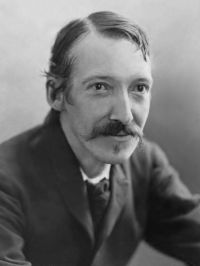
Source: Gutenberg

J. M. Campbell,  Notes on the natural history of the Bell Rock (1904)

“ The whitewashed appearance of the rock surface in summer, due to the presence of the acorn barnacle, has now vanished—thanks to the voracity of the white whelk—and the rocks appear in their natural colour, a reddish-brown. The “sere and yellow” is well represented in the once luxuriant crops of heavy tangles, but lately swaying on the surface with a freshness and beauty peculiarly their own, now storm-tossed, frayed and abraded, denuded of their palm-like fronds, they appear but a vestige of their former selves. ”
Source: Gutenberg

J. M. Campbell,  Notes on the natural history of the Bell Rock (1904)

“ Standing here during the prevalence of a gale, the outlook is being constantly darkened by a curtain of hissing foam drawn across the doorway, as each sea breaks against the base of the tower, flinging the spray high overhead. Fifteen miles in front of us lies the Isle of May, with its castle-like lighthouse crowning its summit, while on a lower level stands a whitewashed relic—remnant of a time, not so long ago, when the Island boasted a double light, and electricity had not as yet usurped sole sway. ”
Source: Gutenberg

Get perspective with Kwize: daily news enlightened by great literature