“ HOW THE BASS WAS HELD FOR KING JAMES 'INSTANTLY A GUST OF WIND BLEW HER OFF THE ROCK INTO THE SEA' THE Bass Rock is a steep black mass of stone, standing about two miles out to sea, off the coast of Berwickshire. The sheer cliffs, straight as a wall, are some four hundred feet in height. At the top there is a sloping grassy shelf, on which a few sheep are kept, but the chief inhabitants of the rock are innumerable hosts of sea-birds. Far up the rock, two hundred years ago, was a fortress, with twenty cannons and a small garrison. ”
Bass Rock
Definition and stakes
Quotes about “Bass Rock”
Walter Scott Dalgleish, The Cruise of the Royal Mail Steamer Dunottar Castle Round Scotland on Her Trial Trip (1890)
“ The Bass Rock (313 feet high) is the counterpart in the Firth of Forth of Ailsa Craig in the Firth of Clyde; and it is remarkable that these two rocks are the only ones in Scotland that are frequented by the gannet, or solan goose. The Bass presents a very bold outline, from whatever point it may be seen. Its summit slopes from north to south, and [90] it is surrounded on all sides by steep cliffs, rising sheer out of the sea. The only possible landing-place is on a shelf of rock on the south side, above which are the ruins of a fortress, which stretched across the island from east to west. ”
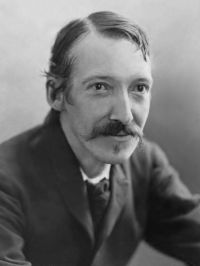
Robert Louis Stevenson,
The Works of Robert Louis Stevenson - Swanston Edition…
“ In the very midst stands one of the most satisfactory crags in nature—a Bass Rock upon dry land, rooted in a garden, shaken by passing trains, carrying a crown of battlements and turrets, and describing its warlike shadow over the liveliest and brightest thoroughfare of the new town. ”

Gordon Stables,
The Cruise of the Land-Yacht "Wanderer"…
“ These rocks are always fantastic, but like the sea that lisps around their feet in fine weather, or dashes in curling wreaths of snow-white foam high over their summits, when a nor’-east storm is blowing, they are, or seem to be, ever-changing in appearance, never quite the same. Only, one rock on the horizon is ever the same, the Bass. ”
J. M. Campbell, Notes on the natural history of the Bell Rock (1904)
“ The first week of February saw hundreds of these birds back to their breeding haunts on the Bass Rock. From the deck of the “Relief” steamer lying within a few hundred yards their movements are clearly seen. Each projecting ledge of the precipitous cliffs is tenanted by some members of the cackling crowd, their heads see-sawing from side to side. The birds are evidently engaged in brisk conversation, a monopoly of which is certainly not tolerated amongst them, judging by the vigorous efforts of each to be heard above his neighbour. ”
J. M. Campbell, Notes on the natural history of the Bell Rock (1904)
“ Only by energetically hauling on the hand-rail can the slightest progress be made in the desired direction, the wind’s eye being the objective point, where possibly on arrival one may find himself pinned flat to the lantern, like an entomological specimen, by the force of the wind. The snow removed, the return journey is effected by simply allowing oneself to be blown gradually back.While relieving the Bass Rock on our way ashore last relief, a good opportunity was afforded of witnessing the mode of effecting a landing under adverse circumstances. ”
“ In 1847 he published his Footprints of the Creator, in reply to the Vestiges by Robert Chambers, in which he seeks to controvert the theory of development, at least in the form in which it was then presented, by attempting to prove the fishes and the fossils of the Old Red to be as advanced in character as those now existing. A racy sketch on The Geology of the Bass formed part of a contribution to a work then issued, dealing with the history, botany, and zoology of the Bass Rock. ”
Robert Barnwell Roosevelt,
Superior Fishing
“ This entire reach, is one mass of rock, indented by innumerable bays, or severed by inlets into barren islands, where the tide rushes, and the surf beats; and in every favorable locality are the bass taken with a stout rod, a long line, and menhaden bait. From almost every bold rock, or prominent island, can the angler cast into the vexed water of some current, made by the huge waves rushing over the uneven bottom, and allure thence the fierce bass, who has been attracted from the ocean depths, to feed on the small fry that hide in the clefts and crevices ”
John Anderson, The course of creation (1851)
“ Have they been directed and modified by the same agencies, the silurian group rising higher and higher as the carboniferous subsided into the depressions occasioned by the evolution of the igneous matter? The Bass, North Berwick Law, and Arthur’s Seat, are the products of the change, though indeed these scattered points of igneous rock on the surface can give no idea of its subterranean extent, since basalt and greenstone are met with at unvarying depths in a great portion of the coal district in question.The whole field is prolific in organic remains. ”
Winifred Hawkridge Dixon, Westward hoboes (1921)
“ In descending a cliff sheer enough to daunt anyone but an old prospector, he lost his hold. His skeleton was found months later by our own guide, William Bass, at the foot of the falls now bearing his name. Sheer precipices lead to the pool at the base of the cascade, and to reach it, we left our horses and entered a limestone tunnel ingeniously worked in and out the soft rock, and thus threading our way finally reached the bottom, and stood exulting in the suddenly cool air, electric with white spray, falling into the great pool below. ”
Captain Alan Douglas, Fast Nine; or, A Challenge from Fairfield
“ The Striped Bass in the South is known as the Rock Fish, or the Rock. This fish is particularly common in the open stretches of large rivers. It is a popular food fish and it is estimated that over 200,000 pounds of Striped Bass are eaten each year in the United States. They are voracious feeders and when in the rivers they prey upon small fishes. They frequent the surf of ocean beaches and rocky shores. The fisherman holds this fish in deservedly high esteem. They are caught in creeks, using shrimps or clams for bait. When fishing for these in the swift [156] tideways, menhaden bait is used. ”
William Wallace Bass, Adventures in the Canyons of the Colorado…
“ The dip of the rocks is to the north, and we are rapidly running into lower formations. Unless our course changes, we shall very soon run again into the granite. This gives us some anxiety. Now and then the river turns to the west and excites hope that are soon destroyed by another turn to the south. About nine o'clock we come to the dreaded rock. It is with no little misgiving that we see the river enter these black, hard walls. At its very entrance we have to make a portage; then we have to let down with lines past some ugly rocks. ”
James A. Henshall, Bass, Pike, Perch, and Others
“ The rock-bass is an attractive-looking fish, and for its size is very pugnacious. It will take the artificial fly, or natural or artificial bait. It bites freely at small minnows, grubs, grasshoppers, cut-bait, or angle-worms. It is capable of affording considerable sport with light tackle, owing to its large and strong fins, and its habit of curling its sides in opposition to the strain of the rod.With a light fly-rod of four or five ounces, and corresponding tackle, and trout flies on hooks Nos. 5 to 7, the rock-bass is not a mean adversary. ”
John Lort Stokes,
Discoveries in Australia, Volume 1…
(1846)
“ The French charts exhibit some sunken rocks to the north of this; but, if they really exist, of which there is great doubt, we saw nothing of them. I may here mention, that great circumspection should be used by vessels in the neighbourhood of Reid's Rocks, as the soundings do not indicate their approach, and as the tide runs among them with great rapidity.* A rock was seen in H.M.S. Conway five miles W.S.W. from Bell Rock. Between them and the Black Pyramid we had 35 and 32 fathoms. ”
Various, Graham's Magazine, Vol. XXXVI, No…
“ The favorite haunts of the Striped Bass, whence his provincial name of Rock Fish, are stony, gravelly, or rocky reefs, or sunken piers and dams which cause eddies, in the vicinity of which his prey are to be found darting about in the greatest abundance, and in such localities he is often taken with the rod and reel in great numbers, running from two and a half to seven pounds in weight, which is the best size for the table. ”
George Bass, An Account of the English Colony in New South Wales…
“ There could, however, be no doubt, that, unperceived by our people, a heavy fall of rain had taken place in the interior of the country, among the mountains, and which, from the parched state of the land for such a length of time, had in no part been absorbed, but ran down the sides of the hills, as from mountains of solid rock, filling all the low grounds, and branches of the river, which, being in form suddenly serpentine, could not give vent so fast as the waters descended. ”
James A. Henshall, Bass, Pike, Perch, and Others
“ The boat should be rowed alongshore, or over rocky reefs or shoals, and about the eddies of rock pools. As the fish always hooks itself in trolling, it only remains for the angler to play and land his quarry in good form, always having a large landing-net or gaff in the boat.Casting menhaden bait from the rocky shores of the coast requires tools and tackle of great excellence and strength, as the largest bass are taken in this way. The most approved rod is a first-class split-bamboo, eight or eight and one-half feet long, and weighing from twelve to sixteen ounces. ”
George Bass, An Account of the English Colony in New South Wales…
“ That the swell of the Indian ocean comes, by far the greater part of the way, from the southward of west, can hardly be doubted, since it is well known that the prevailing winds are from that quarter. Early in the afternoon (of the 11th) a piece of land stood out from the line of the coast like an island, but it was soon found to be joined to the main by a sandy beach. The shore beyond it looked rugged and craggy, and the land equalled the most sterile and stoney that had been seen. At night the vessel stood off to the westward from abreast of a pyramidal rock lying close to the main. ”
George Bass, An Account of the English Colony in New South Wales…
“ But, after all their labour, they have not ingenuity sufficient to place the slips of bark in such a manner as to preclude the free admission of the rain. It is somewhat strange, that in the latitude of 41 degrees, want should not have sharpened their ideas to the invention of some more convenient habitation, especially since they have been left by nature without the confined dwelling of a hollow tree, or the more agreeable accommodation of a hole under the rock. ”
William Wallace Bass, Adventures in the Canyons of the Colorado…
“ Sumner took it up for Dunn because he knew there would soon be trouble, and told Powell that Dunn had been wounded four times by the Comanchies, so it all passed off. The next day we had some very bad rapids, so bad that it was necessary to let the boats around some large rocks, and in order to do this, and as Dunn was a fine swimmer, the Major asked him to swim out to a rock where he could catch the rope and raise it over the rock so the boat would swing in below. ”
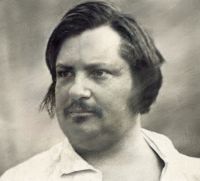
Honoré de Balzac,
Seraphita
(1834)
“ This dangerous entrance to the little bay bears obliquely to the right with a serpentine movement, and there encounters a mountain rising some twenty-five hundred feet above sea-level, the base of which is a vertical palisade of solid rock more than a mile and a half long, the inflexible granite nowhere yielding to clefts or undulations until it reaches a height of two hundred feet above the water. Rushing violently in, the sea is driven back with equal violence by the inert force of the mountain to the opposite shore, gently curved by the spent force of the retreating waves. ”
My Strange Rescue, and Other Stories of Sport and Adventure in Canada
“ Not only was the weather-clerk thus considerate, but nature had already been kind enough to provide them with the finest site for a toboggan slide imaginable. The placid stream which bore the name of Bass River spread out into a broad reach just before it came to their town, and on one side the bank rose up into a steep bluff whose grass-grown face, slanting right down to the water's edge without a break or gully, seemed intended for no other purpose than to afford the boys a splendid coasting-ground when well sheeted with snow. ”
Winthrop Packard, Florida trails as seen from Jacksonville to Key West and from November to April inclusive
“ A bass! Only a little fellow, half to three-quarters of a pound, but who ever heard of a bass taking bait thus placidly? Up in a Massachusetts lake that I know the large-mouthed bass take a bait with a rush that carries everything before it. They whirl beneath the water and leap above it, shaking their heads to throw from the mouth the thing that hurts them. Surely Southern languor has gotten into the bones of the bass. Another comes to the hook in the same peaceful way and I land him. Then there is a lull. A wind out of the south blows up river and brings me the odor of palmetto blooms. ”
The Parochial History of Cornwall…
“ It is possible, however, that rain being held in a natural hollow of a rock, may decompose that part of the rock on which it rests, and being whirled about by the wind from time to 187 time, may form these basons which we attribute to art; and if this is the case, they must continue increasing in size and depth. Have such basons ever been seen but on granite rocks? if not, probably water dissolves the feltspar and disunites the quartz and mica; and the winds driving round the water with particles of quartz at the bottom of the bason, must consequently fret away the rock and enlarge the bason. ”
Ernest Scott, The Life of Captain Matthew Flinders… (1914)
“ It has been asserted that "it is evident that Bass was not fully conscious of the great discovery he had made." [10] Bass's language, upon which this surmise is founded, was as follows: "Whenever it shall be decided that the opening between this and Van Diemen's Land is a strait, this rapidity of tide ... will be accounted for." He also wrote: "There is reason to believe it (i.e., Wilson's Promontory) is the boundary of a large strait." I do not think these passages are to be taken to mean that Bass was at all doubtful about there being a strait. ”
Ralph Temple, Enterprise and Adventure (1870)
“ The shade of the cliffs over their heads, and the noise of the surfs breaking at their feet, were the directions by which their course was steered parallel to the coast. Bass kept the sheet of the sail in his hand, drawing in a few inches occasionally, when he saw a particularly heavy sea following. His friend was steering with an oar, and it required the utmost exertion and care to prevent "broaching to" they knew that a single wrong movement, or a moment's inattention, would have sent them to the bottom. ”
Various, Lippincott's Magazine, August, 1885
“ Nature farms the Elk country.Bright moonlight, the early morning after the sun is up, and from a couple of hours after mid-day until the mountain-shadows strike the water in the evening, are the best times to troll for bass. If so minded, they will rise to a fly at such times in the rapids; but no allurement excepting the troll will bring them to the surface in still water. When the river is rising, or the water is clouded with mud or drift, bass scorn all surface-diet ”
Sarah Pratt McLean Greene, Vesty of the Basins
“ VESTY OF THE BASINS I THE MEETIN' Now is it to be rain or a storm of wind at the Basin? I love that foam out on the sea; those boulders, black and wet along the shore, they are a rest to me; the clouds chase one another; in this dim north country the wind is cool and strong, though it is now midsummer; at sunset you shall see such color! From a little, low, storm-beaten building comes the sound of a fog-horn. That is the gift of Melchias Tibbitts, deceased, to the Basin school-house. ”
Charles Dudley Warner,
My Winter on the Nile
“ What we see immediately before us is a basin, it may be a quarter of a mile, it may be half a mile broad, and two miles long; a wild expanse of broken granite rocks and boulders strewn hap-hazard, some of them showing the red of the syenite and others black and polished and shining in the sun; a field of rocks, none of them high, of fantastic shapes; and through this field the river breaks in a hundred twisting passages and chutes, all apparently small, but the water in them is foaming and leaping and flashing white; and the air begins to be pervaded by the multitudinous roar of rapids. ”