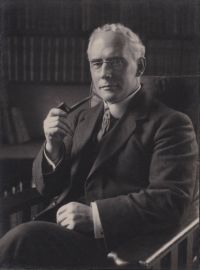
James Pounder Whitney

Biographical details

James Pounder Whitney,  Cambridge Medieval History (1922)

“ We of to-day, perhaps, are too much inclined to forget the moulding force of institutions, of kingship, of law, of traditions of learning, and of ideas handed down from the past. When we see the work of Charlemagne seeming to crumble away as his strong hand fell powerless in death, we are too apt to look only at the lawlessness, the confusion, and the strife left behind. In face of such a picture it is needful to seek out the great centres of unity, which were still left, and around which the forms of politics and society were to crystallise slowly. ”
Source: Wikisource

James Pounder Whitney,  The Cambridge Modern History, Volume 2… (1904)

“ The Zwinglians thought that free preaching extended to the Five Cantons as well as to the Common Lands; and on the other hand the Five Cantons naturally held themselves free to act as they pleased in their own territory. Thus the peace which placed Zurich at the height of her power contained in itself the seeds of future war. As a politician, if not as a theologian, Zwingli was justified in his preference for force. ”
Source: Wikisource

James Pounder Whitney,  Cambridge Medieval History (1922)

“ But once again it is here the preparatory stages with which we deal: the full process in English history, for instance, belongs to a later volume where William the Conqueror and his Domesday Book give us firmer ground for a new starting-point. But if it is more difficult, it is as essential, to study the stages of the more elusive preparation. It is the meeting-ground of old and new: the history in which the new, with toil and effort, with discipline and and suffering, grows stronger and richer as it masters the old and is mastered by it. ”
Source: Wikisource

Get perspective with Kwize: daily news enlightened by great literature