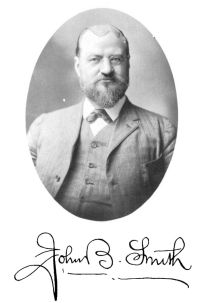
John Bernhardt Smith

Biographical details

Portrait of John Bernhardt Smith John Bernhardt Smith Popular Science Monthly (1904)

In truth not ten per cent, of that vast marsh area breeds mosquitoes at any time, and even a breeding area is not uniformly bad. The mosquito demands water free from fish or predatory insects of all kinds, that shall remain for at least a week. As a rule wherever tides go, the little species of Fundulus or 'killifish' will go and where they go no wrigglers can exist. Wherever fiddler crabs inhabit a marsh area, and there are thousands of acres so inhabited, their holes drain it completely and afford no chance to breed.
Source: Wikisource

Portrait of John Bernhardt Smith John Bernhardt Smith Popular Science Monthly (1904)

It is usually at the edge of the highland, where the tide water works in through grass so dense that it bars fish and fills depressions, that the mosquitoes get their best chance and in a number of surveyed areas it was only the edge of the marsh that was reported dangerous. Other danger spots are the irregular, rather high marshes rarely covered by tides, which dry out completely at times, killing all aquatic life, and then fill all depressions by a heavy storm. Cat-tail marshes when they are at all dense are safe from mosquito breeding.
Source: Wikisource

Portrait of John Bernhardt Smith John Bernhardt Smith Popular Science Monthly (1904)

We had now three classes in the state—the unbelievers and scoffers who were in the vast majority; the enthusiasts who believed firmly in local work, who formed a small but powerful minority, and a yet smaller class who thought that there might be a chance to get money out of it and who urged improvements that they might be engaged to carry out.
Source: Wikisource

Get perspective with Kwize: daily news enlightened by great literature